This guide explains how to evaluate 60817674500 in procurement terms, including supplier fit, pricing logic, and documentation checks. Objectively, the keyword pattern often reflects a reference code used in catalogs, quotations, or logistics records. Readers will learn practical selection criteria, requirement conditions, and common due-diligence steps to reduce mismatches.

If you are trying to act on 60817674500—whether it appears in a quotation, invoice, warehouse note, product catalog, email attachment name, or a procurement spreadsheet—your first priority is to treat it as a reference identifier rather than a standalone “product name.” In professional procurement workflows, identifiers like this typically map to a specific item configuration: model, specification, packaging type, compliance status, sometimes the batch or production run, and occasionally the warehouse handling class. When you evaluate it properly, you gain pricing clarity, reduce returns, and improve schedule reliability.
In many marketplaces, related “keyword strings” may be used to group listings, connect internal SKUs to external catalog numbers, or track supplier inventory. That is why it’s important to combine 60817674500 with supplier details, technical requirements, and the quoted unit price logic—so you can verify you are comparing the same specification across suppliers. A reference code without context is like a map without a legend: it can point you to the right place, but it can also send you to the wrong destination if you skip the validation steps.
When teams handle codes casually—assuming the number is identical to a finished goods name—they often experience avoidable friction: wrong variant deliveries, incomplete documentation, mismatched packaging, incorrect labeling formats, unclear warranty terms, and disputes about whether the price covered the scope of supply. All of these failure modes have one common root: the reference code was treated as “the thing,” instead of “a key that unlocks the thing.”
Even when 60817674500 is exact, suppliers may quote different packaging sizes, grade variants, labeling formats, lead times, or even different revision levels that are still associated with the same broad family of items. From an industry expert’s perspective, the “real” decision is usually made at the documentation and specification level: what the supplier will deliver, in what form, and with what proof of conformity.
Therefore, your evaluation should focus on:
Supplier fit is also influenced by their quality system maturity. Two suppliers may both use the same reference numbering convention, yet one may have stronger process controls, better recordkeeping, and more consistent packaging and labeling. Those differences show up later during receiving inspection, audit readiness, and claims resolution.
It’s also worth noting that many supplier catalogs use reference codes with different granularities. Some codes represent a final packaged SKU; others represent a raw component type; others represent an internal cross-reference that becomes “real” only after the supplier picks the manufacturing revision. The same number can therefore correspond to different “states” of the supply chain unless you validate the mapping.
When procurement teams see a number like 60817674500, they typically receive a price that depends on one or more variables. Without assuming any specific currency or amount, you should ask for the quotation breakdown in writing—commonly including:
This approach is especially important if you are comparing supplier options that may list similar items under different catalog conventions. If you do not align the scope of supply, the lowest quote can still lead to the highest total cost of ownership. Total cost of ownership includes not only purchase price, but also receiving time, rework, replacement shipping, downtime risk, inspection labor, and nonconformance processing.
For example, Supplier A might quote a lower price for an item “coded” as 60817674500, but the unit might be sold in a different packaging increment than Supplier B. If your warehouse expects cartons of a defined count, receiving becomes error-prone, and the team might have to recount or repack. That effort costs labor hours and can create delays. If your production line is sensitive to schedule, delays carry even higher costs.
Another pricing nuance is the difference between “standard” and “certified” supply. Some suppliers include a minimal documentation set by default; others include full traceability documents. If your industry requires audit evidence—regulators, customers, or internal quality systems—then the “documentation scope” is not optional. It is often a pricing determinant.
You referenced possible location placeholders in the keywords. Where a location is intended, procurement teams often factor in “nearby” operational realities: shorter transit windows, easier receiving coordination, fewer customs complications (if applicable), and quicker resolution of discrepancies. Even without naming a specific city or country, you can still operationalize this by asking suppliers about local warehousing capacity, dispatch schedules, typical lead-time variance, and the handling time between order confirmation and shipment.
In day-to-day business terms, “nearby” supply is not merely about distance—it is about predictability. If your production or distribution schedule is time-sensitive, predictable transit and responsive documentation delivery can outweigh minor differences in unit price. In procurement, predictability can be considered a form of risk reduction. It reduces the probability of missed production windows and reduces the time spent chasing updates.
There is also the matter of documentation logistics. If a supplier ships from a distant location, documents might arrive later than the goods, complicating receiving verification and delaying approval workflows. “Nearby” suppliers may dispatch documents earlier, sometimes even electronically before physical shipment.
However, “nearby” is not automatically better in all cases. A “nearby” supplier might source the item from the same manufacturer and still depend on long production lead times. In that scenario, “nearby” reduces only one part of the timeline—transport—while the critical bottleneck remains manufacturing. That is why you should ask not only “where,” but also “when” (production readiness date) and “how reliably.”
If your organization uses vendor scorecards, “nearby” considerations should be framed as measurable performance indicators: on-time delivery percentage, documentation lead time, rate of receiving inspection pass on first delivery, claim resolution cycle time, and defect recurrence frequency.
From an industry expert viewpoint, the top procurement outcomes come from a disciplined verification flow. Use the identifier 60817674500 as your anchor, but confirm the surrounding commercial and technical context before committing.
In practice, a procurement team should treat this checklist as a “minimum evidence package” requirement. The reference code 60817674500 triggers the request for evidence; it should not replace the evidence.
Also, remember that a purchase order is not just a price agreement—it is a legal and operational definition of what is being supplied. The clearer the mapping between 60817674500 and the required scope, the fewer ambiguities exist later if nonconformance occurs.
Procurement professionals often see recurring issues when reference codes are not validated:
By addressing these issues up front, you reduce the chance of procurement disputes and expedite the acceptance process after delivery. You also avoid the situation where corrective actions depend on goodwill rather than a contractual or evidence-based basis.
One practical way to reduce failure modes is to embed the mapping details into the PO line description, not just in the email thread. Emails can be misplaced; PO line descriptions are operational artifacts used by receiving, quality, and finance.
Below is a practical comparison of how common procurement requirements affect the quality of outcomes when sourcing an item referenced by 60817674500. Use this as a framework when negotiating with suppliers.
| Procurement requirement | What you ask for | What it changes in practice |
|---|---|---|
| Specification alignment | Exact product name, revision/spec details mapped to 60817674500 | Prevents receiving the wrong variant and reduces rework or returns |
| Documentation package | Test reports/COC/COA or relevant compliance evidence | Supports quality acceptance and audit readiness |
| Packaging clarity | Units per pack/carton and labeling format | Improves warehouse counting, reduces mis-receipt risk |
| Logistics terms | Incoterms, shipment method, handling precautions | Improves on-time delivery and reduces damage claims |
| Lead time reliability | Confirmation date process, MOQ constraints, production status checks | Reduces schedule surprises |
| After-sales handling | Defect policy, inspection steps, replacement vs. refund pathway | Shortens downtime and controls long-tail costs |
To make this table operational, you can translate each requirement into “PO enforceable language.” For example, instead of only asking for “COA,” you define: “Supplier shall provide COA for each lot/serial number shipped, delivered electronically prior to shipment where available, and physically included in the shipment pack.” That makes the requirement measurable.
Additionally, you can align each requirement with an internal owner. Quality owns documentation and inspection acceptance criteria. Warehouse owns packaging and labeling. Logistics owns shipping terms and damage claims. Finance owns payment terms. When each requirement has an owner, the risk of neglect decreases.
Source (general procurement practice): This guide reflects widely used procurement and quality management approaches aligned with recognized industry standards for supplier qualification and documentation controls (e.g., quality system principles and audit-oriented recordkeeping commonly emphasized by ISO-aligned frameworks). For sector-specific compliance requirements, always defer to your internal quality policy and applicable regulations.
Step-by-step guide:
This execution flow is designed to keep procurement decisions grounded in evidence. The reference code triggers a verification process, rather than serving as the only criterion for selection.
In many organizations, procurement has limited technical authority; engineering or quality must validate. The procedure above creates a structured bridge between the procurement trigger (60817674500) and the technical reality (specs, packaging, and conformity proof).
To avoid procurement friction, set clear conditions early. Typical requirements include:
Clear conditions are especially important when multiple stakeholders interact: procurement orders, warehousing receives, quality inspects, and finance pays. Ambiguity tends to fall through cracks. When requirements are explicit and mapped to the reference identifier, each department can follow the same instructions without reinterpreting the scope.
In addition, consider defining what happens if something goes wrong. For example: if documentation is incomplete, the shipment may be quarantined until the missing documents arrive. If packaging is damaged, define whether you accept the goods and how you verify count. If the wrong revision is delivered, define whether it is “refused,” “returned for correction,” or “conditionally accepted with a nonconformance record.” These decisions affect cost and time.
Procurement teams sometimes assume that “documentation can be requested later.” But later requests often delay acceptance and can create audit issues. The goal is to prevent that by specifying document requirements up front and ensuring the supplier can meet them consistently.
Because 60817674500 is likely a reference identifier, the most effective procurement approach is to treat it as the join key between commercial data and technical requirements. You want to ensure that every system entry—quote, PO, receiving record, quality record, and finance invoice—links to the same underlying configuration.
To do this, you can adopt a practical data structure for procurement records. Even if your organization uses spreadsheets instead of an ERP, the principle remains the same:
This structure prevents a common hidden risk: two teams might use the same reference ID but interpret it differently. For example, procurement might assume “one unit,” while warehouse expects “one carton.” Quality might require traceability documents per lot, while the supplier provides one certificate for the entire order. Each mismatch becomes visible only after delivery unless you standardize the record.
When the supplier confirms the mapping in writing, you can store it as an attachment to the PO and quote. That way, your acceptance team can reference the mapping without hunting through email. If you ever need to resolve a dispute, you have the evidence chain.
It is common for marketplaces to show multiple listings that appear similar because the reference identifiers share a numeric pattern. Yet the underlying specs can differ subtly—materials, tolerance bands, coating types, or certification scope.
When comparing suppliers, do not rely on the appearance of 60817674500 alone. Instead, compare the following in a structured way:
A useful tactic is to ask each supplier to fill out a comparison worksheet using your fields. For example, you can provide a template requiring them to confirm: “Item description, packaging units per carton, revision, compliance docs, shipping lead time, incoterms.” This reduces ambiguity because you force all suppliers to provide answers in your required structure.
When you do this, you often discover that suppliers who seem “cheaper” are cheaper only because they exclude documents or packaging details that you must still source internally or pay additional fees to obtain.
Even with strong procurement practices, the transaction becomes real only when goods arrive. That is why acceptance planning should start before purchase confirmation. When 60817674500 is involved, you should ensure your receiving team has a clear checklist that ties to the mapping details confirmed by the supplier.
Receiving typically verifies:
Quality inspection then verifies the technical acceptance criteria. If your acceptance is tied to standards or internal engineering specs, ensure the supplier documentation aligns to those references. A common mistake is to accept goods based on a “generic certificate” that does not specify the exact test results or revision level you needed.
If 60817674500 corresponds to different revisions or grades within a family, your acceptance checklist must include an item “fingerprint” verification. That might include checking a visible marking, a part number, a manufacturing date, or a lot-specific identifier on the label and comparing it with documents.
If your internal team has no time for complex checks, negotiate with the supplier to provide additional acceptance support (for example, pre-shipment inspection reports or electronic document packs available before delivery). Those actions reduce uncertainty and accelerate acceptance.
When you request documents tied to 60817674500, you are not only solving a short-term acceptance problem. You are also building the audit-ready trail that many organizations require for compliance, customer audits, and internal quality investigations.
Audit-ready documentation typically includes:
For procurement teams, it can be tempting to accept “minimal documentation” because the immediate operational need is to receive goods. However, incomplete traceability can become costly later. If a customer audit requests lot-level proof, and you cannot provide it, you may face delays, corrective actions, or customer dissatisfaction.
Therefore, treat documentation scope as part of the “product” you are buying—not as an optional add-on.
Even with careful mapping, mismatches can happen. Goods might arrive with labels that don’t match the PO, documents might not align with the shipment batch, or the supplier might have shipped a revision that is close but not exact. This is where your contracts and your internal nonconformance procedures matter.
When 60817674500-linked goods don’t match expected documentation or specification, consider the following risk-managed response:
It helps to classify the mismatch clearly. For example, “wrong documentation” is different from “wrong specification.” “Wrong packaging count” is different from “wrong product variant.” A disciplined classification accelerates resolution because suppliers can address the correct root cause category.
Also, keep in mind that some mismatches are partially recoverable. If the delivered hardware matches the specification but documentation is incomplete, you might accept with a hold on final sign-off until paperwork is corrected. If the hardware is wrong, you may need replacement or return. Your acceptance strategy should align with your internal risk tolerance and operational constraints.
If you frequently purchase items referenced similarly to 60817674500, you can reduce future risk by qualifying suppliers more formally. One purchase can reveal only a slice of performance. Qualification aims to build confidence in consistency.
Supplier qualification can include:
If supplier performance is strong, you can reduce administrative burden later (for example, fewer re-checks). If performance is inconsistent, you invest more in inspections and pre-shipment controls.
In this way, 60817674500 becomes part of a bigger supply chain discipline: you learn from each transaction and reduce operational friction over time.
When you contact suppliers about 60817674500, the quality of your questions determines the quality of their answers. If you ask ambiguous questions (“Is this the correct item?”), you may receive vague confirmations. If you ask structured questions tied to PO enforceable details, you increase the likelihood of a precise confirmation.
High-yield questions include:
It is also helpful to request that suppliers respond in a written format you can paste into your procurement record. For instance, you might provide a short template: Reference ID: 60817674500 Product name/spec: ____ Revision/spec level: ____ Packaging count: ____ Documentation package: ____ Lead time basis: ____ Incoterms/shipping terms: ____ Warranty/returns policy: ____
When suppliers fill it out, you reduce the chance of “interpretation drift” in later steps.
In procurement contexts, 60817674500 is very often a reference identifier used to connect listings, catalog entries, or internal records to a specific item configuration. Treat it as an anchor code that must be mapped to the exact product name, specification, and packaging scope. The number alone rarely carries enough meaning for safe purchasing without supplier confirmation and documentation alignment.
Ask each supplier to provide the product name, revision/spec details, packaging count, and the documentation package tied to 60817674500. Then normalize the quote basis (unit vs. pack/carton) and delivery terms before you compare prices. Ideally, request the supplier to confirm the exact mapping in writing and attach it to the quote or PO.
Pricing differences can reflect packaging differences, documentation inclusions, compliance evidence scope, production revision levels, lead time options, or shipping terms. A “same code” assumption is risky unless the supplier confirms the specification and commercial scope in writing. If one supplier includes traceability and full test documentation and another does not, the price comparison is not apples-to-apples.
Request the documents required by your organization’s quality policy: commonly conformity statements, test or inspection reports, and material or compliance declarations relevant to your industry. The exact set depends on your sector and regulatory environment. For best results, require that documents identify the exact lot/serial numbers shipped and align with the 60817674500 mapping and revision/spec level.
“Nearby” sourcing can reduce total risk by improving delivery predictability and shortening resolution cycles, but it does not always guarantee the lowest unit cost. Total value should be evaluated using delivery reliability, documentation completeness, packaging alignment, and acceptance timelines—along with price. A slightly higher unit cost may be justified if it reduces downtime risk and eliminates nonconformance disputes.
Initiate a nonconformance process: document what was received, compare it against the supplier’s written confirmation tied to 60817674500, and request a corrective action plan. Clear defect classification and replacement/return conditions should be established in advance. Ensure your internal receiving and quality teams quarantine appropriately while you investigate and coordinate resolution.
Yes: ensure written specification confirmation, align packaging and quantities, confirm delivery terms, and confirm the documentation package included in the quote. These conditions typically prevent the very costly disputes that occur when the buyer and supplier interpret “reference code” differently. Also consider adding change notification requirements if the supplier might update the revision associated with the reference identifier.
When you encounter 60817674500 alongside procurement-related keyword strings and supplier price offers, the responsible approach is to treat it as the start of due diligence. Verify the specification mapping, normalize pricing on the same delivery basis, and ensure the documentation and acceptance criteria are clear. With that method, you can secure consistent supply performance and make decisions grounded in comparable evidence rather than assumptions.
If you share the product category, your required specifications, and the exact quote structure (unit vs. pack, and delivery terms), the next step would be to build a tighter comparison model tailored to your receiving and quality processes—still anchored on 60817674500.




Este guia analisa, de forma objetiva, as relações e usos associados a Aguinaldofirminocampos, espinhos e remacubaia, com foco em contexto, aplicação prática e cuidados. Apresenta informações de base sobre cada termo, destacando como elementos naturais e referências locais podem orientar escolhas de manejo, coleta e identificação, além de recomendações de avaliação e conformidade.

This guide explains how to evaluate Uu-related offerings by supplier capability, pricing logic, and service conditions. Objectively, “Uu” and the surrounding terms typically represent product categories or identifiers used in procurement and cataloging. You’ll learn what to verify, how to compare suppliers, and which requirements reduce risk when sourcing near you.

This guide explains how to source and evaluate products tied to item code 44539991272, including key supplier considerations, pricing dynamics, and risk checks. Objectively, the keywords suggest a catalog-style identifier used in procurement workflows. The article reviews how buyers should verify specifications, confirm lead times, and document acceptance criteria before ordering from suppliers.

This guide explains how to evaluate Umeu.,Sando products with practical sourcing and pricing considerations. “Umeu.,Sando” functions as a brand-like term for a category of goods, and buyers typically compare supplier reliability, material quality, and packaging consistency. Objectively, the article outlines how to check documentation, confirm specifications, and reduce risk when choosing nearby sources.
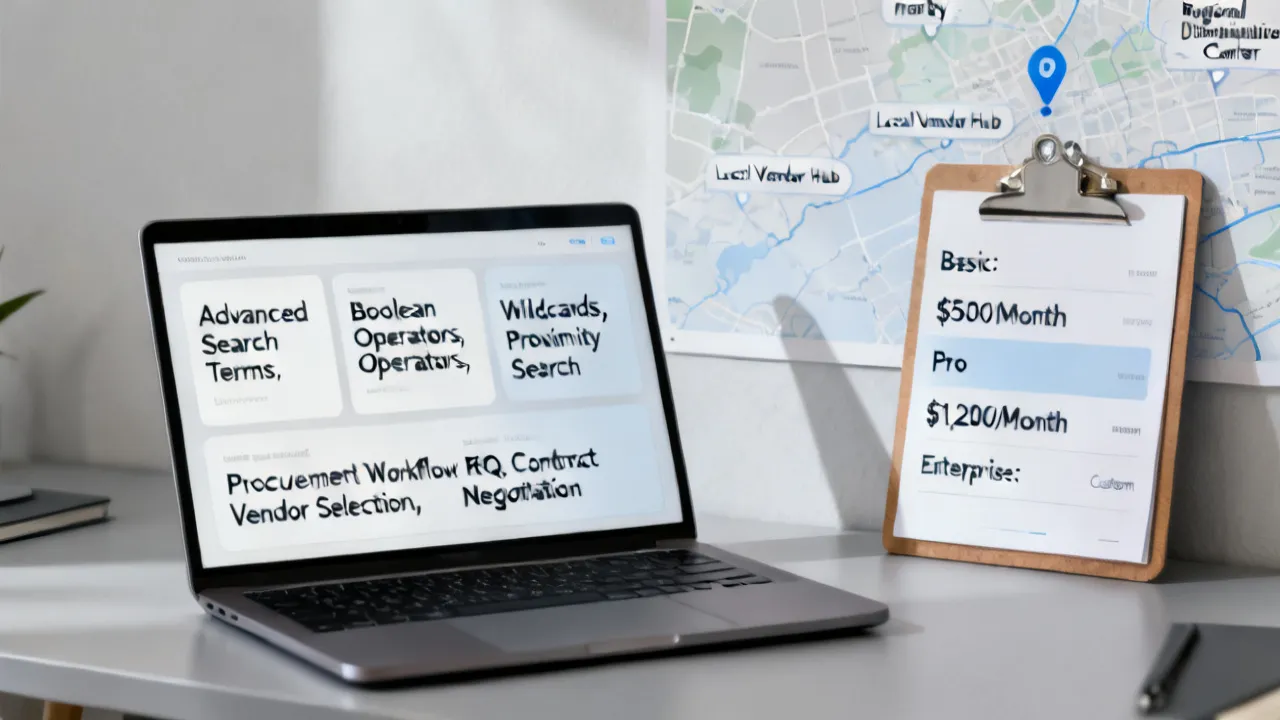
This guide explains how ryugfiih can be used to interpret procurement signals, supplier fit, and cost drivers in a reliable way. Objectively, these keywords reflect the way teams combine search intent, supplier documentation, and operational constraints. You’ll also find a structured comparison table, step-by-step conditions, and FAQs to support decision-making without guesswork.
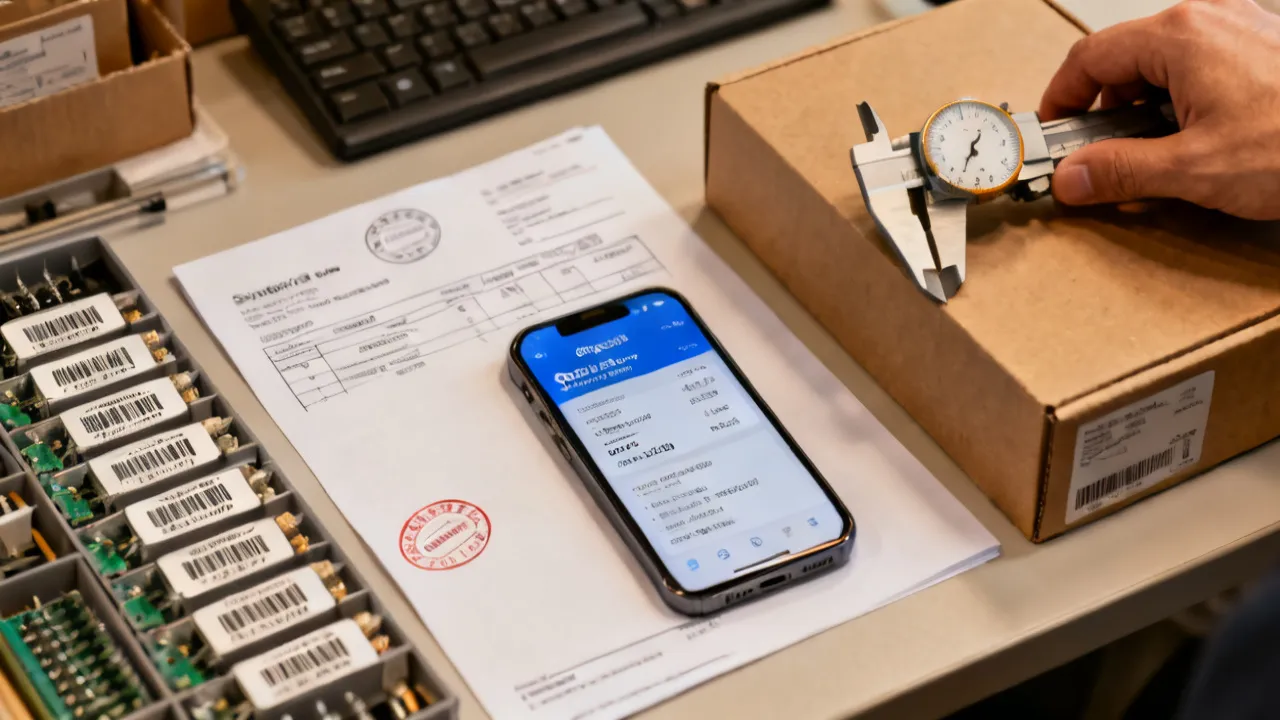
This guide explains how to evaluate supplier options and price factors tied to 60817674500, using practical, objective decision criteria. Background context covers what a supplier quote typically includes, why identifier accuracy matters, and how customers assess lead time, documentation, and quality requirements across comparable procurement scenarios.