This guide explains how “receberecebe” relates to receiving/processing workflows and what requirements typically shape reliable handoffs. In objective background, the keyword concept is discussed in the context of order intake, confirmation, and downstream fulfillment. The article also outlines practical conditions readers should verify—covering quality checks, documentation, and supplier coordination.

When people mention receberecebe in practical conversations, they are often referring to a repeated “receive → confirm → process” pattern inside logistics, procurement, or service fulfillment. The most important point is that reliability is determined less by the word itself and more by how you structure handoffs: the moment an item or task is received, the system must produce a verifiable record, and the next step must be able to proceed with the correct context.
In other words, “receberecebe” is best understood as a signal of a cycle—not just a single event. Organizations that operationalize this cycle usually establish consistent evidence (documents, timestamps, condition reports) and clear responsibility between parties (internal teams and suppliers). Even if you are only optimizing an internal intake desk or coordinating with external suppliers, the same principles apply: receive, validate, document, and forward.
What makes this concept powerful is that it targets the most failure-prone part of many operations: the boundary between “we have it” and “we can use it.” That boundary is often where assumptions creep in. “Someone verbally confirmed it” or “it looked fine when it arrived” are common substitutes for verifiable proof, and those substitutes can break under audit scrutiny, cost allocation disputes, or late-stage troubleshooting. A true “receberecebe” approach treats receiving as a controlled process with evidence, not a casual checkpoint.
Operationally, most breakdowns in receiving workflows come from ambiguity: Was the shipment actually delivered? Was it delivered in acceptable condition? Did the right SKU, quantity, or service scope arrive? And—crucially—did anyone confirm it in a system that downstream teams can rely on?
In this setting, receberecebe functions like a shorthand for the repeated verification loop that keeps a workflow stable:
When that loop is well designed, organizations reduce “downstream confusion,” avoid rework, and shorten exception handling. When it is not, teams often discover issues late—after costs have already accumulated. For example, a warehouse might stage inventory before QA approves condition. A procurement team might invoice before acceptance. A service organization might start implementation before deliverables are actually accepted. Each of these is an example of breaking the cycle: the workflow proceeds on incomplete or unverifiable context.
To make the “receive → confirm → process” idea operational, it helps to think in terms of state. At any point in the workflow, something should have a clear status: “received but not verified,” “verified and accepted,” “received and partially accepted,” “received but on hold,” or “rejected.” Downstream teams should understand which actions are allowed in each state. “Receberecebe” is essentially about making state transitions explicit and evidence-backed.
From an industry-expert perspective, a receiving loop works only if both sides—your organization and the supplier—align on the same evidence standard. That alignment typically includes:
Even if the workflow is informal at first, the moment there are multiple suppliers or locations—especially nearby regional partners—the “receberecebe” pattern becomes essential. The reason is simple: the cost of miscommunication grows with each handoff.
Supplier coordination is often where “it will be fine” thinking happens. A receiving team may assume the supplier’s packing list is accurate; a supplier may assume the receiving team will update confirmations promptly. If neither side explicitly commits to an evidence standard, discrepancies become invisible until someone performs a reconciliation months later. “Receberecebe,” as a cycle discipline, prevents that invisibility by forcing an evidence event at receipt.
In practical terms, alignment between suppliers and internal teams often requires shared templates or shared data contracts. Examples include:
These agreements can be formal (contract clauses, supplier onboarding documentation) or semi-formal (checklists and standardized message formats). Either way, the underlying goal is the same: both parties should be able to answer, with evidence, “What did we receive, and what did we accept?”
The term receberecebe itself does not define pricing. However, receiving loops influence costs by shaping how quickly inventory (or service deliverables) becomes usable and how much rework occurs. For readers evaluating supplier arrangements, it’s more reliable to focus on verifiable cost drivers than on slogans.
Below are common cost elements you should confirm when coordinating receiving and acceptance:
If you have a specific quote, treat it as a starting point. Ask the supplier how their receiving documentation supports your internal acceptance standards, and whether there are charges tied to rework or partial shipments. This keeps decisions grounded in contractual reality rather than assumptions.
Additionally, it’s useful to consider hidden costs that show up when the “receberecebe” cycle is weak. These often include:
In many organizations, the direct cost of inspections is visible, but the cost of delays and disputes is underestimated. Strengthening “receberecebe” typically shifts costs earlier into receiving (e.g., evidence capture and standardized checks) but reduces far larger costs later.
Finally, “receberecebe” affects cost allocation. If your company needs to reconcile multiple locations, multiple buyers, or multiple funding sources, you need a reliable link from receipt evidence to internal consumption or invoicing. Otherwise, teams end up guessing which cost bucket to use, and that can cause financial reporting inconsistencies.
Reliable receiving processes are widely treated as part of quality management and supply-chain governance. For objective grounding, many organizations align receiving and acceptance practices with recognized management-system approaches. A useful reference point is the ISO 9001 quality management framework, which emphasizes process control, documented information, and continual improvement. While specific receiving systems vary by industry, the underlying logic is consistent: define acceptance criteria, capture evidence, manage nonconformities, and improve processes over time.
For supply-chain documentation reliability, it is also common to use the principles of traceability: when something arrives, you should be able to trace it back to the supplier batch and forward to the internal consumption record. This is particularly important when compliance, recalls, or auditability are concerns.
Where the “receberecebe” cycle becomes especially relevant is when you must demonstrate that your process is not arbitrary. Audits often do not merely ask “Did you inspect?” They ask: “How do you know you inspected the right things, using the right criteria, and recorded the results in a way that is consistent and retrievable?” “Receberecebe” is essentially a philosophy of evidence-based consistency.
Different industries may implement this differently, but they converge on common controls:
In other words, “receberecebe” is not only about day-to-day efficiency; it is also about building an operational system that can be explained, audited, and improved.
The table below compares typical conditions that shape whether a receiving loop like receberecebe remains dependable. (No links are included; sources are named for verification.)
| Category | What “receberecebe” implies in practice | Conditions/requirements to verify | Common source of standards |
|---|---|---|---|
| Receiving evidence | Receive and immediately generate a confirmable record | Timestamped proof, order identifiers, condition notes | ISO 9001 (documented information and process control) |
| Acceptance criteria | Verify against predefined thresholds | Defined tolerance for quantity/packaging/service scope | ISO 9001; internal QA procedures |
| Nonconformance handling | Define the next step when exceptions occur | Clear rejection/hold workflow, root-cause capture | ISO 9001 (nonconformity and corrective actions) |
| Supplier coordination | Align on how confirmations are exchanged | Shared identifiers; agreed turnaround time for confirmations | Procurement governance and contract clauses |
| Downstream readiness | Forward validated data to the next function | System integration for inventory or ticket status | Operational process design (enterprise workflow controls) |
| Auditability | Ensure traceability across the loop | Record retention policy; batch/lot linking where needed | Quality management and industry compliance frameworks |
To strengthen the reliability implied by this table, organizations frequently extend the evidence set beyond what is minimal. For instance, “condition notes” may be supplemented with standardized photo angles, a checklist of packaging integrity, and a structured description of visible defects. Similarly, “acceptance criteria” may include a decision tree so that different receiving staff reach consistent conclusions. These additions can turn “receberecebe” from an abstract idea into repeatable work.
If you want to apply the logic behind receberecebe to your receiving workflow, here is a practical step-by-step approach. Adapt it to your industry—warehouse logistics, professional services intake, or procurement receiving—while keeping the evidentiary backbone consistent.
Set a clear operational definition. For physical goods, receipt may mean physically delivered and verified. For service deliverables, receipt may mean submission of acceptance artifacts (reports, logs, deliverables) and confirmation against scope.
It can be helpful to separate “physical possession” from “operational receipt.” In logistics, a truck arriving at a dock may represent possession, but operational receipt might occur only after counts, scanning, or document verification. In services, a deliverable being uploaded might be possession, while operational receipt might require confirming that the deliverable matches the contract scope and acceptance format.
Ensure that orders and confirmations use consistent identifiers: purchase order numbers, line-item codes, job tickets, and any batch/lot references. If identifiers differ between your internal system and the supplier’s documentation, receiving becomes fragile.
Beyond using identifiers, you should also define which identifiers are “system-of-record.” For example, your internal system might consider the purchase order line item as the canonical reference, while the supplier might use invoice line numbering. If those do not align, you need a deterministic mapping procedure so that evidence and outcomes still connect to the correct records.
Specify thresholds for acceptance. For example, determine when to perform a deeper inspection (damaged packaging indicators, partial shipments, or high-value items). Keep criteria documented so decisions are repeatable.
Acceptance criteria should be measurable where possible. If “acceptable condition” is described vaguely (“looks good,” “no major damage”), reliability will suffer because staff judgments vary. Instead, develop objective triggers such as: maximum allowable dent depth, acceptable packaging seal integrity rules, tolerance for quantity differences, required documentation completeness, and required test/traceability information for regulated items.
For services, acceptance criteria might be expressed as: required deliverable version, documented test evidence, sign-off requirements, SLA adherence metrics, or completeness checks against a scope-of-work checklist. The goal is the same: acceptance should reduce subjectivity.
At receiving time, record what matters: condition notes, photos where relevant, counts, and any exceptions. This “receberecebe” loop depends on not deferring evidence capture to a later reconciliation step.
Evidence capture should also follow a structured pattern. Even if a team uses manual forms, the form fields should reflect the acceptance criteria. If you need to decide accept/reject later, you will discover too late that you didn’t record the right details at receipt. A strong implementation uses checklists, standardized photo requirements, and mandatory fields in the receiving system.
In high-volume environments, evidence capture can be lightweight but still disciplined. For example, teams might use a barcode scan plus a quick condition checklist and attach photos only for exceptions. The “receberecebe” concept does not require excessive paperwork; it requires that the record is verifiable and sufficient to support the acceptance decision.
Set a confirmation turnaround time. The faster the loop completes, the less likely downstream processes will start with incomplete information. Make sure communications to suppliers are structured (what was received, what was accepted, and what needs correction).
Speed is important, but so is consistency. Clear communication often requires templates for exception messages and acceptance confirmations. For instance, rather than sending free-form text, include structured fields: order number, line item, quantity accepted/rejected, defect category, and required supplier actions. Structured messages reduce back-and-forth and improve data quality.
If you operate with multiple time zones or different shift schedules, add operational clarity: specify when confirmations must be entered (e.g., same day by 3 PM local time) and define who is responsible during each shift. This prevents a “receberecebe” cycle from stalling simply because the receiving desk ended its day.
If the item or deliverable does not match the criteria, route it into a nonconformance workflow. The receiving loop should not silently absorb exceptions; it should surface them and trigger corrective actions.
A controlled exception workflow typically includes:
When exceptions are handled informally, the cycle becomes unreliable: downstream teams might accidentally treat held items as accepted, or invoicing might proceed without proper credit handling. A controlled workflow prevents those errors by ensuring that exceptions are visible and deterministic.
Instead of tracking vague “quality perceptions,” measure objective indicators such as:
When possible, align your measurement system with ISO 9001-style continual improvement practices.
To make metrics actionable, consider segmenting them by root causes. For example, if exceptions are driven by documentation gaps (missing batch/lot, incomplete packing list), that suggests a supplier documentation training opportunity. If exceptions are driven by packaging damage, that suggests packaging redesign or carrier handling improvements. Metrics should lead to “what to change next,” not just “what happened.”
Additionally, track metrics relevant to “receberecebe” state transitions. For instance, measure how often goods move from “received” to “accepted” without proper evidence, or how often a “pending” state remains unresolved beyond a threshold time. Those metrics reveal process discipline issues directly tied to workflow reliability.
When your suppliers are described as nearby, you may experience faster delivery and more informal communication channels (phone calls, quick handoffs). That can be advantageous, but it also increases the risk that evidence capture becomes inconsistent. A strong “receberecebe” loop preserves speed without sacrificing records: keep a lightweight process for evidence capture and ensure acceptance criteria still apply.
In many regional contexts, teams build trust through routine collaboration. However, trust should complement documentation, not replace it—especially when multiple parties must later reconcile invoices, inventory, or compliance requirements.
“Nearby supplier” operations often face a specific failure mode: people assume that because the supplier is local and responsive, the receiving process can be relaxed. Yet the cost of missing evidence does not disappear; it moves from immediate operational confusion to later dispute or audit resolution. For example, if you cannot prove what was delivered and accepted at the receiving moment, you might have difficulty recovering credits for defects or disputing invoice line items.
To keep local partnerships effective, establish “fast lane” procedures that still capture evidence. Examples include:
In essence, you want to make “receberecebe” speed-friendly. The cycle should not become a bottleneck, but it also should not become optional.
These pitfalls share a common root cause: missing structure around state transitions. When “received” is treated as “done,” the workflow loses reliability. When “accepted” has no evidence, downstream teams inherit uncertainty. When exceptions have no route, problems become hidden debt.
It also helps to watch for cultural or staffing-driven variations. For example:
A practical “receberecebe” implementation anticipates these variations. It uses system prompts, mandatory fields, standardized workflows, and training to keep the cycle consistent under pressure.
Organizations with mature receiving loops are typically characterized by three traits:
This is the real operational meaning behind a repeated receive/process pattern like receberecebe. It turns receiving from an isolated event into a controlled system.
“Average” receiving loops may still function, especially in stable conditions. But they often degrade in the presence of variability: different suppliers, different item categories, contract changes, or higher exception rates. A “good” loop expects variability and remains stable because it has deterministic rules and evidence standards.
To make this differentiation even clearer, consider how each maturity level handles a scenario like this: A shipment arrives with mixed packaging damage and a partial quantity. An average workflow might accept what looks fine, mark the rest as “issue pending,” and rely on someone to follow up. A good workflow would:
That full behavior is what “receberecebe” implies in practice: a reliable cycle that can handle complexity without collapsing into informal coordination.
In practice, it usually signals a repeated workflow cycle: receive something, confirm it, validate it against acceptance criteria, document the outcome, and forward it to the next stage.
Think of it as enforcing that the workflow does not move forward on assumptions. Each cycle produces an evidence-backed state transition.
No. The same logic can apply to service intake, documentation processing, procurement receiving, and even internal task handoffs—anywhere acceptance requires evidence and confirmation.
For example, in professional services, a “received” deliverable might be a report submission, while “acceptance” might require verifying scope coverage, version correctness, and test or evidence artifacts. Then “forwarding” could mean notifying the implementation team or releasing payment milestones.
Supplier documentation quality directly influences verification speed and accuracy. When identifiers and condition reports are consistent, receiving teams can confirm quickly and reduce exception rates.
Conversely, incomplete documentation increases uncertainty. If batch/lot identifiers are missing, you might not be able to trace the goods. If line-item descriptions do not match purchase orders, you might misclassify quantities. Both issues can turn receiving into a prolonged exception cycle.
Focus on landed cost components and any charges tied to inspections, rework, partial shipments, or exceptions. Also confirm payment timing rules—many invoicing steps depend on evidence of accepted receipt.
Additionally, clarify what happens when acceptance fails: who pays return shipping, who pays for repackaging, who performs re-inspection, and whether partial acceptance leads to partial credits. These are often contract-level decisions that receiving operations need to execute correctly.
Even with faster local delivery, maintain standardized identifiers, evidence capture at receipt, and clear acceptance criteria. Speed should not replace records.
It is especially important to define response expectations for exceptions. Local suppliers might respond quickly, but the receiving system still needs documented timelines and structured exception cases.
Use standardized checklists, define acceptance thresholds, capture evidence at receipt, and route exceptions through a controlled workflow. The goal is to make the “right action” the easiest action.
In practice, this often means leveraging automation where it helps: barcode scanning, system validation checks, mandatory evidence prompts, and templates for exception communication. Automation can reduce overhead while improving consistency.
Many organizations draw on ISO 9001 principles for process control, documented information, and corrective actions. For industry-specific contexts, additional regulations may apply, but the governance logic remains similar.
The key idea is to support “process discipline”: define, implement, document, measure, correct, and improve. Those are the pillars that make a “receberecebe” loop resilient.
Do not treat it as a silent issue. Trigger the nonconformance or exception workflow, document discrepancies, communicate clearly with the supplier, and ensure downstream systems reflect the correct status (accepted, rejected, or pending).
It is critical that downstream systems reflect the state accurately. If you allow accepted status to be applied incorrectly, downstream teams may consume defective goods or release incomplete deliverables, creating far more complex rework.
Ultimately, receberecebe is best treated as a practical reminder: receiving is only valuable when it is validated, documented, and connected to downstream execution. Whether you’re coordinating with a supplier team nearby or managing multi-party fulfillment, the most reliable outcomes come from disciplined evidence, agreed acceptance criteria, and a controlled exception pathway.
If you want, tell me your industry (warehouse logistics, procurement, services, or something else) and whether you’re dealing with goods, documents, or deliverables—then I can tailor the receiving loop requirements and the FAQs to your exact scenario.
To add one final operational lens: treat the “receberecebe” cycle as a reliability instrument. If the cycle completes consistently—receive, validate, document, and forward—then your organization gains predictability. Predictability reduces cost, speeds decisions, improves supplier accountability, and strengthens auditability. When the cycle breaks, those same benefits degrade quickly.
Therefore, the most important action you can take is to examine your current receiving workflow in terms of evidence and state transitions: What evidence is captured at receipt? What defines acceptance? How do exceptions move through the system? How fast do confirmations reach downstream systems? And can you reconstruct what happened later? Once those questions are answered, “receberecebe” stops being a phrase and becomes a repeatable operating system.




Espm Ead is a practical way to evaluate components, services, and supply options using a structured purchasing lens. This guide explains what “Espm Ead” typically refers to in sourcing workflows, how buyers assess supplier capability, and what to verify before committing. It then provides an expert comparison approach, requirements checklist, and FAQs to reduce procurement risk.

Este guia apresenta a Didática Universidade como prática estruturante para melhorar planejamento, mediação e avaliação em cursos superiores. A seguir, contextualizamos o significado de “didática” no ensino superior, sua relação com aprendizagem significativa e com a autonomia estudantil, além de pontos centrais para alinhar objetivos, atividades e critérios de avaliação de forma transparente e verificável.

Este guia mostra como aplicar Coesão Sequencial para organizar ideias com clareza e lógica ao longo do texto. Em seguida, descreve o que é coesão e coerência, como as relações entre frases sustentam a compreensão, e por que estratégias de planejamento editorial reduzem ruídos de interpretação. O foco é profissional e objetivo, sem promessas.

This guide explains Didática Univesp and how its didactic approach supports distance learning. It offers objective background on what the term implies in Brazilian e-learning contexts, including common instructional design elements, learner support practices, and typical enrollment workflows. You’ll also find a structured comparison and requirements, plus expert insights and FAQs.

Espm Ead se ha convertido en un término recurrente para quienes buscan eficiencia y control en procesos técnicos. Este artículo explica, de forma objetiva, el contexto conceptual alrededor de “Espm Ead” y “Espm Ead” (sin afirmaciones no verificadas), cómo suelen evaluarse sus componentes y qué criterios conviene exigir a proveedores. Además, incluye requisitos y una sección de preguntas frecuentes.
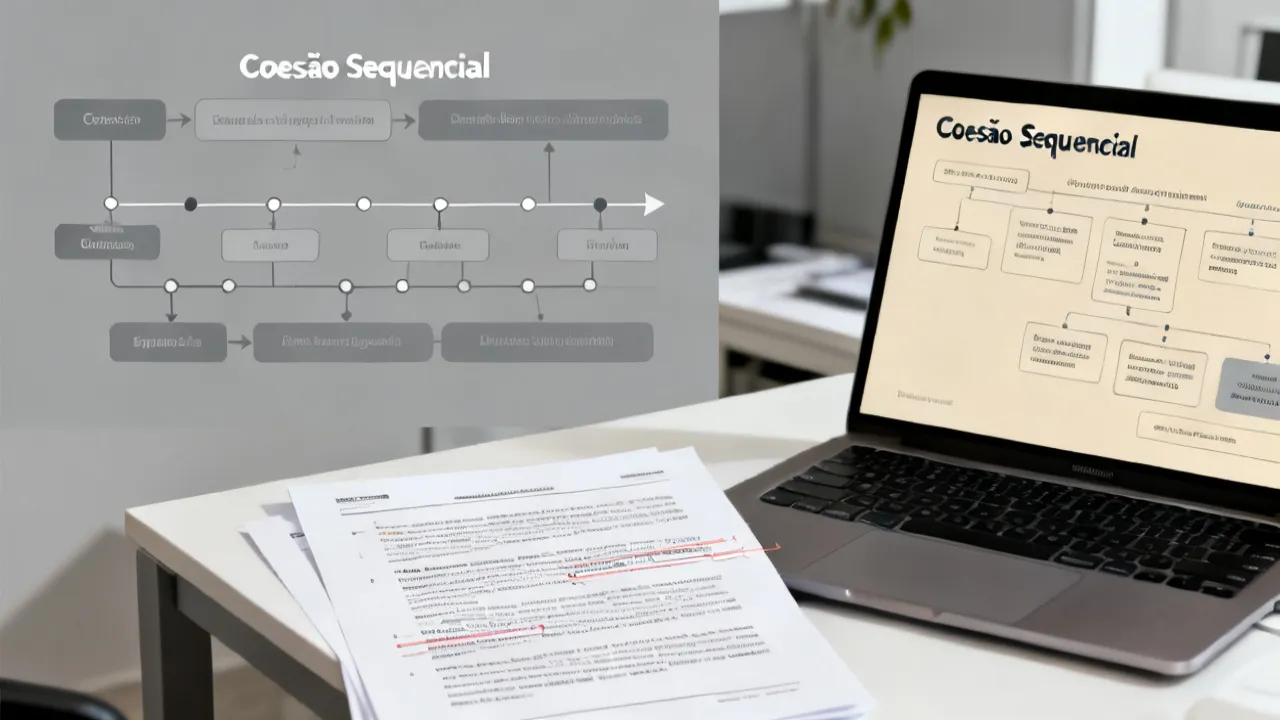
A coesão sequencial é a base para textos que “andam” com lógica, do início ao objetivo final. Este guia explica, de forma objetiva, o papel do encadeamento entre frases e parágrafos, como evitar saltos de sentido e como revisar a estrutura para dar clareza. Em seguida, apresenta condições práticas e respostas a dúvidas frequentes.