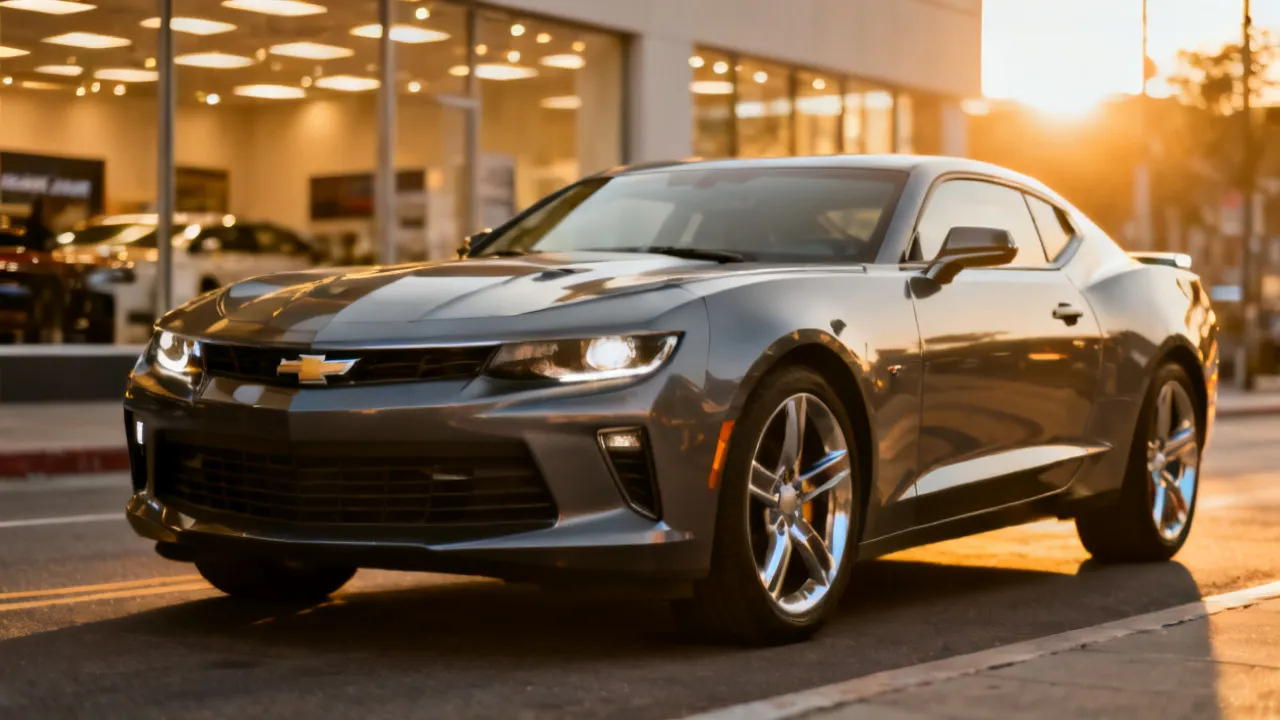
Buying a Camaro: Dealers, Deals, and Expert Tips
This guide explains how to research and buy a Chevrolet Camaro on sale with confidence, using major official trading platforms and dealer networks. It then outlines objective background context on the Camaro model line, current market considerations, and how “on sale” listings typically work. You’ll also find a practical checklist, requirements to verify, and FAQs to help reduce risk when shopping nearby.
Start Here: How to Buy a Camaro on Sale Safely
If your goal is a Camaro on sale, the fastest path is to (1) compare multiple reputable listings, (2) verify vehicle history and condition disclosures, and (3) confirm the final out-the-door price before committing. Unlike casual marketplace posts, official car trading websites typically standardize search filters (price range, mileage, location), dealer details, and key listing fields—so you can focus on meaningful differences between offers.
From an industry perspective, the very common mistake shoppers make is treating “sale price” as the final price. In practice, taxes, registration, documentation fees, reconditioning costs, and potential add-ons can materially change what you actually pay. Therefore, your priority should be to verify the total cost and the terms of the deal early—before negotiating or scheduling a test drive.
To buy a Camaro safely, you also want a process that limits emotional decisions. A performance car like a Camaro can create excitement quickly—especially when you see a clean photo set and a headline discount. But safe buying requires you to slow down at the right moments: when assessing the listing accuracy, when evaluating the inspection results, when reviewing paperwork, and when confirming the final number on the purchase agreement.
Think of it as moving through “gates.” At each gate, you either advance (because the evidence checks out) or you stop (because details conflict). This structure is especially useful when a listing claims it is “on sale,” “priced to move,” or “must sell.” Those phrases can be valid, but they can also be signals that the deal has hidden variables. Your goal is not to assume the seller is dishonest; your goal is to verify everything that affects risk and cost.
What “On Sale” Usually Means for a Camaro Listing
“On sale” can refer to a range of situations: dealer inventory promotions, manufacturer incentives (where applicable), pricing adjustments due to age of inventory, or vehicles priced to increase turn-over. For a Camaro, these listings may also vary by trim level (e.g., performance-oriented variants), model year, and demand patterns. Because demand can shift seasonally, a “good deal” is top evaluated against comparable vehicles (similar mileage, trim, transmission, and overall condition) rather than against a generic expectation of what a Camaro should cost.
In many markets, dealerships adjust pricing based on how quickly similar vehicles sell. If a particular Camaro configuration has lower demand—say, an uncommon color, a less popular transmission pairing, or a higher mileage threshold—its listed price may drop more aggressively than a more broadly desired configuration. That does not automatically mean it is a bad car. But it does mean you should compare more narrowly: match the configuration, not just the model name.
Some “on sale” listings are also influenced by reconditioning status. A car might be discounted because it still needs cosmetic work (paint touch-ups, interior detailing, wheel refinishing) or because the seller is waiting for minor repairs. In those cases, the actual cost to you can rise if you finance and the seller requires certain fees or add-ons to complete paperwork and preparation. Other times, a car is discounted because it has already been reconditioned and the listing price reflects that. Your task is to understand which scenario you are in.
Additionally, some sellers use promotional language differently. One dealer might call a vehicle “on sale” when it is simply listed at a competitive price. Another might use “on sale” to describe a short-term price reduction with an expiration date. A third might apply “on sale” to a bundle of incentives. None of those are inherently misleading, but each requires different questions and verification steps.
Objective Background: Why the Camaro Matters in the Used Market
The Chevrolet Camaro is widely recognized for its performance heritage and broad enthusiast following. That combination often translates into sustained interest across multiple buying segments—from value-focused used coupes to higher-demand trims that hold pricing more firmly. As a result, the Camaro can be a smart purchase when you match the right configuration with your budget and carefully validate condition.
In used-car shopping, buyers typically experience the biggest variability in:
- Vehicle history and maintenance records (service consistency, prior repairs, tire/brake wear patterns)
- Cosmetic condition (paint quality, body alignment, interior wear)
- Mechanical baseline (test-drive findings, inspection results, any warning lights)
- Documentation clarity (title status, disclosure language, warranty details if offered)
There is also the “enthusiast ownership effect.” Many Camaro owners enjoy the car and may invest in upgrades, performance parts, and maintenance beyond the bare minimum. That can be a positive—upgrades may enhance the driving experience and maintenance might be well documented. But it can also create complexity. For example, aftermarket modifications can complicate warranty coverage and inspection outcomes. A “clean” appearance can sometimes hide a history of modifications that affect reliability, emissions compliance, or resale value. That is why the same checklist you would use for any vehicle becomes even more important for performance models.
Another factor is that Camaros can have a broad range of “usage types.” Some are commuter cars with normal wear. Others are weekend toys with more frequent temperature cycles and seasonal storage. Both can be legitimate. The difference is how the car has been maintained. A relatively low-mile Camaro that has missing service records can be riskier than a slightly higher-mile one with consistent documentation.
Finally, the Camaro’s value is influenced by market trends and local inventory density. If you live in an area with fewer sports coupes listed, you might see fewer comparable deals, and pricing could remain firm. If you live in a region with lots of inventory, “on sale” pricing may reflect true competition. This is why comparing multiple listings is crucial: it reduces the chance you are reacting to one isolated discount that is not representative.
Where to Compare Camaro Offers: Official Car Trading Websites
To find credible Camaro listings on sale, start with established car trading platforms and dealer networks. The table below summarizes where you can search and what that platform generally supports. (Per your request, no links are placed inside the table.)
| Platform | Typical Search Value | How It Helps with Camaro Shopping |
|---|---|---|
| Cars.com | Broad dealer inventory and structured filters | Useful for comparing similar Camaro configurations near your target area and checking listing details consistently. |
| Carmax | Dealer-style inventory listings | Often supports a more standardized buying experience than individual listings, helping streamline comparison. |
| Caronsale | Multi-listing discovery approach | Helps broaden your shortlist of Camaro options that may be marked “on sale,” making cross-checking easier. |
| Autotrader | Large marketplace listings | Good for scanning pricing ranges and using search filters to refine results to your preferred Camaro trim and budget. |
Links of the information sources (listed immediately after the table):
source: www.cars.com ; source: www.carmax.com/cars ; source: www.caronsale.com/en ; source: www.autotrader.com.
Step-by-Step: Find a Cheap Camaro or Camaro on Sale
Below is a practical approach you can repeat every time you shop. It is designed to keep your process objective and to reduce the risk of “deal” traps (hidden costs, unclear condition, or inconsistent documentation).
1) Set a realistic budget and define “out-the-door” targets
Before searching, decide your maximum out-the-door spend. Because fees vary, treat the listed price as a starting point. If financing is involved, compare total monthly affordability alongside the total cost of the plan.
A more detailed approach is to estimate your out-the-door number using realistic assumptions:
- Taxes and local fees: These vary by state and sometimes by county/city. Use your local rate as a baseline, then confirm with the dealer or seller.
- Registration: Some sellers include it; others add it later.
- Documentation fees: Often unavoidable in dealer transactions, but the amount varies.
- Dealer add-ons: Look for items like nitrogen tires, paint protection, VIN etching, “appearance packages,” or extended service packages.
- Reconditioning charges: Some listings reflect that already; others show “subject to” prep.
If you do not know the exact local costs, create a buffer. For example, if your maximum budget is $28,000 out the door and you estimate taxes and fees at roughly 8–12% (varies widely), you might create a target list price of something lower than your max. Even then, confirm the exact breakdown later. The point is not precision at the first step; it is risk control.
Also decide your “deal structure.” Are you trying to pay cash, finance, or trade in? Trade-ins can complicate comparisons because the dealer might provide a high trade value but offset it by inflating the vehicle price (or adding fees). When comparing deals, aim to compare the purchase price and total fees separately from the trade-in story.
2) Search nearby using consistent filters
Use your selected platform’s filters for price range, mileage limits, and key options (transmission, drivetrain, trim). Keep the filters consistent across websites so you’re comparing apples to apples.
Expert note: Camaro buyers often focus too heavily on headline price. Instead, ensure the listings share similar mileage, trim, and major options—because those factors heavily influence total value.
To make comparisons easier, you can build a simple spreadsheet with columns such as: year, trim, mileage, transmission, location, listed price, and whether the listing includes a clean title or any accident disclosures. If your “deal” is truly better, it will still look good even when you compare across multiple fields.
You should also refine your search using likely high-impact features:
- Transmission: Manual and automatic demand can differ.
- Engine/variant: Some trims have engines with different performance and servicing costs.
- Wheels and tires: Tire condition and wheel damage can drastically affect near-term costs.
- Exterior color: Some colors are more common; others may have different pricing patterns.
- Interior condition: Leather vs cloth and known wear patterns can matter.
- Options packages: If you care about infotainment, driver assist, or performance packages, do not ignore them.
Finally, consider expanding radius slightly if the deals you find within 10 miles all look suspiciously similar. Sometimes a wider radius reveals either better inventory or fewer “bait” listings. The safe strategy is to build enough data points that outliers can be identified.
3) Create a shortlist of 5–10 vehicles, not 1
A shortlist helps you spot patterns. If one listing is dramatically cheaper than all others with similar specs, it may still be a great purchase—but it also warrants deeper verification (inspection, disclosures, and history checks).
When building the shortlist, include a “shadow list” of 3–5 additional vehicles that are close in price and spec. This prevents you from becoming emotionally attached to a single car. If the best deal fails inspection or the seller is unresponsive, you have backups ready.
As you shortlist, pay attention to listing quality. A well-constructed listing might include:
- Multiple angles of the exterior and interior
- Clear photos of wheels, tires, and the front/rear fascia
- Photos of the engine bay (where appropriate)
- Accident disclosure or repair notes if applicable
- Consistent odometer/mileage presentation
- Specific details about maintenance, not just vague statements
Low-effort listings can still be legitimate, but they demand extra diligence. Lack of information is not proof of wrongdoing; it is proof that you have to verify more aggressively.
4) Verify listing disclosures and vehicle history indicators
Check for accident reporting language, title status details, and service history availability. If a listing provides limited documentation, request clarification immediately rather than assuming it’s “fine.”
When evaluating disclosures, do not treat “minor accident” or “cosmetic damage” as automatically harmless. Instead, look for what was repaired, how it was repaired, and whether there is supporting documentation. If repairs involve structural work, frame damage, or repeated body work, that changes the risk profile.
Also, verify title status. Branded titles (for example, salvage or rebuilt) can be legal to buy depending on the jurisdiction, but they affect insurance costs, financing eligibility, and resale value. Even if a branded title is acceptable to you, you should go in with a clear understanding of the implications.
Vehicle history indicators are often limited to what the seller provides. To supplement, you can ask sellers for additional documentation such as maintenance receipts, inspection reports, or warranty transfer documents (where applicable). If the seller cannot provide anything and is unwilling to provide details, that can be a sign to pause.
Here are specific questions you can ask that tend to surface important answers:
- “Do you have service records or receipts for routine maintenance?”
- “Has the car ever been in an accident? If yes, what was repaired and do you have documentation?”
- “Is the title clean? Any branded status?”
- “Are there any active warning lights?”
- “Have tires and brakes been replaced recently?”
- “Any known mechanical issues or unusual noises?”
5) Request a third-party inspection when possible
For higher-value trims or performance-focused Camaros, an inspection can be especially valuable. Concentrate on items that are costly to correct: suspension wear, brake system condition, cooling system performance, and any evidence of repeated repairs.
Even with a strong listing, a professional inspection helps validate the story. Photos can hide issues. The inspection can also reveal safety risks and repair estimates that should influence your negotiation—or your decision to walk away.
If the seller agrees, you can coordinate the timing so the inspection happens before you commit to payment and before the deal becomes emotionally locked. Many buyers schedule the inspection after they secure an agreement, but you should attempt to make it conditional and affordable: in other words, clarify who pays and when you can back out if issues are found.
What should the inspection cover for a Camaro? While every inspection differs, consider requesting attention to:
- Suspension components: ball joints, control arms, shocks/struts, bushings
- Brake system: pad thickness, rotor condition, caliper condition, brake fluid condition
- Tires: tread depth and even wear patterns (uneven wear may indicate alignment or suspension issues)
- Cooling system: hoses, radiator condition, fan operation
- Underbody: leaks, corrosion, damage history
- Electrical: check for diagnostic trouble codes (DTCs) and any sensor issues
- Test-drive validation: vibrations, steering alignment drift, transmission behavior
- Aftermarket modifications: look for evidence of performance tuning, exhaust modifications, or suspension changes that might affect reliability
If the car has been modified, the inspection should specifically note whether modifications appear professionally installed. Poor installation can be a red flag. Also ask whether modifications are associated with any tuning that could affect engine health or drivability.
6) Confirm final pricing and negotiation terms
Ask the dealer or seller to provide the breakdown of fees and any add-ons (documentation, dealer-installed options, warranties, or service packages). If you plan to finance, ask whether dealer incentives affect the final price or only the payment calculation.
To keep negotiations safe and clean, insist on clarity. You want the numbers that define the deal:
- Vehicle price: base sale price before fees
- Documentation fee: confirm the exact amount
- Taxes and registration: confirm the exact estimates or calculations
- Any add-ons: confirm whether optional items can be removed and whether they are required
- Warranty terms: whether it is included or an add-on, and whether it has transferable coverage
Be cautious with “payment-based” negotiations. Sellers often discuss monthly payments rather than total cost. Two deals can have similar monthly payments while having very different total costs depending on down payment, APR, and term length.
If you have a trade-in, ask for an itemized breakdown. Ideally, the purchase agreement should show the trade-in value separately so you can compare deals fairly.
One more point: if the listing says “sale price includes incentives,” confirm whether you meet eligibility requirements. Incentives sometimes require financing through the seller, specific credit tiers, or a limited timeframe. If the incentive does not apply to you, the “sale price” can change.
7) Test drive with a structured checklist
During the test drive, evaluate:
- Cold start behavior (if possible)
- Steering response and straight-line tracking
- Brake feel (no vibration, consistent pedal)
- Transmission shifts (if automatic) or clutch feel (if manual)
- Noise and vibration at typical speeds
Then repeat key checks after a short stop—confirm whether any warning indicators appear under load or during restart.
To make the test drive more effective, plan a simple route that includes both low-speed and highway conditions. You want to experience:
- Low-speed turns to detect steering play or suspension noises
- Acceleration to feel driveline smoothness and check for hesitation
- Braking from multiple speeds to confirm consistent braking performance
- Downshifts or gear transitions (if automatic) for smoothness
If you can, bring a phone or use the car’s display to record any warning messages (if they appear). Also pay attention to smells—burning odors, coolant smell, or excessive fuel odor can be signals that should be investigated.
For manual transmissions, listen for clutch chatter and evaluate pedal engagement. For automatics, look for delayed engagement or harsh shifts. For both, note how the vehicle responds under moderate throttle—roughness at steady power can sometimes hint at drivetrain or engine issues.
Industry Comparison Table: Conditions and Requirements When Buying on Sale
The table below summarizes typical requirements and conditions that matter very when you’re selecting a Camaro on sale. Use it as a pre-purchase checklist when contacting sellers.
| Buying Condition | What to Verify | Why It Matters |
|---|---|---|
| Pricing claims | Sale price explanation, included fees, promo eligibility | Prevents surprises that change the out-the-door total. |
| Vehicle history | Accident/claim disclosures, service records availability | Helps gauge good reliability and repair risk. |
| Inspection access | Willingness to accommodate a pre-purchase inspection | Supports a risk-controlled purchase decision. |
| Title and documentation | Title status, transfer details, any branded-title notes | Avoids registration and resale complications. |
| Warranty and return policy | Coverage scope, limits, and time/mileage rules | Determines how much uncertainty you carry after purchase. |
| Financing terms | APR, term length, and any dealer add-ons | Ensures the payment plan matches your total budget. |
Where to Evaluate Value Beyond “Cheap”
For a Camaro, “cheap” can be either a true value opportunity or a sign of hidden work. Instead of chasing the lowest sticker price, evaluate value through:
- Specification fit: transmission preference, seating practicality, and performance needs.
- Condition consistency: whether cosmetics, tires, brakes, and interior wear suggest the same ownership story.
- Maintenance readiness: whether routine service appears documented and recent.
- Verification quality: how transparent the seller is about defects, repairs, and history.
To evaluate consistency, compare the vehicle’s physical wear to its claimed mileage. For example, unusually worn seats, faded steering wheels, or deeply worn pedals may not match low miles. Also compare tire wear patterns: aggressive inner wear can indicate alignment problems that might have been ignored. Those are not automatic deal killers, but they influence negotiation.
Another value factor is what you can reasonably predict after purchase. If the tires are near the end of their life, you might face a near-term replacement cost. If the brakes are worn but not yet metal-to-metal, you might need to budget maintenance soon. A cheap listing might still be a good deal if these upcoming costs are factored into your total price and you are willing to handle them.
Consider also the “comfort and usability” side. A Camaro is not only about performance; it is also about how it fits your daily life. If you plan to commute, evaluate cabin noise levels, visibility, and how the car behaves in stop-and-go traffic. If you plan to road trip, evaluate seating comfort and whether the infotainment system and navigation work properly.
Finally, value is influenced by financing structure and warranty. A car that costs a little more upfront but includes a strong warranty coverage might be safer than a car that is cheaper but has uncertain maintenance history. Safe buying is not only about price—it is about reducing the probability of expensive surprises.
Expert Negotiation Principles for Camaro on Sale Listings
Negotiation is very effective when you anchor it in documented information. Here are grounded principles commonly used by experienced automotive retail analysts:
- Use comparable listings rather than emotional benchmarks (“I saw a cheaper one”).
- Connect offers to verification outcomes (inspection findings, missing service records, condition notes).
- Ask for clarity on add-ons and decide which items you truly need.
- Negotiate the total price, not only the monthly payment.
To negotiate confidently, prepare a “deal case” before you talk to the seller. Your case can include:
- Comparable listings in the same radius with similar mileage and trim
- Evidence from the inspection (or from your own observation during the test drive)
- Any missing documentation or uncertainty about repair history
- Any identified wear items you expect to replace soon (tires, brakes, fluids)
Then set your target price range. For example, you might have a “walk-away” number and a “reasonable” number. This prevents you from getting pulled into pressure tactics when the seller says “we can do it if you sign today.” Pressure is common in car sales; your job is to decide based on verified value, not urgency.
Also, negotiate add-ons separately. If a seller offers an extended service plan, ask for details: coverage terms, exclusions, time/mileage limits, and whether it can be canceled or transferred. If you decide you do not want it, ask for the price without the add-on. A safe approach is to evaluate your willingness to pay for each optional item individually.
Finally, remain polite and consistent. If you are respectful, you reduce the chance the seller reacts defensively. But you should be firm about your “out-the-door” focus. Sellers sometimes comply when you clearly request a breakdown and compare the total number.
FAQ: Buying a Camaro on Sale
Q1: Where is the top place to search for a Camaro on sale?
Reputable car trading platforms and dealer inventory websites are typically the very efficient starting points, because they provide structured filters, consistent listing fields, and clear dealer/seller identities. In this guide, examples include Cars.com, Carmax, Caronsale, and Autotrader.
Q2: How can I find a “cheap Camaro” without sacrificing too much quality?
Search nearby with consistent filters (price, mileage, trim), shortlist multiple vehicles, and verify history and condition disclosures. A lower price becomes a “deal” when it aligns with verified factors such as needing minor cosmetic work or having higher mileage—without major red flags.
One practical tactic is to define categories of “acceptable cheapness.” For instance:
- Acceptable cheaper: older model year within your range, high but documented maintenance, normal wear items, minor cosmetic flaws disclosed clearly
- Questionable cheaper: low price without documentation, unexplained missing service history, vague accident statements, frequent relisting, unclear title status
When you categorize, you can make better decisions under time pressure.
Q3: What documents should I request before buying?
Request the title/transfer details, service history if available, and any disclosures related to prior repairs or accidents. If an inspection is planned, ask for access and scheduling requirements.
It is also reasonable to request:
- Any warranty documents (especially if the car is still within factory coverage)
- Receipts for major work (brake jobs, transmission service, engine work)
- Information about tire and brake replacement dates
- If applicable, documents related to aftermarket modifications (install receipts or tuning information)
Q4: Should I get a pre-purchase inspection for a Camaro?
Yes, especially when the price is unusually low compared with similar Camaros. A professional inspection can identify issues that aren’t obvious in photos or during a short test drive.
If the seller refuses an inspection or insists on skipping it, treat that as a meaningful data point. While some legitimate sellers decline due to logistics, your safe approach is to understand why and whether they will compromise by allowing at least a mechanical evaluation. If they cannot provide any inspection alternative, it may be safer to walk away.
Q5: Are “sale price” listings always the final price?
No. You should confirm taxes, registration, documentation fees, and any add-ons. Experienced buyers treat the out-the-door total as the real decision metric.
To avoid surprises, request the fee breakdown in writing (even if it is a preliminary quote). You want to ensure there are no “catch-all” fees that appear later in the finance office.
Q6: How do I compare two different Camaro trims fairly?
Compare like-for-like: match transmission and core configuration, then evaluate documented condition differences. If specs diverge substantially, use the seller’s description and verification materials to understand whether the price difference is justified.
For example, a trim with performance packages may require premium tires or more frequent inspections depending on usage. Similarly, a higher trim may have more electronics and sensors, which can cost more to repair if something fails. When comparing trims, consider both the purchase cost and the expected cost of ownership.
Q7: What should I do if a listing seems suspiciously underpriced?
Proceed cautiously. Ask for clarification, verify history and title status, and strongly consider an inspection. If the seller is unwilling to provide transparent answers or workable verification steps, it’s reasonable to remove the vehicle from your shortlist.
Suspicious underpricing can also be explained by legitimate factors—like a need for urgent sale, a missing second key, a difficult-to-fix cosmetic issue, or a backlog in reconditioning. That’s why your questions matter. But if the seller responds with evasiveness, refuses inspection, or changes the story when you ask for documentation, you should treat the discrepancy as a risk indicator rather than an opportunity.
Q8: Can I buy a Camaro online, then inspect it locally?
In many cases, you can coordinate test drives and inspections through the dealer or seller’s process. Confirm logistics early: where the vehicle will be available, whether third-party inspection is allowed, and what fees apply if financing or documentation steps require a physical presence.
If the listing is far from your location, plan travel costs into your budget so you can still make safe decisions. A “cheap” Camaro that requires expensive travel to inspect might not be a good deal unless you confirm details before traveling.
Also consider whether you can schedule a pre-purchase inspection at a facility near the seller location rather than relying solely on a local shop. Some shops require the car to be physically on their premises, and some sellers may have restrictions. Plan logistics early to avoid delays.
Additional Safety Steps Specific to a Used Camaro Purchase
Beyond the foundational steps above, there are additional safety layers that can be especially valuable when buying a Camaro on sale. These steps focus on reducing risk related to common issues in used performance cars and on preventing the most common “paperwork and cost” surprises.
Confirm the Vehicle’s “Current Condition Story,” Not Just the Photo Story
Photos can be flattering. Even honest sellers can inadvertently present images that do not reflect current reality—dirty brakes, worn tires, or minor but significant exterior blemishes. A safe buyer tries to reconcile photo story with real condition by asking targeted questions and verifying in person.
When you inspect the vehicle, compare:
- Brake dust and rotor condition (if visible)
- Wheel condition (curbing, cracks, or repaint overspray)
- Tire tread and whether it looks even across axles
- Interior wear (steering wheel, shifter, bolsters on seats)
- Underbody leaks (oil/coolant stains, wetness around components)
If the photos suggest a pristine car but the physical condition suggests heavy wear, you should treat that as a mismatch. Ask for updated photos or additional documentation if needed.
Check for “Repair Language” That Doesn’t Match the Visible Reality
Disclosures can sometimes be too broad. For example, “accident repaired” may be stated without details. Safe buying means you ask for more specifics until you can connect the repair language to physical evidence.
If there was a front-end impact, look for signs like mismatched paint on panels, different-looking headlights, uneven panel gaps, or a radiator/condenser replacement indicated by receipts. If there was a rear impact, inspect the trunk alignment, taillight fitment, and exhaust/underbody components (depending on the exhaust configuration).
If the seller cannot provide details, you are still allowed to request a professional inspection. Often, inspectors can detect signs of structural repair or paint inconsistencies that general buyers might miss.
Understand Insurance and Financing Implications Early
A Camaro on sale might still be expensive to insure, especially for certain age groups, certain trim levels, or certain performance variants. Before you sign paperwork, call your insurance provider with the exact VIN (or request it from the seller). Getting an insurance quote can prevent a budget mismatch.
Financing implications also matter. Some branded titles, missing documentation, or unusual states of readiness can affect financing eligibility. Even if the vehicle is technically for sale, not every lender will approve every vehicle configuration.
In safe buying terms: confirm financing approval before you rely on a promised payment number. Do not assume the lender will approve the terms until you see the final quote.
Beware of Add-On Pressure in the Finance Office
Even when the online listing looks clean, dealerships can add optional products later. Add-ons can include extended warranties, gap insurance, service plans, or cosmetic/appearance packages. These products can be legitimate, but they are often negotiable—or at least should be disclosed clearly.
To stay safe:
- Ask for an itemized breakdown of all add-ons.
- Ask whether each add-on is required or optional.
- Ask whether any add-on can be removed without changing the “sale price” structure.
- Do not sign paperwork until you confirm the out-the-door amount matches your target.
Never be rushed into signing. A safe deal requires time to read the final paperwork and verify the numbers.
For Performance Trims: Ask About Driving Style and Maintenance Intervals
Performance Camaros may have been driven in ways that influence wear. Aggressive driving can increase brake and tire wear, accelerate suspension wear, and stress cooling systems. Safe buying means you ask the seller how the car was used.
Questions that can reveal helpful information:
- “Was the vehicle driven mostly on highways, or did it see spirited driving?”
- “How often were oil changes done, and do you have receipts?”
- “Have brakes and tires been replaced? If yes, when?”
- “Any track days or high-stress use?”
If the car had track-style usage, consider that the cooling system and brake system might be different than typical commuter wear. That does not automatically disqualify the car, but it should influence inspection focus and your negotiation.
Inspect for Aftermarket Parts and Tune Records
Many enthusiasts customize their Camaros with aftermarket exhaust, wheels, suspension kits, intakes, or performance tunes. Some modifications can be beneficial and professionally installed. Others can reduce reliability or increase risk if not maintained.
A safe approach is to ask:
- “What modifications have been done?”
- “Do you have receipts or install documentation?”
- “Has the car been tuned? If yes, do you know what tune and how it was applied?”
- “Is there any risk of warranty voiding on the components?”
During inspection, look for signs of hack-installation: mismatched wiring, loose clamps, improper routing, and unusual fluid contamination. If you find modifications, consider whether you’re comfortable with the associated risk and cost to maintain those upgrades.
Review the “Service Readiness” Indicators Before You Negotiate Hard
Before you negotiate, make sure you understand what you may need to fix soon. Service readiness indicators include recent oil change documentation, recent brake replacement receipts, tire tread life, alignment evidence, and whether any major fluids were recently addressed.
Even if the car is “on sale,” you should not negotiate as if it is problem-free. If the seller can provide evidence of maintenance, that supports the idea that the discount reflects fair market value. If they cannot provide it and the car shows wear, then you can justify a lower offer based on expected maintenance costs.
Plan Your Offer Strategy Around Your Inspection Results
Safe negotiation often works best when your offer strategy is staged. For example, you can agree on a purchase price contingent on inspection outcomes. If issues are discovered, you adjust your offer based on actual repair estimates.
Staged negotiation reduces the risk of overpaying due to time pressure. Sellers might want you to commit quickly. But safe buying should still be evidence-driven. If you build contingencies, you create room to protect yourself.
Keep Communication Clear and in Writing Where Possible
When buying a Camaro on sale, communication matters. Request answers in a way you can verify. If you ask for a photo of the undercarriage, ask for it. If you ask for service receipts, request copies. If you ask about title status, request it in text or in a documented statement.
Keeping communication clear helps you avoid confusion and prevents “he said, she said” situations. It also helps you prove what was promised if a dispute arises later.
Final Checklist Before You Commit
- Confirm the out-the-door price and fee breakdown.
- Verify vehicle history disclosures and title status.
- Compare against similar Camaro listings with matched specs.
- Schedule a test drive and, when possible, a pre-purchase inspection.
- Read the full terms for warranty/coverage and any return options.
- Verify insurance estimate using the VIN before you finalize (especially for higher trims).
- Ask whether any add-ons are removable and confirm what is included vs optional.
Disclaimer
1) The above information comes from online resources, and the data is as of October 2023.
2) For more information, please refer to the official website.
Reference Links
-
1

A Guide to Cost-Efficient Small Electric Cars for Seniors
-
2
Mastering Debt Consolidation: Boost Your Credit Score and Manage Interest Rates
-
3
Your Guide to Loans, Credit Checks, and Interest Rates
-
4
Affordable Independent Living: Finding the Right Senior Housing
-
5
Guide to Senior Living Apartments: Affordable and Comfortable Environments