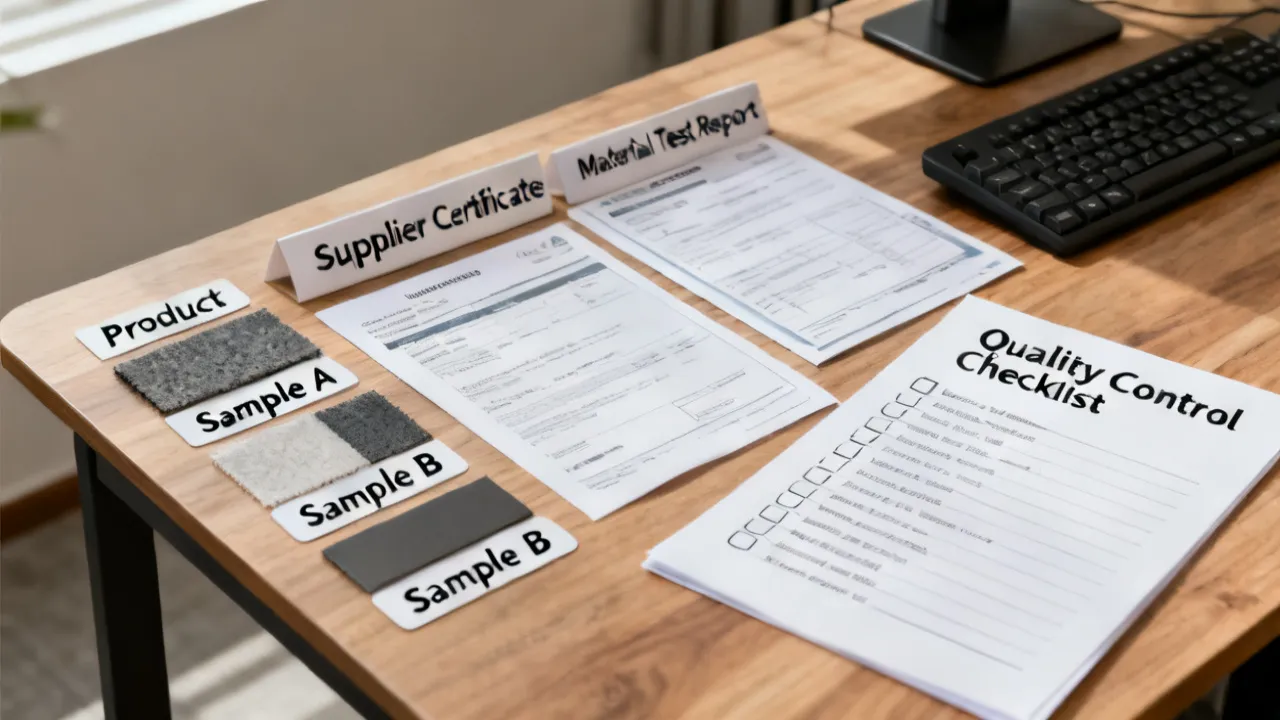
Evelyn Cristine Guide: Supplier, Pricing, and Selection
This guide explains how to evaluate Evelyn Cristine offerings by comparing supplier credentials, pricing patterns, and purchase conditions before committing. Evelyn Cristine is used as a brand reference in skincare and personal-care discussions, where buyers typically weigh product authenticity, ingredient clarity, and fulfillment reliability. The article provides an objective framework for sourcing decisions and practical requirements.

Why This Guide Matters for Evelyn Cristine Sourcing
If you’re considering Evelyn Cristine products, the very important step is not simply finding a good-looking offer—it’s verifying supplier reliability, understanding pricing logic, and confirming purchase conditions before ordering. This article provides an objective, expert-style approach to evaluating options so you can choose based on traceability, documentation quality, and predictable fulfillment practices. The goal is simple: reduce the chance that you receive a different variant than expected, a product with unclear sourcing, or an order you can’t resolve easily if something goes wrong.
Many consumers assume “a brand name” is enough. In reality, the buying experience for skincare and personal care depends heavily on how the product is sourced and represented in listings. Even if the name is the same, “Evelyn Cristine” offers you may see in the market can differ in size, formulation line, batch/lot handling, packaging format, region-specific labeling, and warranty/return terms. Your best protection is not skepticism for its own sake—it’s a repeatable verification process that treats pricing and listing content as leads you must confirm.
This guide is written to help you think like a careful buyer: you’ll learn how to evaluate supplier credibility, how to interpret pricing differences without overreacting, and what conditions to check so you understand your real risk. Where applicable, it also addresses the common desire to purchase from “nearby” sources (and why “nearby” isn’t a magic safety shield). You’ll also find a comparison table and a step-by-step workflow you can use for any specific Evelyn Cristine purchase you’re considering.
Background: What “Evelyn Cristine” Typically Represents in Consumer Sourcing
The name Evelyn Cristine appears in consumer conversations as a brand reference within skincare and personal-care procurement. In these markets, buyers often seek clarity on three operational questions: What exactly is being sold?, Where does it come from?, and What conditions apply to the transaction? While product formulas and claims vary by specific item, the sourcing process usually follows a similar pattern: identify the exact product SKU, check whether the supplier provides verifiable documentation (such as batch/lot references or packaging consistency), and assess whether pricing reflects legitimate distribution rather than opaque “market” pricing.
When a brand is discussed frequently in online marketplaces, multiple seller types tend to appear. Some sell genuine inventory obtained through authorized distribution. Others may be resellers, wholesalers, or independent distributors. Some stores may sell the product as part of a curated retail shelf, while others may fulfill orders using warehousing and subcontracted shipping carriers. A careful buyer’s job is to understand which operational model a seller is using—because that operational model influences how reliably you can confirm what you purchased and how quickly and fairly issues get resolved.
In typical personal-care sourcing, the product you receive is only one part of the transaction. There is also a chain of custody: where the item was stored, how it was packaged for shipment, whether seals were preserved, and how the seller handles returns. For skincare and personal-care goods, those factors matter practically because you may need to confirm authenticity, expiration status, storage suitability, and whether sealed items remain eligible for return in case of transit damage.
Another point that confuses many shoppers: brand names and line names sometimes overlap in consumer conversations. People may refer to “Evelyn Cristine” even when the item is part of a specific sub-line (for example, a hydrating serum line, a cleansing line, or a targeted treatment line). Your supplier may use a slightly different naming convention in its listing. That’s why the verification step must be anchored to the exact listing details (product name, size/volume, and packaging). The best sellers present this clearly; less reliable ones may use shorthand labels, vague descriptors, or inconsistent variant naming.
Critical Evaluation: Pricing Isn’t Just a Number
When shoppers compare “price” for Evelyn Cristine, they’re usually comparing multiple layers of cost that can include sourcing channel, packaging type, import or logistics complexity, and the supplier’s margin strategy. Because pricing can shift across regions and seasons, the very reliable approach is to treat price as a proxy signal—use it to guide further checks rather than to make a final decision on value alone.
It’s tempting to assume the lowest price must be the best deal. But in many procurement contexts, low pricing can result from legitimate reasons (for example, bulk purchasing discounts, clearance cycles, or stable authorized supply) or from less desirable reasons (for example, inconsistent documentation, unclear sourcing origin, older inventory, or ambiguous return terms). Since you can’t safely deduce which scenario applies just by looking at the number, your process should be: “price is a trigger for verification, not a shortcut to certainty.”
To interpret pricing differences more accurately, consider what typically changes between sellers:
- Channel and procurement route: Authorized distribution often costs more but comes with more predictable handling and documentation. Wholesalers and resellers may be competitive but can vary in how well they document batch/lot and packaging consistency.
- Unit size and net content: Two listings may both say “Evelyn Cristine serum” yet one may be 30 ml and another 50 ml. Small unit differences create big price differences, especially when converted into cost per milliliter.
- Packaging format: Retail boxed packaging, protective sleeves, sealed pumps, and travel-friendly caps can differ. If one seller ships in a different packaging format, it may indicate a different stocking or repackaging approach.
- Fulfillment and shipping: A seller may offer a lower base price but charge higher shipping or handling fees. In some cases, duties, taxes, or special handling charges apply at checkout.
- Risk pricing: Sellers that reduce your risk through clear returns may reflect that in their pricing. Meanwhile, sellers that have restrictive dispute terms may show lower prices but shift risk onto the buyer.
What to look for in any supplier quotation:
- Exact item identification: confirm the precise product name and size (e.g., 30ml vs 50ml). Even small differences can explain large price gaps.
- Packaging consistency: verify whether the listing describes sealed retail packaging, labeling language, and whether it matches the seller’s stated sourcing method.
- Shipping and handling: a lower base price can become more expensive after shipping, duties, or special handling charges.
- Customer support pathways: credible suppliers typically provide clear contact methods for order and delivery questions.
- Total cost transparency: check whether the listing states all costs upfront or if unexpected fees appear only during checkout.
Industry note: Reputable distribution models generally reduce uncertainty. In personal-care supply chains, that often correlates with better documentation quality and fewer “mismatched item” complaints—not always with the lowest number. A smart buying decision compares total value, not only base price.
One additional way to interpret price: consider the “too-good-to-be-true threshold.” If a price is dramatically below every other comparable offer and the seller provides thin listing details, you should treat that as a potential warning sign. The goal is not to accuse anyone of wrongdoing automatically—it’s to avoid making blind assumptions when verification information is limited.
Supplier Reliability: How to Assess Without Guesswork
Because Evelyn Cristine buyers may encounter multiple seller types—retail marketplaces, authorized distributors, wholesalers, and third-party resellers—your goal should be to determine whether the supplier can consistently provide traceable, accurate product information.
The most reliable suppliers behave similarly across their offerings. They don’t change naming conventions drastically from one listing to another; they provide consistent descriptions; and their customer support answers questions in a way that shows they understand the specific item. Meanwhile, unreliable suppliers often show inconsistency—vague names, mismatched sizes, delayed responses, or generic return/dispute language that doesn’t address personal-care sealed item conditions.
Expert checks you can perform:
- Transparency of product details: listings should clearly specify variant, size, and key labeling indicators (as applicable). Look for information that maps to real packaging—e.g., volume in ml, packaging type (bottle/jar/pump), and variant names as presented on the product.
- Consistency across listings: a supplier that describes the same product similarly across multiple SKUs often demonstrates tighter operational control.
- Return and dispute process: credible suppliers publish readable terms on how returns/refunds are handled for incorrect or damaged items. Pay special attention to whether they differentiate between “opened” and “sealed” items.
- Fulfillment reliability: assess whether delivery estimates are realistic and whether the supplier provides tracking where possible. Tracking is not just convenience—it’s proof of shipment and timeline accountability.
- Responsiveness: if the seller has a “contact us” method, test it with a factual question. For example: “Can you confirm the exact size (ml) and whether the item is sealed retail packaging?” Reliable sellers can answer.
- Documentation availability: some suppliers can provide receipts/invoices or batch/lot information. Even if not always provided automatically, their willingness to clarify matters.
Supplier reliability also shows up in what happens after a problem occurs. Think proactively: if you receive the wrong variant or the packaging arrives damaged, will you be able to resolve it quickly? Sellers who invest in clear policies, clear evidence requirements, and reasonable dispute timelines generally deliver a better buying experience.
A practical rule: if you can’t find clear policy terms before purchase—or if the terms are written in a way that suggests you will have difficulty claiming a refund when items arrive damaged—you should consider that as part of the pricing and value equation. In other words, “low price” plus “uncertain dispute resolution” may actually be an expensive outcome.
Local Purchasing Considerations (“nearby” Focus)
The location phrase rules in your request require that any explicit city/country references be replaced with "nearby." If you are buying Evelyn Cristine products from stores or suppliers in your area, the practical difference is often logistics: local availability can reduce waiting time and may improve return handling for damaged goods. However, “nearby” purchasing still requires the same diligence—especially if the seller’s supply chain origin isn’t clearly stated.
Many buyers assume that buying “nearby” automatically reduces risk. It can reduce some risks (for example, you may have the option to return in person, or you can inspect packaging before purchase). But risk doesn’t disappear completely because you still need to confirm what product variant you’re buying and whether packaging seals and labeling align with the listing or shelf presentation.
Cultural nuance for local consumers: In many regions, buyers prefer seeing the physical packaging before purchase or prefer suppliers who can explain usage and storage conditions. Treat this as an advantage: when staff can answer product questions accurately and reference the exact item details, it tends to reduce the risk of ordering the wrong variant.
If you’re shopping locally, consider doing a “packaging verification” step at the point of sale:
- Check the product name and size as printed on the label or box.
- Inspect seals and ensure caps/pumps appear intact and unbroken.
- Look for lot/batch and expiration information if available and legible.
- Confirm the storage and usage instructions if those details are present on the packaging.
- Keep proof of purchase (receipt or invoice) because many returns depend on it.
Another local factor: inventory turnover. In some “nearby” shops, older stock may remain on shelves longer than online stores rotate through shipments. That doesn’t automatically mean the product is bad—it means you should check expiration and batch information when possible. A supplier who can clearly show batch handling and rotation practices is often a better long-term choice.
Conditions and Requirements Before You Buy
Even when consumers focus on price, conditions determine the real cost of mistakes. For Evelyn Cristine purchases, consider whether the supplier imposes any constraints related to returns, authenticity guarantees, or delivery eligibility. If the offer includes unusual conditions (for example, restrictive refund windows or unclear item descriptions), those are decision factors on par with price.
Conditions usually fall into several categories. You should treat each one as a “risk lever.” If one lever is unfavorable, your expected value of the purchase changes—even if the base price looks good.
Minimum requirements (practical checklist):
- Confirm the exact product variant and size.
- Check whether the supplier provides order documentation such as receipts/invoices and tracking information.
- Review whether the supplier’s return/refund policy applies to sealed personal-care items in case of transit damage or incorrect shipment.
- Assess delivery terms and timelines, especially for orders shipped into/within “nearby” areas.
- Check what happens if the item arrives damaged: do they require photos, the original packaging, or a specific return window?
- Review whether the supplier offers any authenticity guarantee or clarifies sourcing terms (even in general wording) to reduce uncertainty.
Because personal-care items can be regulated differently by jurisdiction, some sellers impose strict hygiene-related policies. That’s common, but you should still look for clear exceptions when transit damage occurs or when the seller delivers the wrong item. The best sellers balance consumer protection and hygiene constraints with clear, fair resolution procedures.
What “unusual conditions” can look like:
- Returns only accepted if the item is unused and the seal remains unbroken, with no clear procedure for damaged seals on arrival.
- Refund windows that are so short they conflict with delivery timelines.
- Policies that blame the buyer for “shipping issues” without describing evidence requirements.
- Listing descriptions that omit the exact size or variant and then require the buyer to prove what they “thought they ordered.”
- Dispute processes that are buried behind multiple links or that require the buyer to contact external channels.
When you identify these conditions before paying, you can decide whether the seller is acceptable for your level of risk tolerance. If you’re not comfortable with the dispute terms, you can choose a different supplier even if the price is slightly higher.
Comparison Table: Sourcing Options, Documentation Signals, and Trade-offs
| Sourcing route | Typical documentation signal | Pricing pattern you may see | Key requirements/conditions to verify |
|---|---|---|---|
| Authorized/official distribution | Clear product naming, consistent packaging description, and predictable order handling | Often mid-to-upper range, but more stable | Confirm authorization status where applicable; verify item variant and size; review returns policy |
| Wholesaler/reseller | Product details may be detailed, but documentation can vary by supplier | Can be competitive; may vary by batch/stock | Ask for clarity on sourcing origin; verify batch/lot or packaging consistency if described |
| Marketplace third-party seller | May show varying quality of listing descriptions | Wide range due to different margins and fulfillment channels | Prioritize sellers with consistent listing accuracy; confirm return/dispute process before purchase |
| Local “nearby” retail shop | Packaging can be inspected in person; staff explanations can add context | May include store overhead; not always the lowest | Inspect packaging seals/labels; confirm the exact product name; keep proof of purchase |
| Local “nearby” online order with local pickup | May combine online listing details with in-person inspection | Sometimes competitive; pickup can reduce shipping fees | Verify pickup conditions; confirm return/exchange rules for sealed items |
Use the table as a decision scaffold. The key is to not treat it as a rigid rule like “authorized is always best.” Instead, treat each row as a set of likely strengths and likely weaknesses. Then apply your checklist: variant verification, packaging consistency, documentation signals, return policy clarity, and fulfillment reliability.
Step-by-Step Guide: How to Choose Evelyn Cristine With Confidence
Below is a structured process you can follow for Evelyn Cristine purchases, designed for decision clarity rather than hype. The steps are intentionally practical: each one targets a common failure point (wrong variant, unclear sourcing, unexpected costs, or inability to resolve a dispute).
- Identify the exact item: Write down the full product name and size. Many purchasing mistakes come from confusion between variants. If you have a prior bottle/box, match the naming and volume exactly to what’s shown on the listing.
- Compare like-for-like pricing: Ensure you’re comparing the same size and packaging type. If prices differ, treat it as a reason to investigate rather than automatically accept the lower figure. Calculate cost per ml or cost per unit if sizes differ to normalize the comparison.
- Verify supplier credibility: Look for clear business information, consistent product descriptions, and a straightforward order support mechanism. Confirm whether the supplier provides invoices/receipts and tracking information where applicable.
- Review conditions: Check return eligibility (especially transit damage or wrong-item scenarios), delivery timeline realism, and any limitations stated in policy pages. Confirm what evidence is required for a claim (photos, packaging, order number).
- Assess listing documentation quality: Suppliers that provide consistent, specific item descriptors reduce the risk of mismatch. Be cautious when you see vague phrases like “same as picture” without confirming variant, size, or packaging format.
- Confirm “nearby” logistics if applicable: For local sourcing, ensure you understand opening hours, return handling, and whether sealed personal-care items can be returned under stated conditions. If pickup is offered, verify any time limits and what the store requires for refunds/exchanges.
- Keep proof of purchase: Receipts/invoices and order confirmations help resolve disputes and simplify after-sales support. For online purchases, keep screenshots of the listing details and order summary as well.
- Check expiration/batch information if available: Where the product packaging exposes lot/batch and expiration details, verify that the remaining shelf life meets your needs. If a seller can’t confirm expiration windows, consider that a risk factor.
- Validate shipping/packaging integrity: If you’re concerned about transit damage (common for glass bottles, pumps, or fragile caps), ensure the seller describes protective packaging. When possible, choose shipping services with tracking.
- Conduct a “post-arrival verification”: When your order arrives, check the package integrity, the product name/size, the seal condition, and lot/expiration information (if visible). If there’s an issue, document immediately before removing seals.
Many buyers stop at step 3 (choose the cheapest listing) or step 4 (place the order). But the additional steps—especially verifying batch/expiration information and preparing for post-arrival verification—are what separate reliable purchases from frustrating experiences.
Industry Context: Why Objective Sourcing Matters
In the broader personal-care industry, consumer confidence often hinges on consistent fulfillment and transparent product presentation. While regulatory requirements vary by jurisdiction, suppliers generally benefit from clear product labeling and reliable distribution practices. For buyers, that means your purchasing outcomes depend on supplier operational quality as much as on product formulation.
To understand why objective sourcing matters, it helps to see the buyer’s perspective as a chain of responsibilities. When you purchase a personal-care item, you’re relying on the seller to act as an intermediary who correctly identifies the product, stores it properly, ships it with adequate protection, and resolves any errors. When that chain is weak, you become the one responsible for correcting problems after the fact—often under time limits and with documentation burdens.
Objective sourcing also supports better consumer outcomes because it reduces uncertainty around:
- Authenticity and sourcing consistency: accurate naming and consistent packaging descriptions align with the expectation of a stable supply source.
- Variant correctness: the most common fulfillment errors are simple mix-ups of size or variant rather than “completely different product types.” Those errors are preventable when listings are precise.
- Condition of the item: sealed items that arrive with broken seals are a practical hygiene problem and may create dispute complexity. Sellers who pack well and document clearly reduce these occurrences.
- After-sales resolution: clear policies and responsive support reduce friction if you need a replacement or refund.
Reliable sources for industry context (general): For readers seeking background on product safety and labeling practices, consult guidance from recognized regulators and consumer-safety organizations in your jurisdiction. For general labeling and consumer protection concepts, you can refer to resources from agencies such as the U.S. Food and Drug Administration (FDA) (where applicable) or comparable bodies in your country. If you want, tell me your country/region and I’ll point you to the very relevant official consumer or product-safety guidance pages.
Even though you may not be able to directly audit a seller’s entire supply chain, you can still apply an “evidence-first” approach. When sellers provide documentation clarity, consistent product descriptors, and fair dispute handling, the probability of a successful purchase increases. That is the core logic of this guide.
Expanded Buyer Framework: What “Proof” Looks Like in Real Listings
To make the guide more actionable, it helps to define what “proof” means in a practical shopping context. Proof does not always mean formal certificates. Often, proof is a set of small signals that, together, reduce the likelihood of error.
Here are common “proof signals” you may encounter when evaluating Evelyn Cristine offers:
- Clear SKU-like naming: the listing includes the correct product name and volume in a consistent manner across pages.
- Packaging photos that match the description: images show the exact label, bottle shape, and cap design corresponding to the variant.
- Reference to sealed retail packaging: the seller explicitly states that the item will arrive sealed (when that’s accurate), or shows that the packaging is retail-ready.
- Legible policy pages: returns/refunds terms are easy to find and written clearly. Ambiguous policies often indicate high dispute friction.
- Tracking and shipment proof: the seller provides tracking and communicates delivery status.
- Contactable support: support responses are not generic. They engage with your specific questions about item size and variant.
When those signals are missing, you can compensate by using additional verification steps (asking questions before purchase, requesting clarification about size, or choosing a different seller with better documentation clarity).
Another aspect of proof involves how sellers respond to uncertainty. A seller who proactively corrects misunderstandings (“Yes, this is 50 ml, not 30 ml”) is more likely to have operational control. A seller who becomes evasive (“It’s the same product”) without confirming specifics is not providing the clarity you need.
How to Ask the Supplier the Right Questions (Without Sounding Aggressive)
If you encounter ambiguity, you don’t need to accuse anyone. You simply need to obtain the missing facts. Below are polite, factual questions that tend to produce high-quality answers from reliable suppliers.
Variant and size verification questions:
- “Can you confirm the exact volume (ml) and variant name as printed on the packaging?”
- “Will the item arrive in sealed retail packaging, or is it shipped without retail outer packaging?”
- “Is this the same product as listed under a specific SKU/variant code, or are there multiple versions?”
Documentation and order proof questions:
- “Do you provide an invoice/receipt with the order for my records?”
- “Is tracking provided, and when is it typically issued?”
- “Do you have batch/lot or expiration details visible or provided with your shipping documents?”
Conditions and returns questions:
- “What is your return/refund policy if the item is delivered damaged or if the wrong item is shipped?”
- “Do I need to keep the original packaging to claim a refund?”
- “How long is the refund window after delivery?”
A reliable supplier will answer these questions clearly and specifically. If the seller provides vague answers or refuses to confirm core details like size and variant, that is relevant information. You can then decide whether to proceed or choose an alternative listing with better documentation clarity.
Common Mistakes Buyers Make With Branded Personal-Care Purchases
Even careful shoppers often fall into predictable traps. Here are the most common mistakes related to Evelyn Cristine sourcing, along with how to avoid them.
1) Trusting the brand name without verifying the variant: Buyers see a familiar brand and stop there. But variants can differ by formula line, intended skin type, concentration, or packaging size. Always match the exact variant and size printed on the product.
2) Comparing prices without normalizing for unit size: A 30 ml jar priced at one amount and a 50 ml bottle priced at another amount cannot be compared safely without normalization. Even if you don’t calculate cost per ml, you must confirm size and packaging format.
3) Ignoring shipping and handling fees: Base price comparisons can be misleading. Always consider total checkout cost, including shipping, duties, taxes, and any handling charges.
4) Not reviewing return terms for sealed personal-care items: Many disputes arise because the buyer expects a refund but the policy restricts returns under certain conditions. Read the policy. If you’re unsure, ask the supplier before ordering.
5) Not documenting at delivery time: If something goes wrong, documentation is crucial. Take photos of the external package condition, the shipping label, and the product label/packaging. Do not remove seals until you’ve taken photos when transit damage is suspected.
6) Assuming “nearby” guarantees easier resolution: Local stores can be helpful, but returns still depend on policy. Verify the exchange/refund rules and keep proof of purchase.
Deep Dive: Packaging Consistency and Why It Matters
Packaging consistency is one of the most practical indicators you can use when evaluating supplier listings. In personal care, the product you receive isn’t only the “liquid or cream”—it’s the entire labeled package that communicates the variant, size, and batch/lot details.
Here’s why packaging consistency matters specifically for Evelyn Cristine sourcing:
- It reduces variant confusion: packaging design differences often map directly to variant differences. A listing that shows a photo mismatch is a warning sign.
- It supports proof during disputes: if you need a refund for wrong-item delivery, packaging photos and labels are evidence.
- It helps you confirm seal integrity: sealed items should remain sealed unless opened by the seller before shipment (which should be disclosed). Broken seals on arrival increase the risk of refusal under strict hygiene policies.
- It signals operational control: suppliers who consistently represent the packaging are more likely to have an inventory handling process that matches their listings.
When you examine packaging images in a listing, look for consistency in the following details (as applicable): bottle/jar shape, cap/pump type, label layout, typography and variant naming, and outer box labeling if provided. If the listing says “retail boxed” but shows images without outer packaging, ask the supplier to clarify what will be included.
For local “nearby” purchases, packaging inspection can be even more direct. You can check the seal condition before paying and verify that the product’s size and variant match what the salesperson claims. Still, keep your receipt because policy enforcement may require it even when packaging looks correct.
Practical Traceability: What You Can (and Can’t) Verify
“Traceability” in consumer sourcing can mean different levels of documentation. Sometimes you might see batch/lot codes on packaging. Sometimes suppliers can provide an invoice that shows procurement details. Sometimes a distributor may reference batch/lot information in documentation.
In everyday consumer purchases, you usually can verify packaging-level traceability, especially if the batch/lot and expiration information are printed on the unit packaging and are legible. You may not always receive advanced chain-of-custody documents. That’s normal. The objective is not to demand an audit report—it’s to ensure you have enough information to detect mistakes and resolve disputes.
What to focus on for traceability:
- Legible batch/lot and expiration on the packaging: this helps confirm the item isn’t expired and supports dispute evidence.
- Consistency between listing and received packaging: if the listing variant matches the packaging label, you can be confident the product is what it claims to be.
- Invoice/receipt and order number: helps track the purchase in disputes and provides proof of transaction.
- Tracking and shipment proof: relevant when you need to prove delivery timeline and when transit damage is suspected.
If a seller refuses to provide basic clarifications or policies are unclear, you should consider that traceability is weaker. You can still proceed if you’re comfortable with the risk, but you should do so with eyes open and with stricter documentation on arrival.
Fulfillment Reliability: Delivery Times, Tracking, and Damage Prevention
Fulfillment reliability is where good suppliers separate themselves in everyday consumer life. You don’t want to rely on luck when you’re ordering a product that may arrive in fragile packaging or that you might need to return quickly if something is wrong.
What to evaluate:
- Shipping timeline realism: if the listing says delivery happens “next day” repeatedly without clear logistics details, that can be unrealistic.
- Tracking availability: tracking provides transparency. Without tracking, disputes become more difficult because you lack timeline proof.
- Packaging description: does the listing mention protective packaging? Are glass bottles/pumps likely to be shipped in a way that prevents crushing or leakage?
- Delivery scope: especially for orders shipped “nearby,” confirm whether the supplier covers your exact delivery eligibility area.
If you’re ordering from a marketplace third-party seller, the fulfillment method can be split between the seller’s warehouse and the marketplace’s logistics network. That affects how the item is handled in transit. Reliable listings often include clear shipping and support details. If details are missing, your safest approach is to choose a seller whose policy and tracking are strong.
Return and Refund Readiness: Reduce Risk Before It Happens
Most buyers focus on choosing the product they want. But “what happens if it goes wrong?” is equally important for confidence. This section focuses on return readiness so you can reduce risk.
Before purchase, confirm:
- Return eligibility triggers: wrong item, damaged item, missing items—are these clearly covered?
- Condition requirements: sealed vs opened. Does damage due to transit allow return even if the seal is compromised?
- Evidence requirements: photos of packaging, photos of product label, and the original shipping label.
- Time limits: when you must report an issue (e.g., within X days of delivery). Make sure the window is reasonable given shipping delays.
- Refund method: refund to the original payment method vs store credit. Refund to original payment is often more desirable.
After delivery, do this quickly if there’s an issue:
- Take photos of the outer package and shipping label.
- Photograph the product packaging label and any lot/expiration text visible.
- Keep all parts of the shipment (including protective inserts) until the dispute is resolved.
- Contact the supplier through the documented support channel and reference your order number.
Returning personal-care items can involve hygiene restrictions. However, in cases of transit damage or wrong item delivery, reputable sellers generally provide fair resolution. Your job is to ensure their policy is clear enough that you can actually use it if needed.
How to Compare Two Offers When Both Say “Evelyn Cristine”
It’s common to see two offers both branded “Evelyn Cristine,” but the details hidden in the listing can differ. Here is a comparison approach you can apply to any two offers:
Step-by-step comparison criteria:
- Variant and size: Are they identical in ml and variant name?
- Packaging type: Are both describing sealed retail packaging? Are they shipping the same format (box included or not)?
- Unit cost and total cost: Compare base price plus shipping, taxes, and handling for the final checkout total.
- Return terms: Which seller is clearer about refunds for damaged or wrong items?
- Delivery and tracking: Which seller provides tracking and realistic delivery estimates?
- Support responsiveness: If possible, test both sellers with the same factual question and compare their response quality.
Decision rule: If two offers appear similar on variant/size and total cost, choose the seller with stronger documentation and clearer dispute handling. If one offer is much cheaper, treat that as a signal to investigate deeper rather than assuming it’s equal value.
Frequently Asked Questions (FAQs)
1) How can I confirm I’m buying the correct Evelyn Cristine product variant?
Match the full product name and size shown in the listing. If possible, compare photos of the packaging label and ensure the supplier description aligns with what you expect. Before paying, confirm whether the supplier lists the same variant across different product pages.
2) Why do Evelyn Cristine prices differ between suppliers?
Price differences often reflect differences in distribution channel, stock sourcing timing, packaging format, shipping/handling costs, and supplier margins. Use price as a starting point, then verify item identification and supplier terms to avoid costly mismatches.
3) What sourcing conditions should I check before placing an order?
Review return/refund eligibility, the policy for incorrect or damaged items, delivery timelines, tracking availability (if applicable), and any restrictions that might affect sealed personal-care items in case of transit damage. Also check evidence requirements and the time window for reporting issues.
4) Is buying from “nearby” sellers always safer?
Local purchasing can reduce waiting time and improve dispute resolution for physical items, but it doesn’t eliminate the need to verify product details and inspect packaging. Still confirm exact variant, seal condition, and keep your proof of purchase. For local purchases, verify store return rules before purchase.
5) How do I evaluate supplier reliability if the listing information is limited?
Prioritize sellers who provide clear product identifiers, consistent descriptions, responsive support, and readable transaction terms. If key details are missing, ask the supplier directly before buying. If they cannot confirm size/variant or provide clear dispute terms, treat that as increased risk.
6) What should I do if I receive a wrong or damaged Evelyn Cristine order?
Document the item and packaging condition, keep all shipping labels/receipts, and follow the supplier’s stated return/dispute procedure. Acting quickly within the policy window is important for resolution. Take photos before removing seals if damage is suspected.
7) Are ingredient claims or performance promises a reason to pick one supplier over another?
Formulation quality and suitability depend on the specific product, not solely the supplier. However, a supplier that provides clearer product identification and accurate listing details reduces the risk of ordering an unintended variant—an important practical factor. Always verify you’re comparing the same variant/size.
8) What’s the top way to compare two offers when both show “Evelyn Cristine”?
Compare like-for-like: same size, same product name/variant, and the same fulfillment conditions (shipping, returns, and delivery scope). If the products aren’t clearly identical, pause and verify before ordering. Use supplier terms as part of the comparison, not an afterthought.
Conclusion: Make Evelyn Cristine Decisions Based on Proof, Not Hunches
Choosing Evelyn Cristine responsibly comes down to a repeatable method: confirm the exact item, evaluate supplier documentation quality, understand pricing in context, and follow the stated purchase conditions. Whether you source from “nearby” retailers or other distribution channels, the very reliable outcomes typically come from sellers whose operational details are consistent and whose transaction terms are clear.
When you treat every purchase as an evidence-check—variant verification, packaging consistency, supplier reliability, and return readiness—you reduce the chance that your experience will depend on luck. Instead, your decision is guided by practical proof signals you can verify before money changes hands.
If you share which specific Evelyn Cristine product(s) and the approximate price range you’re seeing (with size/variant details), I can help you apply the checklist above to your exact options—still in an objective, verification-first way.
-
1

A Guide to Cost-Efficient Small Electric Cars for Seniors
-
2
Mastering Debt Consolidation: Boost Your Credit Score and Manage Interest Rates
-
3
Your Guide to Loans, Credit Checks, and Interest Rates
-
4
Affordable Independent Living: Finding the Right Senior Housing
-
5
Guide to Senior Living Apartments: Affordable and Comfortable Environments