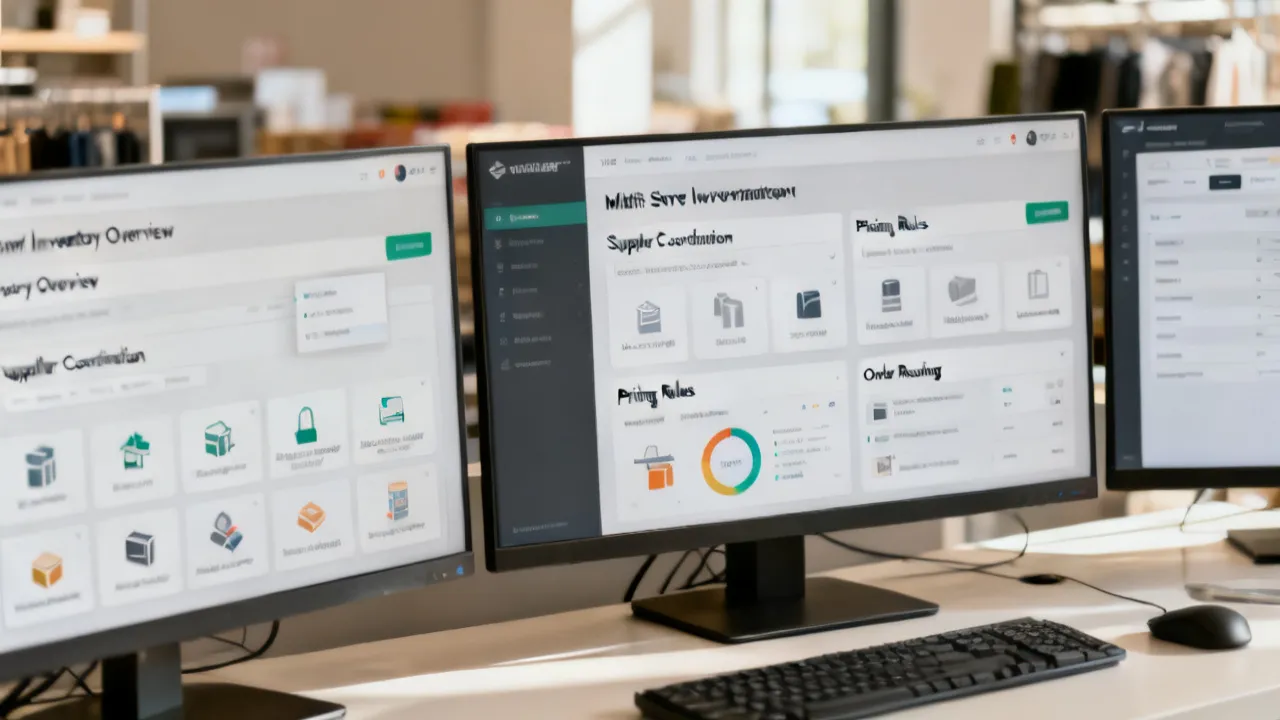
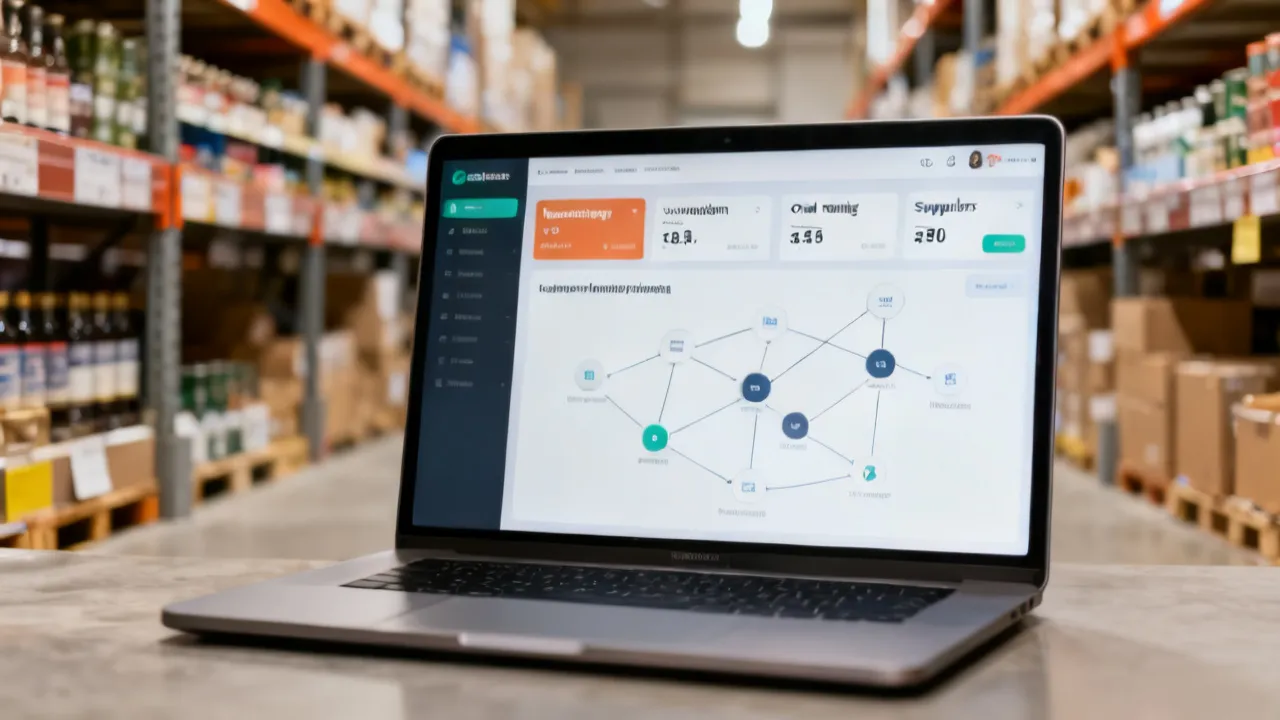
How Multishop Improves Multichannel Commerce Operations
This guide explains how Multishop supports multichannel commerce by coordinating product, pricing, and supplier workflows across your storefronts. Objectively, “Multishop” refers to an operational approach and platform-style capability for managing catalogs and orders. You’ll also find a structured comparison of common setup paths, practical conditions to verify, and an industry-focused checklist for implementation.

Executive Overview: What Multishop Helps You Achieve
Multishop is typically used to streamline multichannel commerce operations—especially catalog consistency, order routing, and supplier-aligned workflows. In practical terms, teams adopt Multishop-style capabilities to reduce mismatches between storefront data and back-office records, improve replenishment visibility, and create a more coherent customer experience across channels.
From an industry operations perspective, the central value is not “more selling,” but better control: clearer product governance, predictable pricing logic, and measurable process performance between suppliers, inventory, and channels.
When implemented well, Multishop (or a Multishop-like approach) becomes a governance layer that standardizes “how the business decides” rather than merely “what the business publishes.” This governance layer typically covers the rules for what products can be sold, at what price, under which promotional conditions, and how each order is routed to the right fulfillment method. Instead of every channel independently interpreting supplier data and business policies, the system enforces consistent interpretation across the enterprise.
Teams often discover that the biggest operational costs of multichannel growth are not customer acquisition costs, but “back-office friction.” Friction shows up as catalogue errors that take down listings, pricing discrepancies that cause disputes and returns, and stock mismatches that create backorders and warehouse work that wasn’t planned. Multishop-style coordination reduces that friction by centralizing key decision points and ensuring that changes propagate reliably.
It’s also important to clarify that “Multishop” may be used as shorthand for different technical patterns in the market. In some organizations, it refers to a specific product. In others, it refers to an architecture: a coordination service or platform that synchronizes and governs multichannel commerce data. Regardless of the implementation, the operational outcomes that matter are strongly similar: unified product truth, consistent pricing behavior, reliable inventory/availability logic, and fewer manual interventions.
Why Multichannel Operations Get Complex Without a Coordinating System
Many merchants start with one sales channel and expand over time—marketplaces, e-commerce sites, and regional storefronts. As channels multiply, complexity increases in a few predictable ways:
- Catalog drift: product attributes, images, and descriptions diverge between channels.
- Pricing inconsistency: discounts, fees, and pricing rules are applied differently by each channel.
- Supplier-to-order latency: data that should be available at fulfillment time arrives late or in incompatible formats.
- Operational bottlenecks: manual reconciliation consumes staff time and increases error rates.
Multishop addresses these issues by consolidating operational logic—so the “truth” about products and prices is defined once and propagated consistently.
To understand why this problem grows non-linearly, consider that each new channel doesn’t just add one more place to update data. It adds a new set of constraints: different product feed formats, different tax or shipping rules, different promotional mechanics, and different order routing expectations. Over time, teams build channel-by-channel exceptions, and those exceptions become institutional knowledge trapped in spreadsheets, email threads, or custom scripts.
Without coordination, even “small” differences can compound:
- A product description typo on one channel becomes a support issue and a return driver.
- A rounding rule applied differently leads to price changes at checkout, undermining customer trust.
- An out-of-date supplier availability flag causes an order to route to a fulfillment method that cannot ship it.
- A discontinued status is applied in one catalog but not another, leading to continued sales of items that can’t be fulfilled.
Multishop-like coordination is designed to turn those scattered exceptions into explicit rules and governed workflows. Rather than hoping people remember to apply changes everywhere, it ensures changes follow the correct precedence logic and update cycle.
Core Capabilities Commonly Associated With Multishop
Although Multishop can be implemented in different ways depending on the business model, the capabilities merchants seek usually cluster around the same operational goals.
It’s useful to think of these capabilities as an interconnected chain. If catalog governance is weak, pricing logic might calculate correct prices for incorrect items. If pricing logic is weak, inventory availability might be correct but customers still won’t see the right number. If fulfillment routing is weak, even correct order data can become operational chaos.
In other words, Multishop-style capabilities are typically “workflow capabilities.” They are not isolated features. They work together so that each downstream process receives the correct inputs with the correct timing.
1) Unified Catalog Management
A multichannel catalog must support standardized product attributes and variations (size, color, compatibility, bundles). Multishop-style workflows typically emphasize:
- attribute mapping between supplier feeds and internal schemas
- image and media handling
- product status governance (active, paused, discontinued)
Unified catalog management often includes a practical taxonomy design phase. Teams define how products are categorized (for example, brand, category, subcategory, compatibility tags), which attributes are required for a product to be sellable, and which attributes are optional but recommended. Once that taxonomy is defined, suppliers’ data can be mapped into it.
Catalog governance also includes versioning and lifecycle state handling. Common states include:
- Draft / In Review: product data exists but is not yet exposed.
- Active: product is available for sale on selected channels.
- Paused: product may exist but is temporarily blocked on some channels due to inventory, compliance, or promotional timing.
- Discontinued: product is no longer sellable; systems should prevent new orders while still supporting returns and post-purchase workflows.
Good Multishop-style solutions keep these states consistent across channels. If a product is discontinued due to supplier changes, the system should propagate the status to every relevant channel in a controlled manner (including lead times and scheduled windows, so you don’t remove items while inventory is still being sold).
Unified catalog management also tends to address media handling: image resolutions, cropping standards, and content compliance. For example, marketplaces sometimes reject product pages that do not meet their image requirements. A coordination layer can enforce standards before publishing, reducing submission errors and account health risks.
2) Pricing Logic and Rule-Based Updates
Pricing is not just a number. It often depends on:
- channel-specific pricing rules
- promotional windows and discount types
- supplier costs, currency handling, and rounding behavior
From an expert standpoint, a key requirement is traceability: teams must understand why a price changed and when it propagated.
Pricing logic becomes complex because “final price” is often the result of multiple inputs. For example:
- Base price: internal list price or calculated margin target.
- Supplier cost changes: upstream changes that affect margin and may require recalculation.
- Promotions: percentage-off, fixed-amount, bundle discounts, or tiered promotions.
- Channel fees: platform fees or channel-specific surcharges that are sometimes applied differently across channels.
- Currency conversion: exchange rates and conversion timing (daily rates vs. weekly rates) with rounding rules.
- Regulatory constraints: minimum advertised price policies or region-specific requirements.
Multishop-style pricing orchestration typically needs precedence rules. Precedence defines which calculation wins when multiple rules could apply simultaneously. For instance, should a promotion override a channel-specific fee? Should supplier price changes override a manually negotiated override? These decisions must be explicit, documented, and testable.
Traceability also needs to be operationally useful. It’s not enough to know that “price changed.” Teams need to answer questions like:
- Which rules triggered the change?
- Was the rule active at the moment the channel feed was generated?
- Did rounding introduce a difference between systems?
- What was the expected price versus the published price?
A strong pricing layer stores audit logs and supports replay or reprocessing. In practice, teams frequently need to “re-run the rules” after fixing a mapping or data issue. Without replay capability, error correction can become manual and time-consuming.
3) Supplier Workflow Integration
Supplier feeds and replenishment processes are central to operational stability. Multishop-like systems typically help teams:
- ingest supplier product and inventory signals
- normalize lead times and availability rules
- coordinate reorder triggers with inventory status
Even when suppliers provide partial data, the system can still enforce consistency—provided the business defines conditions for missing fields (for example, how to behave when a supplier does not provide an attribute).
Supplier integration is not merely a technical ETL task. It is operational decision-making around incomplete and changing data. Suppliers may:
- send availability updates daily or irregularly
- omit certain attributes or provide them in inconsistent formats
- use different product identifiers or naming conventions
- update lead times when manufacturing changes occur
- provide “estimated availability” rather than confirmed stock
Multishop-style coordination usually defines how to interpret each of these cases. For example, if supplier availability is missing, the system can either:
- hide the product on channels that require verified availability,
- show it but mark it as pre-order (if your business supports that),
- keep it active based on last known availability with a confidence policy, or
- apply internal estimated availability until supplier data is restored.
That choice should be documented because it affects customer experience and operational load. If you hide products too aggressively, you lose sales. If you show them too aggressively, you increase cancellations and customer support tickets.
Supplier workflows also include mapping supplier identifiers to internal SKUs. When a supplier changes an identifier or updates their naming, the system must support mapping version changes without breaking historical reconciliation.
4) Order Routing and Fulfillment Alignment
Orders often need to be mapped to the correct fulfillment path—warehouse stock, supplier drop-ship, or split fulfillment. Multishop-style coordination can reduce manual handling by:
- automating channel-to-fulfillment mapping
- ensuring the correct SKU mapping for each supplier
- reducing cancellation and backorder inconsistencies
Order routing is one of the most operationally sensitive parts of multichannel commerce. A system can show the correct product and price, but if it routes orders incorrectly, fulfillment teams will experience:
- wrong picking instructions
- inventory depletion mismatches
- shipment delays due to incorrect carriers or processes
- supplier claims that items were not requested with the correct SKU
- split shipments that create extra customer notifications or unexpected shipping costs
Multishop-style routing logic typically uses a rules engine that considers:
- warehouse inventory availability and location constraints
- supplier availability and lead time windows
- shipment cut-off times for same-day or next-day delivery promises
- shipping method compatibility (e.g., certain items require special handling)
- customer destination region compliance (restricted items, embargo restrictions)
- channel-specific policies (marketplaces sometimes require consistent shipping confirmation behavior)
Additionally, routing logic should handle split orders deterministically. If one item is in warehouse stock and another item must be drop-shipped, the system must decide how to split the order, how to communicate split shipping to customers, and how to reconcile shipment status back to the channel.
A practical Multishop approach also includes “identifier fidelity.” If the internal SKU differs from supplier SKU, routing must translate identifiers correctly for every fulfillment path. That translation should use the same mapping registry as catalog management, ensuring consistency.
Industry Context: What Objective Research Suggests About Multichannel Operations
Industry analyses consistently show that the multichannel challenge is less about “technology variety” and more about operational alignment. For example, studies and reports from Gartner and McKinsey often frame digital and process automation as a way to reduce operating costs and improve service levels, especially when workflows span departments and external partners. For pricing and inventory accuracy, the underlying operational risk is well documented across retail operations literature: data latency, reconciliation overhead, and inconsistent governance are recurring themes.
Reliable references to consult:
- McKinsey (research on digital and operations transformation; consult their retail and supply chain related publications): https://www.mckinsey.com
- Gartner (research on supply chain planning, retail technology, and operational excellence; consult relevant reports): https://www.gartner.com
- National Retail Federation (NRF) for recurring retail operational trends: https://nrf.com
Note: Specific performance numbers vary by company type, channel mix, and implementation maturity; therefore, this guide focuses on process outcomes and implementation conditions rather than unverified claims.
It’s worth expanding what “operational alignment” typically means in multichannel commerce. Most organizations run into a familiar pattern:
- Marketing and merchandising want fast iteration on offers and assortment.
- Procurement and supplier managers want reliable replenishment signals.
- Operations teams want fewer exceptions and consistent order handling.
- IT teams want stable integration patterns and lower maintenance cost.
- Finance teams want accurate pricing records and predictable margin logic.
Without a coordination layer, these stakeholder groups often optimize locally. Marketing updates one channel’s promotion quickly; finance discovers margin impact later. Operations receives orders with inconsistent SKU formatting; IT patches integration logic; supplier managers learn that their updates aren’t interpreted correctly in certain regions.
Multishop-style coordination aims to reconcile those local optimizations through shared governance: common identifiers, common rules precedence, consistent state management, and centralized monitoring.
Another relevant research theme is automation with controls. Many organizations attempt automation purely through “sync everything all the time.” That can introduce new errors quickly and obscure root causes. A Multishop-style approach usually balances automation with controlled publishing, validations, approvals for certain rule changes, and clear exception paths.
Expert Take: Where Multishop Typically Delivers the Very Value
In practice, Multishop’s strongest impact shows up when three conditions align:
- SKU volume is non-trivial (enough that manual catalog updates become expensive).
- At least two sales channels exist or are planned (so catalog/pricing drift becomes visible).
- Suppliers influence availability and costs (so supplier integration reduces fulfillment surprises).
However, even if these conditions are met, value depends on execution quality. A common failure mode is implementing the “plumbing” without implementing governance. If teams can publish changes but do not define consistent precedence rules, validation, and monitoring, the system may simply automate inconsistency faster.
That’s why many experienced practitioners evaluate Multishop-like solutions through the lens of operational reliability rather than feature checklists. They ask questions like:
- How does the system behave when supplier data is incomplete?
- How quickly do changes become visible on channels?
- Can we trace a specific price to the rule and input that generated it?
- What happens when mappings fail or new SKUs appear?
- What is the incident response process when synchronizations break?
Operational KPIs to Watch
To evaluate whether Multishop-style integration is working, monitor KPIs that reflect data integrity and fulfillment reliability. Examples include:
- catalog accuracy rate: percent of products with correct attributes and active status
- price synchronization latency: time between rule change and channel update
- order-to-fulfillment correctness: percent of orders routed to the right SKU and fulfillment path
- reconciliation effort: hours spent on fixing mismatches between systems
These metrics are grounded in operational reality: if pricing and stock data are consistent at the moment of purchase and at the moment of fulfillment, customer disputes and back-office firefighting tend to fall.
To make these KPIs actionable, define measurement windows. For example, catalog accuracy might be measured daily after the feed publish cycle, while price synchronization latency might be measured around promo starts and supplier cost change events. Order-to-fulfillment correctness might be measured by spot-checking shipment records against routing decisions.
Also consider operational KPIs beyond pure data accuracy:
- customer cancellation rate: particularly for out-of-stock or fulfillment mismatch orders
- refund rate: a proxy for pricing and item mismatch issues
- chargeback rate: can indicate systematic pricing or fulfillment errors
- support ticket volume: categorized by root cause (pricing dispute, product information mismatch, shipping delay)
- feed rejection rate: number of marketplace feed submissions rejected due to validation errors
These measures help you confirm that operational improvements are visible in customer experience outcomes.
Comparison Table: Common Multishop Setup Paths (No Links)
The table below reframes typical implementation approaches as a decision-ready comparison. Use it to discuss fit internally with operations, procurement, and IT.
| Setup Path | Top For | What You Configure First | Key Conditions/Requirements |
|---|---|---|---|
| Catalog-first integration | Brands entering multiple channels with complex product attributes | SKU mapping, attribute schema, media standards | Supplier data completeness for core attributes; clear internal product taxonomy |
| Pricing-rule orchestration | Businesses with promotions, channel fees, or multi-currency needs | Pricing rules, rounding logic, promotion schedules | Documented pricing policy; audit trail needs; agreement on precedence of rules |
| Supplier-led replenishment | Merchants relying on supplier inventory availability and lead times | Availability mapping, lead time handling, reorder signals | Reliable supplier update cadence; clear fallback logic when data is missing |
| Order routing optimization | Companies with split fulfillment or drop-ship models | Fulfillment mapping rules, SKU translation, split-order behavior | Defined fulfillment constraints; consistent identifiers across channels and suppliers |
| Phased migration | Organizations minimizing disruption while modernizing operations | Start with one catalog segment, then expand to pricing and routing | Change-management plan; rollback procedures; stakeholder sign-off checkpoints |
Although these setup paths appear separate, many successful implementations blend them. For example, you might begin with catalog-first integration, then quickly move into pricing-rule orchestration for a limited promo event, while supplier-led replenishment remains manual. The key is to define boundaries and ensure each step improves operational reliability before expanding scope.
Step-by-Step Guide: How Teams Typically Implement Multishop-Style Coordination
This section offers a practical, industry-informed sequence you can adapt. The order matters because governance and identifiers must be stable before you automate pricing and routing.
Step 1: Define the “source of truth” for each data domain
- Products: where SKUs and attributes are maintained (internal master data vs. supplier feeds).
- Pricing: which layer drives final price (supplier cost, internal markup, channel rules).
- Inventory/availability: how stock is represented (warehouse stock, supplier availability, or estimations).
Defining the source of truth is the most underestimated step. Teams often say “we’ll use supplier data” or “we’ll use internal inventory,” but they rarely define what happens when values conflict. A coordination platform typically needs explicit conflict resolution policies such as:
- if supplier says “in stock” but internal warehouse says “out,” which is authoritative?
- if supplier cost changes, does internal pricing update immediately or during scheduled cycles?
- if a product is marked discontinued internally but supplier continues to send it, should it remain purchasable on any channel?
Those decisions must be documented before you automate, because automation will quickly enforce the defined policy and reveal where assumptions were wrong.
In mature implementations, “source of truth” can be domain-specific and even time-specific. For instance, on the day of a promotional launch, you might prefer internal pricing overrides to guarantee launch accuracy, even if supplier data is slightly delayed. After the promo window, supplier cost updates take over again. The governance layer should support these time-based precedence overrides.
Step 2: Establish a SKU and identifier mapping strategy
Very integration failures come from inconsistent identifiers. Create a mapping that covers:
- channel SKUs vs. internal SKUs
- supplier SKU vs. internal SKU
- bundle-to-component rules (if applicable)
Identifier mapping is more than mapping tables. It’s also about lifecycle and resilience. If a supplier changes their SKU format, your mapping registry should support:
- effective dates for changes (so historical orders remain traceable)
- linking old identifiers to new ones
- handling deprecations (when do you stop accepting old SKUs?)
- validation rules that prevent duplicate mapping collisions
Bundle-to-component mapping is a frequent source of error. If you sell bundles on a channel but fulfill via components, the system must decide how to represent bundle inventory and how to route components. This affects both availability display and fulfillment execution.
Step 3: Normalize and validate supplier product feeds
Before you automate, validate. Perform tests with sample feed updates to confirm:
- attribute formats (units, dimensions, compatibility formats)
- media availability (images, videos, documents)
- status rules (active/discontinued transitions)
Validation should include both syntactic checks (format correctness) and semantic checks (meaning correctness). For example:
- Are dimensions within plausible ranges?
- Do compatibility tags match the expected format for your internal taxonomy?
- Do required attributes exist for sellable states?
- Do images meet the required size or aspect ratio?
Semantic validation often requires business rules that aren’t “generic.” Multishop-like implementations typically include a rules configuration layer for these checks so that operations teams can tune validations without deep engineering involvement.
Normalization also covers time zones and date parsing. Supplier feed timestamps might be in different time zones or encoded in multiple formats. If you don’t normalize these properly, pricing and availability can appear to update late or early relative to promotion windows.
Step 4: Configure pricing precedence and auditability
Even when pricing rules are correct, teams need transparency. Define:
- rule precedence (e.g., promotions override base prices)
- currency conversion approach and rounding strategy
- audit logs requirements for internal review
Pricing precedence should be designed to reflect how your business thinks about pricing. Common precedence models include:
- Promotion-first: apply promotions on top of base price, then apply channel-specific fees.
- Policy-first: apply corporate pricing policy, then apply channel adjustments, then promotions.
- Channel override: channel-specific rules always win except when promotions explicitly override.
Auditability should include both “what changed” and “why.” Good implementations allow you to inspect the pricing calculation inputs used at the time of feed generation.
Also consider audit for price integrity. If you have constraints like “final price must not be lower than cost plus minimum margin,” the pricing layer should enforce those constraints or require approvals when constraints are violated. This prevents accidental margin destruction due to feed anomalies or misconfigured promos.
Step 5: Align fulfillment routing logic with operational reality
Automations must reflect what your fulfillment operations can actually do. Decide conditions such as:
- when an order can be split
- how to handle backorders
- drop-ship constraints and shipment confirmation timing
Operational reality includes people, systems, and time. For example:
- warehouse picking cut-off times differ by warehouse location
- carrier pickup times vary by destination region
- supplier drop-ship confirmation may take hours or days
- some SKUs require special packaging or compliance checks
If you route an order to drop-ship but supplier shipment confirmation takes time, your system must decide whether to mark the order as pending, partially shipped, or delayed in each channel. Without this decision alignment, customers may receive confusing updates or channel status may become inconsistent.
Split-order behavior needs careful design. If split shipments are allowed, define:
- how shipping cost is handled
- how delivery date estimates are communicated
- how returns are handled if components ship at different times
Step 6: Run parallel testing and reconciliation drills
For a controlled rollout, test end-to-end scenarios:
- create orders in a staging environment
- simulate supplier inventory changes
- verify price updates at the channel storefront level
- confirm cancellation and returns flows are consistent
Parallel testing is crucial because multichannel failures often occur at interfaces: between feed generation and channel ingestion, between channel orders and fulfillment systems, or between supplier availability and reorder triggers.
Reconciliation drills should be treated like operational training. Run test scenarios where you intentionally introduce issues to validate your controls. Examples include:
- simulate a supplier feed where a required attribute is missing
- simulate a pricing rule change that would violate a margin constraint
- simulate an SKU mapping mismatch (new supplier SKU not in mapping registry)
- simulate supplier lead time increase and confirm that routing changes accordingly
These drills help prove that the system fails safely. A safe failure might mean “hide the product” or “route to warehouse fallback” rather than “publish incorrect information.” The specific safe failure depends on your business risk tolerance.
Step 7: Train operations staff and define escalation thresholds
Even with automation, exceptions occur. Establish:
- who reviews feed failures and how often
- thresholds for manual override (for example, large price deviations)
- incident reporting cadence
Escalation thresholds are an essential part of operational governance. Without them, teams either over-escalate (creating noise and slow response) or under-escalate (letting issues reach customers). Common thresholds include:
- catalog accuracy drop below a defined percentage
- price change larger than a percentage threshold without an associated promotion approval
- feed rejection rate exceeding a certain limit
- routing mismatch rate above a defined baseline
- supplier feed ingestion failures lasting longer than a certain time window
Training should also cover interpretation of dashboards and logs. Operations teams need to understand what a feed validation error means, what to do when a mapping is missing, and how to run a controlled reprocessing if a feed was delayed.
Conditions and Requirements: What to Verify Before You Scale
Multishop-style coordination is very effective when certain prerequisites are met. These are not optional if you want reliability at scale.
- Data quality governance: measurable completeness and validation rules for supplier data.
- Change control: a workflow for updating pricing rules, attribute mappings, and fulfillment constraints.
- Monitoring and alerting: operational visibility into feed failures, price sync delays, and order routing anomalies.
- Security and access control: role-based permissions for catalog and pricing changes.
- Documented reconciliation: an approach to resolve mismatches when they inevitably occur.
“Ready to scale” typically means your organization can handle both normal operations and abnormal scenarios. Normal operations include scheduled feed updates, routine pricing adjustments, and day-to-day order routing. Abnormal scenarios include supplier outages, sudden feed format changes, promotion misconfigurations, or partial channel ingestion failures.
To verify readiness, many teams create a readiness checklist and run tabletop exercises. Tabletop exercises simulate an incident without executing changes in production. For example: “A supplier feed arrives with missing availability fields for 30% of SKUs. What happens in the next two hours? What customers see? What operations do? What the escalation path is?”
Another requirement is operational ownership. Who owns the coordination platform as a product? Is it IT, operations, or merchandising? Without clear ownership, changes may be delayed or decisions may be inconsistent.
Finally, ensure there is a governance model for “exceptions.” Exceptions are inevitable: certain SKUs might have unique compliance attributes, certain channels might require special formatting, and certain suppliers might not provide complete data. A Multishop-style approach should include a structured way to define exceptions so that they are visible, auditable, and revisitable.
Common Challenges Teams Face (and How to Address Them)
Challenge: Supplier data arrives late or with inconsistent formatting
Mitigation: implement validation and fallback logic (e.g., treat missing attributes as “not exposed” rather than overwriting internal truth).
Late or inconsistent supplier data often causes “silent failures” if you don’t validate aggressively. Silent failures might look like stable catalog listings but incorrect availability, or stable pricing but wrong product status. A strong governance layer ensures that validation occurs before publishing.
Consider designing fallback logic with multiple tiers:
- Tier 1 (safe default): hide products that require verified attributes or availability.
- Tier 2 (grace period): keep previously published data active for a defined time window while waiting for updates.
- Tier 3 (estimate mode): show availability as estimated and route orders using conservative assumptions.
Each tier should be tied to specific conditions and operational risk acceptance. If missing formatting affects compliance (e.g., hazardous materials attributes), “hide” might be the only safe action.
Challenge: Price updates propagate too slowly during promotions
Mitigation: define scheduling windows, test propagation latency, and include an approval workflow for time-sensitive price changes.
Promotion windows create time pressure. If price propagation latency is inconsistent, customers might see old prices at launch, leading to either lost sales or pricing disputes. A Multishop-style pricing orchestration should support:
- scheduled rule activation aligned to promotion start times
- feed regeneration on demand for approved changes
- a “launch checklist” to confirm that critical SKUs have updated on each channel
- rollback capability if a launch fails
Approval workflow is especially important for large or unusual price changes. Without approvals, a supplier cost change could inadvertently trigger a large discount or margin reduction.
Challenge: SKU mapping breaks during catalog expansions
Mitigation: enforce mapping checks before activating new SKUs on channels; keep a mapping registry with version control.
SKU mapping breaks often happen due to human process issues: a new SKU is created internally without updating mapping tables, or a supplier introduces a new identifier format. Preventive controls include:
- blocking channel activation until mapping completeness meets a threshold
- automated mapping validation reports for newly ingested SKUs
- version-controlled mapping registry with effective dates
- clear escalation and remediation steps when new mappings are missing
A mapping registry with version control is particularly important for historical accuracy. Orders already placed should remain traceable even if mappings change later.
Challenge: Fulfillment logic doesn’t match warehouse capabilities
Mitigation: validate routing rules against real constraints (picking capacity, carrier handling, and shipment cutoff times).
Fulfillment mismatch can become a compounding problem. If routing logic routes too many orders to a fulfillment path that cannot handle the load, backlogs accumulate. Backlogs then lead to inaccurate customer delivery promises, which then increase cancellations.
To address this, validate routing rules against operational constraints and capacity signals. Some organizations start with static routing constraints (e.g., don’t route oversized items to certain carriers). Others include capacity planning and dynamic throttling.
Even if you don’t implement complex capacity planning at first, ensure your routing rules incorporate the practical constraints that your teams understand. For example:
- shipment cutoff times by region
- carrier pickup schedules
- drop-ship lead time ranges
- special handling requirements for certain SKUs
FAQs
Q1: What does “Multishop” mean in a commerce context?
In many businesses, “Multishop” refers to a multichannel commerce coordination capability—helping manage catalogs, pricing updates, supplier data, and order handling consistently across multiple storefronts or selling channels.
Q2: Does Multishop replace supplier management or inventory planning?
No. Multishop-style systems typically orchestrate how supplier and inventory data is used across sales channels and fulfillment workflows. They complement procurement and planning processes rather than fully replacing them.
Q3: How should pricing updates be handled to avoid customer-facing errors?
Define pricing precedence, ensure audit logs are available, validate channel rules, and run controlled tests during off-peak periods. Also set escalation thresholds for unusual price changes.
Q4: What are the minimum requirements to get reliable results?
At minimum: stable SKU identifiers, a clear source-of-truth decision for catalog and pricing, validated supplier feed formats, and monitoring that alerts you when synchronizations fail.
Q5: Can Multishop support promotions and seasonal pricing?
Yes—very implementations are designed to support rule-based pricing and scheduling. The key is governance: promotions must have clearly defined start/end times and precedence relative to base price and supplier cost.
Q6: How do businesses handle missing supplier attributes?
They typically define conditions such as “do not overwrite internal attribute values,” or “hide the affected product field on channels,” and they document how these exceptions are reviewed and corrected.
Q7: What proof should we ask for during evaluation?
Request evidence of mapping validation, change control capabilities, auditability of pricing logic, monitoring coverage, and documented exception handling—preferably demonstrated through test scenarios aligned with your catalog and supplier structure.
Q8: Will implementation require heavy IT development?
It depends on current systems and data quality. Many organizations can start with configuration and mapping, but deeper integration may require development if identifiers, pricing logic, or fulfillment events are not standardized.
Conclusion: Treat Multishop as an Operational Governance Layer
Multishop is very valuable when it functions as an operational governance layer for multichannel commerce—helping teams keep product information, pricing rules, supplier signals, and order routing consistent. Rather than focusing only on adding channels, a durable strategy emphasizes reliable data synchronization, transparent pricing logic, and fulfillment-aligned workflows.
If you approach Multishop with clear source-of-truth definitions, disciplined mapping, and conditions for exceptions, you can build a foundation that scales as your catalog expands and your supplier relationships evolve.
To make the strategy truly durable, organizations often adopt a “governance-first” mindset beyond the platform itself. That mindset includes establishing operational rhythms: scheduled reviews of catalog governance health, periodic reconciliation sampling, and routine validation checks aligned with supplier feed cadence. It also includes strengthening cross-functional agreements—merchandising and finance agreeing on pricing precedence, operations and procurement agreeing on fulfillment fallback behavior, and IT and operations agreeing on monitoring thresholds and incident response.
In the end, multichannel growth succeeds when the operational system behind it is reliable. Multishop-style coordination reduces the number of decisions that must be made manually by humans at the last minute. It turns critical business logic—what to sell, what to charge, when to show availability, and how to route orders—into consistent rules. When those rules are governed, monitored, and traceable, customers see a coherent experience across channels, and back-office teams spend less time reconciling data and more time improving the business.
-
1

A Guide to Cost-Efficient Small Electric Cars for Seniors
-
2
Mastering Debt Consolidation: Boost Your Credit Score and Manage Interest Rates
-
3
Your Guide to Loans, Credit Checks, and Interest Rates
-
4
Affordable Independent Living: Finding the Right Senior Housing
-
5
Guide to Senior Living Apartments: Affordable and Comfortable Environments