Toyota Hilux Buying Guide and Dealer Options
Toyota Hilux buyers can use a structured approach to compare listings, verify condition, and complete a safe purchase through major car-marketplaces. This guide provides objective background on Hilux as a globally recognized pickup and explains how official dealer/trading platforms streamline searching, financing, and documentation.
Why the Toyota Hilux remains a practical pickup choice
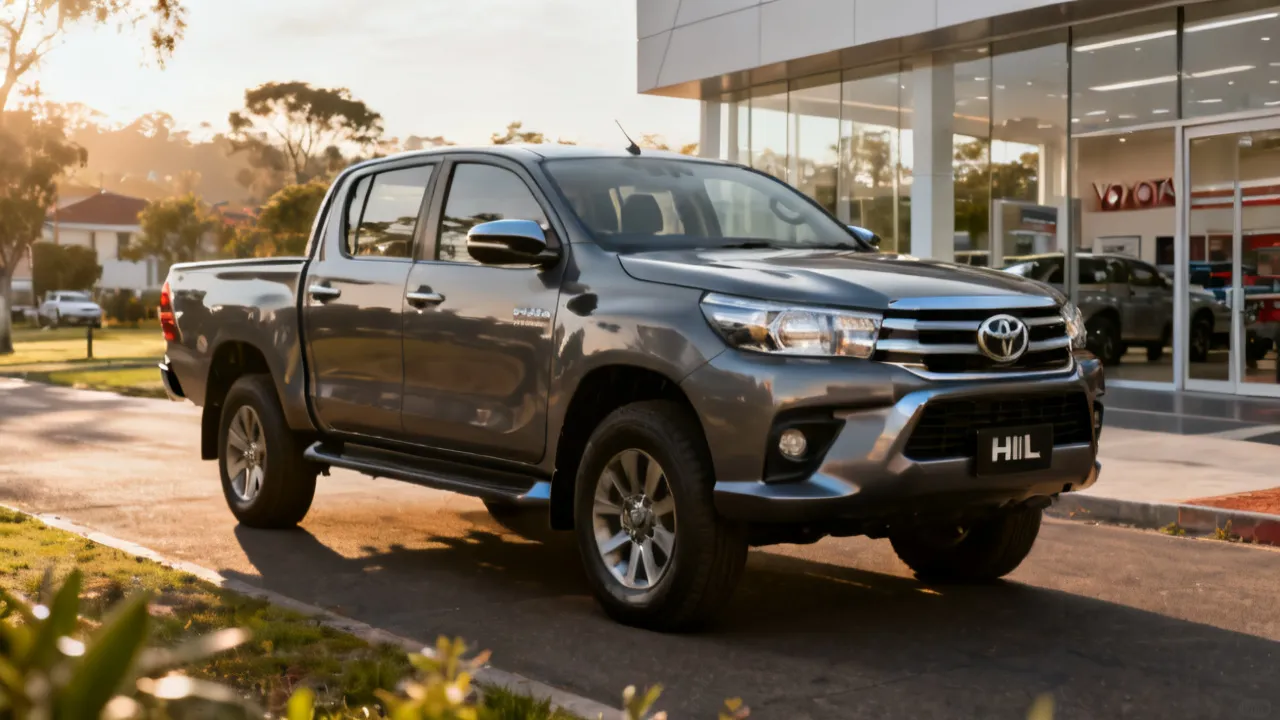
The Toyota Hilux is frequently considered for its reputation for durability, broad parts availability, and wide availability in both private and dealer channels. In many markets, the Hilux has earned a long-standing reputation as a “workhorse” pickup—built to handle everyday commuting, weekend hauling, and long-term ownership with fewer surprises than many competing trucks. That combination of perceived toughness and real-world practicality is exactly why shoppers keep returning to it when they need a pickup that can be used, not just admired.
If you’re looking at a Hilux listing “on sale,” the smartest next step is not to rush—it’s to verify specification, ownership history, and the true total cost (fees, taxes, and any required repairs). This matters because a “deal” price can hide differences that strongly affect cost of ownership. Two vehicles might look similar in year and mileage, yet one may have a recent service record, newer tires, and a clean inspection report, while the other may be due for suspension refresh work, brakes, or drivetrain attention. When pricing looks attractive compared to nearby inventory, the listing can reflect mileage, trim level, accident history, or pending service items rather than purely “deal” pricing.
From an industry perspective, pickup-truck shopping tends to be more than a price comparison. Consumers often balance real-world use (cargo capacity, towing needs, drivability) with good costs (maintenance intervals, tire wear patterns, and how quickly parts can be sourced). That’s why an expert buying process focuses on evidence: service records, inspection results, and clear vehicle history documentation. It’s easy to get distracted by the excitement of finding a low asking price, but disciplined verification helps ensure that the bargain is real.
For a Hilux specifically, buyers often care about the way the truck fits their lifestyle—whether that’s frequent load carrying, travel on rougher roads, towing boats or trailers, commuting with occasional off-road use, or simply needing a reliable vehicle that can remain in the family for years. A practical pickup purchase means thinking beyond the next month and asking: “If I keep this truck for 3–7 years, what will I likely spend?” The “on sale” label should not replace that question.
It also helps to remember that pricing can vary widely due to local demand, dealership pricing strategies, seasonal turnover, and even how a seller chooses to market the condition of a vehicle. Some listings emphasize new tires and a freshly serviced engine; others emphasize low mileage and ignore wear items. When you’re comparing “on sale” Hilux models, your job is to read between the lines and verify what matters.
What “on sale” usually means in the Hilux market
In many online car-marketplaces, “on sale” typically indicates one of the following:
- Dealer incentives tied to inventory turns, seasonal promotions, or manufacturer programs.
- Price adjustments after reconditioning or after a listing review.
- Trade-in pricing when a dealership has acquired inventory through a trade cycle.
- Trim/mileage match that aligns with shopper demand—meaning supply and demand can move price independently of brand sentiment.
Sometimes, “on sale” can be a temporary marketing badge that simply reflects that the seller reduced price from an earlier number. That isn’t automatically bad, but it does mean the “sale” status should be treated as context, not proof of value. For buyers, the practical conclusion is simple: treat “on sale” as a starting point for verification, not a final signal of value.
In the Hilux marketplace, there’s another common reality: trucks can be priced aggressively when they are high mileage but still appear mechanically sound—or when they’re priced attractively to compensate for smaller issues that the seller is comfortable disclosing only in limited detail. “On sale” may also be used more often for certain trims or drive types, depending on what buyers in that region want most. For example, if 4x4 models are less in demand locally than 4x2 models, you might see stronger discounts for the less demanded configuration.
Understanding what “on sale” means also helps you spot marketing patterns. A seller may highlight “on sale” but provide minimal documentation. Another seller may not use the exact phrase but can show a full service history, recent inspection, and maintenance receipts. In many cases, the second listing represents better value even if it doesn’t advertise a discount.
Where to find Hilux listings from major trading platforms
To compare inventory effectively, many shoppers begin with established trading websites. Below is a comparison of the official car trading websites that can host listings for vehicles such as the Hilux, along with the kind of inventory and buyer services you should expect.
| Platform | Typical listing coverage |
|---|---|
| Cars.com | Dealer and seller listings across multiple markets, searchable by make, model, trim, mileage, and price. |
| CarMax | Predominantly dealer-style inventory with structured listings and buyer-facing processes. |
| CarOnSale | Listing aggregation with promotional framing, often aimed at quickly locating deals and inventory. |
| AutoTrader | Marketplace inventory featuring a broad mix of dealer and private listings with filtering tools. |
Source of information:
source: www.cars.com
source: www.carmax.com/cars
source: www.caronsale.com/en
source: www.autotrader.com
When using these platforms, it’s wise to treat them as the “starting map,” not the final truth. The key advantage of a marketplace is breadth—many listings in one place. The downside is that it can be difficult to standardize condition grading across sellers. Even within the same platform, two sellers may present information differently: one might disclose minor cosmetic wear and clearly note it, while another might avoid mentioning it. That’s why your verification process still matters regardless of where you find the truck.
Also consider how each platform’s buyer protections or purchase workflow might reduce risk. Some platforms funnel shoppers toward dealer purchases with consistent processes. Others expose you more directly to private-party listings, where documentation may be less complete. Neither is automatically better; it depends on your comfort with due diligence.
Expert checklist: How to find and buy a cheap Hilux (without gambling)
Finding a “cheap” Hilux is possible, but the very reliable method is to reduce uncertainty. Industry professionals commonly follow a disciplined sequence: define criteria, compare comparable vehicles, confirm vehicle condition signals, and only then evaluate price. This approach is especially effective with older pickups and high-mileage models, where a low sticker price can either represent true affordability or mask hidden costs.
When people “gamble” on a cheap truck, it’s often because they skipped one of the verification steps—such as not checking service records, not confirming whether a maintenance item was done, or not performing an inspection. With a Hilux, skipping these steps can still work sometimes, but it increases the chance that you’ll pay later for repairs you could have priced into your budget.
Think of it like budgeting for risk. The goal is not only to spend less today; it’s to spend less over the time you plan to own the vehicle. A bargain that requires immediate work can quickly turn into an expensive decision once you factor in parts, labor, downtime, and the inconvenience of dealing with a vehicle that isn’t ready when you need it.
Step 1: Define your “non-negotiables”
Before searching, set constraints aligned to how you will use the truck. For a Hilux, typical non-negotiables may include:
- Transmission type (manual/automatic depending on availability in your market)
- Engine variant and intended driving pattern
- Cab configuration (single/extra/cab style)
- Drive type (4x2 vs 4x4, where applicable)
- Bed and towing suitability for your cargo needs
This step prevents the common mistake of chasing low prices that come with mismatched specifications. For instance, a cheaper truck may be priced below your target because it’s missing features or drivetrain options you actually need. Another possibility is that it has an unsuitable configuration for your towing or off-road usage—such as a drivetrain setup that’s not aligned with how you plan to drive.
Non-negotiables also help you avoid emotional purchases. When you define what you need ahead of time, you’re more likely to walk away from a listing that looks good at first glance but fails on a fundamental requirement. This is one of the best ways to prevent “cheap” from becoming “regrettable.”
When defining non-negotiables, consider your real usage. If you drive mostly city traffic and do light hauling, you may prioritize comfort, interior condition, and fuel efficiency over maximum off-road capability. If you tow regularly, prioritize transmission health, cooling system condition, and whether the truck has evidence of towing-related maintenance.
Step 2: Use filters to compare like-for-like listings
Price becomes meaningful only when the comparisons are fair. Use marketplace filters to align:
- Mileage range (use bands, not single numbers)
- Year range (avoid overly wide ranges)
- Trim level (look for comparable equipment—suspension, drivetrain, and infotainment can vary)
- Condition descriptors (e.g., “certified,” “no accidents,” or “dealer inspected,” where provided)
When you compare similar configurations, “on sale” offers stand out more clearly—and you can spot when a low price is paired with warning signs (limited documentation, vague history, or missing service information).
Using bands instead of exact mileage targets is important because maintenance intervals are typically time- or usage-based, not purely mileage-based. A truck with 120,000 miles that has regular service at reasonable intervals can be a better buy than a truck with 95,000 miles that has skipped maintenance. Filters help you narrow choices; they don’t replace due diligence.
Also pay attention to the trim level in practical terms, not only the brand name of the trim. Some Hilux trims differ in suspension setup, drivetrain, tow package presence, cabin ergonomics, and available accessories. A “cheaper” trim could be perfectly reliable but might lack features you will regret later.
Step 3: Confirm the listing details are consistent
A low-cost listing can still be a great buy—if details check out. Verify that the listing’s key data points align:
- VIN or vehicle identification details (where shown)
- Reported mileage and how it matches the seller’s documentation
- Ownership history or title status, when disclosed
- Service history claims (whether records are offered)
- Accident or damage disclosures (and the presence of repair documentation)
As an expert would approach it, you’re looking for “consistency signals,” not marketing language. For example, if a listing says the truck is “immaculate” but the photos show mismatched panel gaps or repaired areas, that’s a contradiction. If the listing claims “fully serviced” but provides no receipts or service timeline details, that’s also a contradiction.
Consistency checks can also include verifying that the description matches what you can see. If the listing indicates a certain tow package or drivetrain specification, confirm whether those elements show up in photos or are consistent with how the truck is described. If you notice that the listing is vague about crucial items—like transmission type, 4x4 engagement status, or whether the truck has been used for towing—ask direct questions.
In many cases, the fastest way to find out if a listing is trustworthy is to ask a small set of precise questions. Sellers who are prepared and transparent will respond with useful detail. Sellers who avoid specifics or provide generic answers may be less reliable.
Step 4: Evaluate “total cost,” not just sticker price
In pickup buying, true cost can be affected by tires, brakes, suspension wear, and maintenance needs that aren’t always visible in a quick scan. Consider:
- Inspection results (pre-purchase inspection is often worth it)
- Immediate consumables (tires, brake pads/rotors, fluids)
- Registration and transfer fees
- Warranty terms (if any) and what is covered
When a Hilux is “on sale,” the top deals typically remain favorable even after accounting for near-term maintenance.
To evaluate total cost effectively, you can create a simple “first-year ownership budget” estimate. Even if the purchase is cheap, you may still need to pay for items that wear out based on usage: tires, brake service, suspension components, battery replacement, and potentially coolant or transmission fluid services. If you plan to drive the truck hard or tow, you may also need upgrades or maintenance attention sooner.
It’s also smart to consider whether the truck’s current maintenance schedule matches typical intervals for that model and engine variant. If service records show irregular gaps, you may want to budget for “catch-up” maintenance. That doesn’t automatically make the truck a bad choice, but it changes the price you should be willing to pay.
Step 5: Negotiate using documentation
Negotiation works best with objective references. If you’ve obtained an inspection report or identified discrepancies in the listing, you can negotiate based on verifiable items rather than impressions. This reduces the chance of ending up with a “cheap” truck that becomes expensive soon after purchase.
In practice, documentation-based negotiation might look like this: if an inspection identifies worn brake components, you can request a price adjustment or ask the seller to address it before delivery. If a vehicle history report indicates prior accident repairs, you can ask for evidence of professional repair work and potential warranty coverage. If receipts show scheduled service items have been skipped, you can use that information to justify your offer.
Even for “on sale” listings, sellers may have room to move because the goal is often to close the sale rather than maximize the absolute highest price. But negotiation should be respectful and grounded. If you make claims without evidence, the seller may simply reject your offer. Strong offers are supported by inspection findings, service records, and clearly explained reasoning.
Step 6: Prefer clear ownership and transparent seller processes
Dealers and larger trading platforms often provide more standardized workflows for purchase and documentation. While a private-party deal might look better on paper, marketplace structure can reduce risk by making certain steps more predictable (even if it doesn’t eliminate all risk).
When a dealer has transparent processes—clear title documentation, consistent reporting, and an ability to facilitate inspection or test drive—it can reduce uncertainty. That doesn't mean dealers always offer the lowest price; it means they may offer a safer purchasing path. For many buyers, “safe process” is part of value.
Private-party purchases can still be excellent deals, especially if the owner is knowledgeable and provides receipts. However, the buyer must be prepared to do more verification work and accept that some documentation might be incomplete. If you’re new to purchasing a Hilux, starting with clearer seller processes can help you learn without facing unnecessary risk.
Buying conditions and requirements to watch for
Before committing, ensure you understand the transaction conditions. The table below summarizes common “requirements” and what they imply for a Hilux buyer.
| Requirement/Condition | What it means for your purchase decision |
|---|---|
| Vehicle history availability | Clear history can reveal prior repairs, ownership count, and title status—critical for pricing accuracy. |
| Inspection access | Being able to inspect or request an independent check reduces the risk of undisclosed wear or damage. |
| Title/registration status | Any ambiguity can affect timelines and costs; always verify status before payment. |
| Warranty and return terms (if applicable) | These define what you’re protected against and what you must handle immediately. |
| Payment and fees disclosure | Transparent fees help you compare offers accurately and avoid surprises at signing. |
It’s also useful to interpret these requirements in terms of risk management. Vehicle history availability reduces the chance of unknown accidents or title complications. Inspection access reduces mechanical surprises. Title clarity reduces the possibility of administrative delays or unexpected legal complications. Warranty and return terms define how much downside you accept. Payment transparency ensures your “deal” isn’t changed by surprise add-ons.
Additionally, pay attention to “soft requirements”—things not always listed in a formal way but that matter in the real purchase flow. For example: how quickly the seller responds to messages, whether they can provide a VIN instantly, whether they provide additional photos on request, and whether they allow a pre-purchase inspection at a reasonable time. These soft signals often correlate with how the rest of the process will go.
Another practical condition to watch for is delivery timing and location. If you must travel to inspect or pick up the truck, confirm logistics early. If the seller wants payment before you can inspect, that should be a red flag. A legitimate sale process should align with standard buyer protections and provide time for due diligence.
How to interpret Hilux price differences across platforms
When shoppers see different prices for similar Hilux configurations, the discrepancy often comes from factors that marketplaces can’t fully standardize. An expert buyer typically reads the “story” behind the price:
- Mileage and service timing: A lower price may reflect overdue maintenance.
- Cosmetic vs mechanical condition: Cosmetic issues can lower price without affecting reliability; mechanical issues can do the opposite.
- Trim equipment: Features can shift the value even when the year and mileage look close.
- Documentation depth: A listing with stronger documentation may carry a higher upfront price but lower risk.
Therefore, a “cheap Hilux” isn’t merely one with the lowest number—it’s one where the risk-adjusted value remains strong after checks.
To make price differences easier to interpret, consider the idea of “apples-to-apples cost.” Apples-to-apples is not just mileage and year; it’s also drivetrain condition, maintenance recency, tire and brake condition, and evidence of repairs. A truck with fresh tires and recent service might be priced higher but could cost less in the first year. Conversely, a truck priced lower might have deferred maintenance that you must pay immediately.
There’s also the platform effect. Some platforms attract sellers who are confident in their vehicle condition and provide clear details. Others may attract a mix of sellers with varying levels of transparency. If one platform shows a large number of similarly priced Hilux listings but consistently lacks documentation, the pattern might reflect higher average risk.
Finally, platform pricing can reflect how each listing is promoted. A seller may reduce a price to appear more competitive within search results. Another seller may keep price stable and instead rely on brand recognition or a premium listing presentation. Neither strategy is inherently bad; your goal is to figure out where the risk lies and whether the price reflects it.
Recommended verification steps before you finalize a Hilux purchase
Even when listings are detailed, a professional approach verifies key areas that influence good ownership:
- Mechanical inspection: engine performance, transmission behavior, drivetrain engagement (especially for 4x4 systems where applicable).
- Undercarriage and suspension check: look for leaks, rust issues, and uneven wear.
- Brakes and tires: confirm tire condition and brake wear to estimate near-term maintenance.
- Electrical and interior functionality: test dashboard functions, windows/locks, and infotainment if equipped.
- Test drive under load: verify shifting, braking consistency, and steering response.
If the seller cannot accommodate inspection or test drive, that limitation should factor into your valuation—or your decision to walk away.
To make these verification steps more effective, you can break them into “high priority” and “supporting” checks. High priority checks typically relate to safety and major components—engine, transmission, drivetrain, braking systems, and cooling systems. Supporting checks include interior wear, cosmetic rust, and minor electrical functionality. A truck could look fine cosmetically while having a major issue that will cost a lot to fix.
For Hilux buyers, pay special attention to drivetrain engagement and transfer case operation if you are considering a 4x4. You want to know that all modes engage correctly and that there are no unusual noises or delays. For automatic transmissions, pay attention to shift quality during acceleration and deceleration. For manuals, evaluate clutch behavior and drivetrain smoothness.
Also consider under-hood checks that an inspector might perform or that you can notice during a basic visual scan. Look for signs of fluid leaks, excessive dirt accumulation that might hide leaks, and evidence of previous repairs. Check tire wear pattern: uneven wear can indicate alignment problems or suspension wear.
During the test drive, evaluate more than just whether it drives. Pay attention to how it brakes at different speeds, how the steering feels on straight roads and during turns, and whether there are vibrations at highway speeds. If you can, test drive on a road that includes some uneven surface or minor grade—because it can reveal suspension issues that a smooth showroom road might hide.
If towing is part of your plans, consider discussing tow history and towing capability. Even if a truck is technically rated to tow, real-world towing performance depends on maintenance and cooling system health, as well as whether the transmission has been kept in good condition. If the listing doesn’t mention towing history, don’t assume it wasn’t used—ask for clarification. You can also consider a pre-purchase inspection that includes a towing-related assessment if your inspector offers it.
Another verification detail: ask about the truck’s usage pattern. Some Hilux owners use trucks for local delivery and stop-and-go driving; others use them primarily for highway travel. These patterns affect wear items differently. For example, city driving may increase wear related to engine cycles and brakes, while highway-heavy use may increase tire wear and potentially lead to different suspension dynamics. Knowing the usage pattern can help you estimate future costs more accurately.
FAQs
Are “on sale” Hilux listings always cheaper in the long run?
No. “On sale” can indicate a discount, but it can also reflect condition differences, missing service records, or other risk factors. The safest approach is to compare total cost using inspection findings, not just the asking price.
In long-term cost terms, consider whether the truck will require major repairs soon, whether consumable items need replacement, and whether you will spend time dealing with administrative or warranty issues. A slightly higher asking price can sometimes be cheaper overall if it includes recent maintenance or has fewer warning signs. Long-run value is about reliability and predictable upkeep.
Which platform is top for finding a Toyota Hilux?
It depends on your buying preferences. Larger marketplaces such as Cars.com and AutoTrader often provide broad inventory and filtering. CarMax-style inventories can offer a more structured buying process. The top option is the one that provides clear listing details and supports verification steps.
When choosing a platform, also consider the user experience. Some buyers prefer platforms where filters make it easy to build a short list quickly. Others prefer platforms where the seller’s process is more standardized. There is no universal best platform; the best platform is the one that supports your due diligence workflow.
Should I buy a Hilux with higher mileage if it is priced lower?
Higher mileage can be fine when the maintenance history is strong and mechanical condition is confirmed. However, lower price with weaker documentation may signal higher future costs. For expert-level due diligence, pair mileage review with service proof and a pre-purchase inspection.
One useful approach is to evaluate “maintenance coverage” rather than mileage alone. If records show consistent oil changes, scheduled inspections, and timely replacement of wear items, higher mileage becomes less of a concern. If records are missing or vague, higher mileage increases the uncertainty and risk. In that scenario, you should either budget for catch-up maintenance or negotiate more aggressively.
What documents should I request before paying for a Hilux?
Request whatever the seller can provide regarding title/registration status, vehicle history disclosures, and service records. If there is an inspection report available, review it carefully. For any claimed repairs, ask for repair documentation where possible.
Additionally, request documentation for major component replacements when applicable—such as transmission work, clutch replacement, cooling system components, or drivetrain repairs. If the seller claims the truck was recently serviced, ask for receipts that show what was done and when. If a seller cannot provide documentation but is transparent about known issues, that can still be manageable. The key difference is transparency versus silence.
Can I negotiate the price of a Hilux listed as “on sale”?
Often yes—especially if you identify issues in an inspection, mismatched listing details, or missing maintenance items. Use objective findings to support your offer, and confirm all final fees before agreeing.
When negotiating, keep the conversation focused on facts and numbers. A common mistake is to negotiate based on emotion—“I like the truck but it feels expensive”—instead of “The tires are below expected tread life” or “The brake system requires service” or “The service record indicates overdue maintenance.” Objective negotiation is more persuasive and often leads to better outcomes for the buyer.
Practical buyer strategy: build a short list, then verify
If your goal is a strong deal on a Hilux, the very efficient strategy is to build a short list of 3–5 candidate trucks that meet your non-negotiables. Then verify condition and documentation for those candidates. This approach reduces time spent on out-of-scope options and increases the odds of finding a genuinely good value.
Building a short list also helps you compare pricing more effectively. When you review many trucks at once, it’s easy to lose track of which details you’re comparing. A small shortlist keeps the comparison clear: the same engine variant, similar trim, similar mileage band, and similar drive configuration. Then you can spend more time on inspection arrangements and verification steps for each shortlist candidate.
As part of the shortlisting process, create a simple comparison sheet. Include columns for year, mileage range, transmission, drivetrain (4x2 or 4x4), trim, listed condition, seller type (dealer or private), documentation quality, and asking price. If you later receive inspection results or additional photos, you can add notes. This makes negotiation and decision-making easier.
Another advantage of shortlisting is that it lets you act faster. If you find a genuinely good Hilux deal—one with strong documentation and no obvious red flags—other buyers may notice too. By having your shortlist ready, you can schedule inspections and make offers without delay.
Where each platform typically fits in your search workflow
Many buyers follow a workflow such as: broad discovery on a marketplace, then deeper due diligence through seller-provided documentation. In practice:
- Cars.com can help you compare Hilux listings quickly by using consistent filters across inventory.
- CarMax can be useful when you want a structured buying experience and clear listing presentation.
- CarOnSale can be helpful when you want deal-focused exposure to listings that are presented as discounted.
- AutoTrader is often used for broad marketplace coverage and comparison across multiple sellers.
Regardless of platform, the verification steps remain essential.
You can also use platforms strategically by focusing on what each platform does best. For example, you might use one platform to identify the most promising candidates and note their VINs. Then you can use other sources—like a vehicle history report service—to confirm details. Or, if the platform includes specific inspection or certification language, compare how strongly those claims are supported by documents or processes.
Finally, remember that even the best platform cannot eliminate risk if you skip inspection or rely only on listing descriptions. Your goal is to combine marketplace convenience with independent verification.
Disclaimer
1). The above information comes from online resources, and the data is as of October 2023.
2). For more information, please refer to the official website.
Reference links (and all links used in this article):
-
1

A Guide to Cost-Efficient Small Electric Cars for Seniors
-
2
Mastering Debt Consolidation: Boost Your Credit Score and Manage Interest Rates
-
3
Your Guide to Loans, Credit Checks, and Interest Rates
-
4
Affordable Independent Living: Finding the Right Senior Housing
-
5
Guide to Senior Living Apartments: Affordable and Comfortable Environments