
Understanding Xxvx: Procurement, Supply, and Value Analysis
This guide explains Xxvx in practical procurement terms, focusing on supplier evaluation, specification checks, and how to assess price realism and performance fit. Objectively, Xxvx is commonly referenced in procurement discussions where teams balance technical requirements, lead-time risk, and documentation quality. The guide then presents a structured decision approach, plus requirements and FAQs for informed buying.
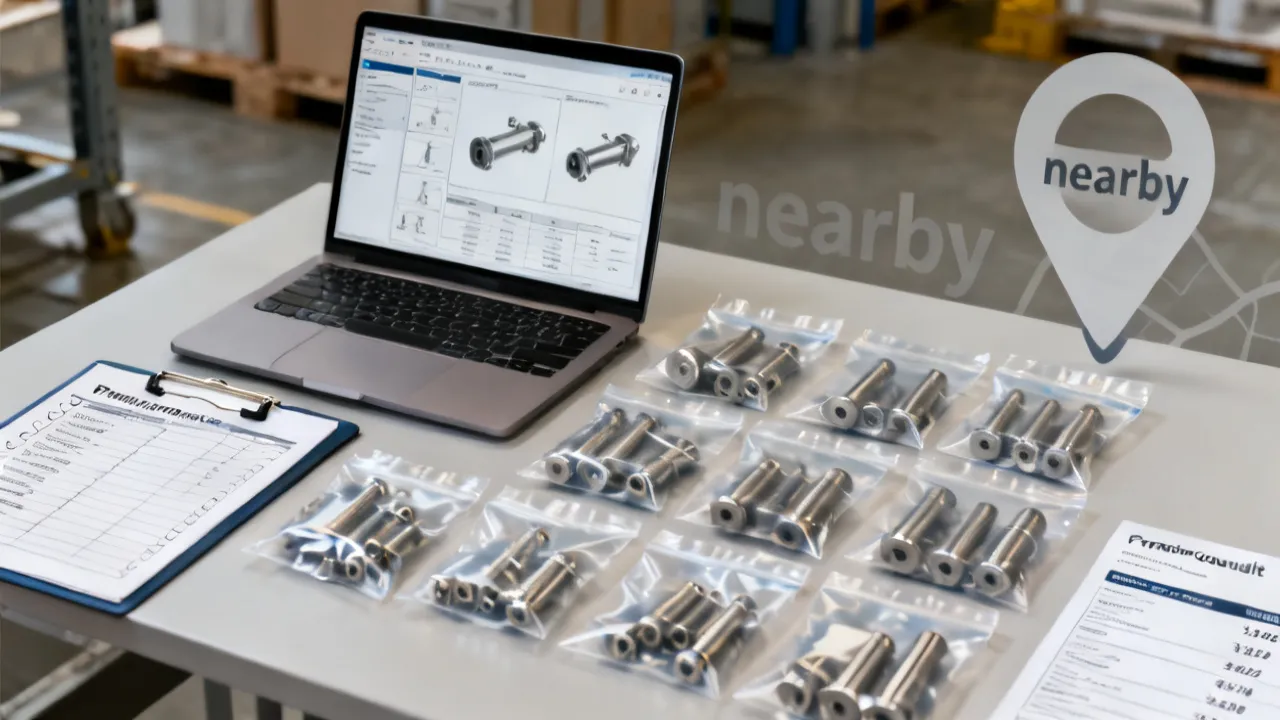
Why Xxvx procurement decisions should start with evidence
When organizations discuss Xxvx, the key goal is rarely the word itself—it’s the buying decision behind it. In practice, procurement teams rarely spend their most valuable time debating what a keyword “means.” They spend it making sure they buy the right thing, at the right time, with the right level of quality proof, and with documentation that holds up under internal scrutiny and external audits. This guide frames Xxvx as a procurement topic: how to validate specifications, compare suppliers, and interpret pricing in a way that reduces delivery and quality risk. Rather than treating price as the only signal, you’ll learn how to assess documentation, lead-time certainty, testing evidence, and compliance posture so the final purchase matches real operational needs.
Because procurement outcomes depend on how requirements are written and verified, the most important work happens before any order is placed. That means aligning internal stakeholders, confirming technical parameters, and verifying what the supplier will actually deliver—down to packaging, quality controls, traceability, and documentation. In the sections below, you’ll find an expert-style analysis, a decision framework, and FAQs designed for practical use.
To make this guide usable in real sourcing workflows, it treats Xxvx as a “keyword-like” identifier that appears repeatedly across internal discussions, emails, catalogs, and quote requests. The core message is that identifiers are not guarantees. Evidence is.
Background: how keywords such as “Xxvx” function in procurement and technical sourcing
The provided keywords include fragments that appear in many sourcing workflows, often used as shorthand for product families, service scopes, part numbers, internal project codes, or procurement categories. In procurement contexts, “Xxvx” frequently acts as a reference label that helps purchasing and engineering communicate about a target requirement without repeatedly restating full specs.
From an objective perspective, these keyword-style identifiers matter because they influence:
- Specification clarity: If Xxvx is used inconsistently, quotes may reflect different interpretations of what is included (materials, tolerances, interfaces, documentation level, or acceptance criteria).
- Comparability of supplier offers: Two vendors can quote the same keyword while delivering different tolerances, materials, packaging standards, test procedures, or traceability formats.
- Risk management: Ambiguous requirements increase the chance of rework, replacement shipments, schedule slips, or escalations—especially when components affect downstream assembly, compliance, or system performance.
- Audit readiness: Many industries require documentation (test reports, certificates, traceability) that must be referenced from the start, not retrofitted after a delivery dispute.
- Operational continuity: If “Xxvx” ends up being treated as a “good enough” label, teams may bypass receiving inspections, leading to avoidable field failures or warranty claims.
In procurement literature, the “keyword” concept is a common pattern: codifying needs into a compact identifier so that sourcing documents remain consistent across emails, RFQs, and purchase orders. The practical takeaway is straightforward: you must treat “Xxvx” as a start point, not a finished specification.
To extend that takeaway, consider the procurement lifecycle: requirements are created, RFQs are issued, suppliers respond, internal teams evaluate, purchase orders are issued, and deliveries are accepted. A keyword typically survives every stage—but the evidence does not. Evidence must be requested, delivered, verified, and referenced in each stage.
In other words, Xxvx is the tag; the specification and evidence are the substance.
Price realism: what “cost” usually includes and what to verify
Any procurement evaluation that centers on price should also ask what the price actually covers. Even when two suppliers quote the same Xxvx-related code, their total cost of acquisition can diverge due to differences in scope, testing, logistics assumptions, and compliance deliverables. The best practice is to interpret “cost” as a bundle of line items and risk-transfer decisions, not a single unit figure.
Even within the same keyword reference, cost can change due to:
- Unit scope differences: One quote may include accessories, installation support, startup training, calibration, or documentation; another may not.
- Quality and test level: Cost can vary based on acceptance criteria, in-process checks, sampling plans, end-of-line testing, third-party testing, or the rigor of test methods and traceability.
- Packaging and protection: For hardware and components, packaging standards can affect damage rates during transit, which then affects inspection time and rejection likelihood.
- Lead time and logistics: Expedited shipping, capacity reservations, or special handling can raise quote values. Sometimes a low unit price hides expensive logistics later.
- Compliance paperwork: Certificates, labeling, material declarations, test reports, and traceability files may be included or charged separately.
- Warranty and after-sales terms: Replacement timelines, warranty coverage boundaries, and remedies can create large cost differences even when unit pricing seems comparable.
- Inspection effort: If a supplier delivers partial documentation or missing certificates, your organization may incur extra incoming inspection labor or may require re-testing.
To stay objective, avoid assuming that the lowest bid equals the best value. Industry guidance consistently emphasizes total cost of ownership (TCO) and risk-adjusted decision-making. That means procurement should model not only “purchase cost,” but also:
- Incoming inspection time
- Rework and replacement likelihood
- Schedule impact (production downtime, line stoppage, or delayed commissioning)
- Audit and compliance overhead
- Warranty claims, field service costs, and reputational risk
For practical guidance, many procurement teams align their internal checklists with established quality and management system expectations, referencing frameworks such as the ISO standards portfolio for quality and management systems. The point isn’t to “copy a standard” into your RFQ. The point is to use those structures—process control, evidence, documented responsibilities, traceability, and corrective action—to design procurement questions that force clarity.
When you do that, “price realism” becomes a discipline: you translate price into scope, scope into evidence, and evidence into confidence.
Supplier evaluation: turning supplier claims into verifiable deliverables
The supplier is where procurement risk becomes real. A supplier offering “Xxvx” should be evaluated on the quality of its evidence and the precision of its commitments. Consider evaluating suppliers using these lenses, but in a way that converts claims into deliverables you can verify:
- Specification fidelity: Does the supplier’s quote reflect the same tolerances, materials, performance characteristics, interfaces, and service scope you requested? A keyword match should not be treated as specification compliance.
- Documentation readiness: Are certificates of conformance, test results, traceability records, or compliance documents included and clearly listed? Are they aligned to the specific lot/batch you are buying?
- Process control: Do they describe quality gates and acceptance criteria relevant to your use case? Do they have a controlled manufacturing or service process with consistent outputs?
- Change management: If the supplier must substitute components or update materials, do they have a formal process that requires approval? And do they notify you in time to avoid last-minute disruptions?
- Response capability: How quickly do they address nonconformities, returns, corrective actions, and root-cause investigations?
- Evidence quality: Is the evidence “paper compliance” or is it the kind of data your QA function can actually use? For example, does a certificate include traceability fields that are meaningful to your audit needs?
If your sourcing discussion includes other keyword fragments beyond “Xxvx,” treat them as part of the same verification system. The goal is to convert each keyword reference into an explicit statement inside your RFQ and purchase order—so the supplier cannot interpret the code loosely.
Practically, supplier evaluation should not stop at “they said they can.” Procurement should ask:
- What evidence will you provide?
- When will you provide it?
- How will you connect evidence to the delivered items (lot, serial number, batch, or job number)?
- What acceptance criteria will you meet?
- What happens if you miss them?
One of the most common failure modes in procurement is a mismatch between “supplier interpretation” and “your operational requirement.” Evidence-based RFQs reduce that mismatch by requiring structured responses.
Location nuance: sourcing “nearby” without over-assuming convenience
The keywords include location placeholders; whenever a city or country appears, they are replaced here with “nearby.” In practice, “nearby” sourcing can reduce transit time and improve communication frequency—yet it still requires evidence. Local availability can shift quote structures (e.g., shorter lead time, lower logistics cost), but quality documentation and acceptance processes remain just as important.
If you are sourcing in a “nearby” context, you can often benefit from more efficient coordination—such as faster clarification calls, easier sample handling, and smoother receipt inspections. Still, do not assume that proximity automatically improves reliability. A nearby supplier can still experience production variability, supply shortages, and documentation errors.
To avoid over-assumption, verify “nearby” sourcing with the same discipline used for any supplier:
- Lead-time commitments in writing: confirm not just the date, but the delivery window and the conditions that could affect it.
- Packaging standards: local deliveries still go through warehouses, docks, and handling equipment that can damage materials.
- Inspection scheduling: ensure receiving has the ability to inspect quickly to avoid storage-related issues.
- Documentation delivery timeline: confirm when certificates and test reports will be provided (before shipment, with receipt, or after inspection).
“Nearby” should reduce friction, not eliminate requirements.
Industry-fit analysis: matching Xxvx to operational requirements
Procurement success depends on fit. Industry practitioners typically treat Xxvx-related procurement as a matching exercise across three domains:
- Technical fit: Does Xxvx meet the functional needs (performance, durability, interface compatibility, environmental tolerance, or safety requirements)?
- Quality fit: Do acceptance criteria and documented testing align with your tolerance for risk? For example, a supplier may test more rigorously but provide less traceability; your risk profile may prioritize traceability.
- Operational fit: Can the supplier meet delivery timelines, packaging expectations, documentation requirements, and receiving constraints (warehouse capacity, labeling systems, inspection capacity)?
To keep this objective, request that suppliers respond to each requirement in a structured way—ideally mapping their compliance to your checklist. This reduces the chance of “quote drift,” where the supplier’s understanding diverges from internal needs without being formally changed.
Industry-fit is often overlooked in procurement because teams focus on whether the supplier can “sell the item.” But operational fit is about whether the delivered item can be integrated without friction. For example:
- A component may technically meet specifications yet arrive with labeling that your barcode system can’t read, slowing receiving.
- A service may quote a turnaround time but lack defined acceptance points, making it hard to verify completion.
- A product may pass on functional tests but lack the documentation required for audit sign-off, delaying downstream approval.
When Xxvx is treated as a keyword rather than an evidence package, operational fit suffers. Evidence-based procurement turns operational fit into explicit requirements.
Decision approach: how to compare offers without bias
When you compare supplier quotes for Xxvx, you want a consistent method. A practical approach used in professional procurement programs includes not only normalization, but also explicit weighting of evidence and risk factors.
When comparing offers, consider these steps:
- Normalize the scope: Ensure each quote references identical spec requirements, quantities, packaging expectations, and documentation milestones. If suppliers propose deviations, require them to document the deviation and its implications.
- Assess lead-time certainty: Compare not just the average lead time, but the probability of meeting your required date. If you depend on a production line schedule, prioritize suppliers who demonstrate stable delivery performance (or who offer credible contingency plans).
- Evaluate quality evidence: Prioritize offers with clear test reports, traceability, and acceptance criteria. Evidence should be specific to the lot/serial numbers to be delivered, not generic “we can provide reports upon request.”
- Quantify risk: If the supplier is less documented, adjust decision weight to reflect inspection and rework risk. Use a structured risk score approach so the decision is defensible, not subjective.
- Validate compliance posture: Ensure suppliers meet relevant compliance needs (regulatory, industry standards, internal quality management requirements). Evidence should be requested upfront.
- Check change-control commitments: If your production process cannot tolerate substitutes, require strict change-control terms. Compare how suppliers handle substitutions and nonconforming deliveries.
This is consistent with how many quality and procurement management systems are structured: objective evaluation criteria, traceable rationale, and a documented basis for selection.
One useful mindset shift is to treat procurement comparison as a multi-dimensional decision rather than an arithmetic problem. Even if one supplier appears cheaper, evidence and acceptance terms may change the “real cost” dramatically.
Comparison table, requirements, and step-by-step guidance
Below is a supplement that turns the earlier analysis into a structured comparison and action plan. (No links are included in the table.)
| Evaluation element | What to request for Xxvx-related procurement | Why it matters | Pass/Fail conditions |
|---|---|---|---|
| Specification alignment | Written spec sheet mapping each requirement to the quote | Prevents quote drift and mismatch during delivery | Supplier’s parameters match your tolerance and interface requirements |
| Documentation | Certificates of conformance, test reports, and traceability details | Enables audits and reduces downstream uncertainty | Documents are provided at agreed milestones and match batch/lot references |
| Quality process | Acceptance criteria, inspection plan outline, and corrective action process | Improves consistency across shipments | Supplier describes controlled processes and nonconformance handling |
| Price breakdown | Unit price plus line-item costs for packaging, documentation, and logistics | Supports total cost comparability | Quote includes all required line items or clearly states exclusions |
| Lead time and delivery | Confirmed delivery window and schedule assumptions | Reduces schedule risk and receiving bottlenecks | Supplier commits to delivery dates consistent with your required timeline |
| Packaging and handling | Packaging standard, labeling approach, and handling instructions | Minimizes transit damage and receiving delays | Packaging aligns with your storage and handling constraints |
| Change control | Substitution policy and approval process for deviations | Prevents unapproved substitutions | No substitution without documented approval of equivalency |
To make the table more operational, you can expand it internally with two additional columns: “evidence to be attached” (for your procurement file) and “who verifies at receiving.” That way you link the decision to real tasks, not only to documentation.
Step-by-step guide: buying Xxvx with defensible sourcing discipline
Use the following sequence to structure your procurement workflow end-to-end. This is not just a planning order; it is a risk control sequence that prevents late-stage surprises.
- Define the requirement set: Convert each Xxvx-related keyword mention into a clear set of technical and documentation requirements. Create a requirement list that includes both “what you need” and “what proof you require.”
- Standardize your RFQ template: Ask suppliers to respond in the same format, including spec mapping and documentary deliverables. Request suppliers to explicitly identify exclusions, assumptions, and deviations.
- Normalize quote scope: Ensure pricing includes the same packaging, shipping terms, and documentation milestones. Require line-item clarity so comparisons remain apples-to-apples.
- Request evidence, not assurances: Ask for test reports, certificates, and traceability references relevant to your batch or lot. If your process depends on serial-number-level traceability, require that level explicitly.
- Compare lead-time certainty: Evaluate delivery windows and define what happens if dates slip (expedite options, penalties, escalation paths, communication frequency). Consider including a schedule adherence clause for high-importance items.
- Inspect before full adoption: For new supplier relationships, plan receiving inspections aligned to your acceptance criteria. Define who performs the inspection and how results are recorded.
- Finalize the purchase order: Include spec mapping, documentation requirements, change-control rules, and acceptance terms. Make evidence delivery a contractual requirement, not a “please provide later” request.
- Close the loop with supplier feedback: After delivery, record outcomes (quality, documentation correctness, responsiveness) and update your supplier scorecard. Use results to refine future RFQs and improve your internal requirement templates.
Procurement maturity shows up in the “close the loop” step. Many organizations purchase repeatedly from suppliers without feeding performance data back into selection criteria. Over time, that reduces evidence quality and increases risk.
In evidence-based procurement, “close the loop” means you store:
- Received documentation completeness and correctness
- Any nonconformities or deviations, including their root causes
- Inspection results and how long receiving took
- Whether documentation matched batch/lot identifiers
- Response times and the effectiveness of corrective actions
Those records become future evidence when you decide whether to keep, expand, or restrict purchasing from a supplier.
Conditions and requirements to include in procurement documents
Professional procurement templates typically include these conditions to reduce ambiguity and protect both sides. The key is that requirements must be measurable and evidence-based.
- Acceptance criteria: Define the measurable parameters and the process for inspection and acceptance. Include tolerances, required testing methods (if relevant), and documentation evidence that supports acceptance.
- Documentation milestones: Specify when certificates and test reports must be provided (e.g., before shipment, with receipt, or before final payment). If your receiving department can’t release goods without documentation, make that explicit.
- Traceability requirements: Require batch/lot identifiers and consistent labeling on delivered units. If items have serial numbers, require them. If parts are grouped, specify how the grouping must be labeled.
- Deviation and substitution control: Require written approval for any deviation from the quoted spec. Clarify what constitutes a deviation versus an equivalent substitution.
- Warranty and corrective actions: Define response time and remediation steps for nonconformities. Include expectations for root-cause reporting and timelines for corrective and preventive action (CAPA).
- Packaging and labeling: Include packaging requirements for “nearby” delivery scenarios as well, especially where receiving docks or storage systems are sensitive. Packaging should protect against expected transit and handling conditions.
To strengthen defensibility, include a “documentation compliance” clause that defines consequences when certificates or test reports are missing or mismatched. For example: goods may be quarantined, acceptance may be delayed, or payment may be withheld until documentation is received.
Also consider requiring suppliers to provide a “compliance matrix” that lists each requirement and its corresponding evidence. This reduces back-and-forth during receiving and helps avoid disputes about whether documentation was provided.
Expert perspective: common pitfalls when Xxvx appears as a shorthand
In real procurement operations, shorthand codes like “Xxvx” can cause predictable issues. From an industry expert standpoint, the most frequent pitfalls include:
- Inconsistent internal interpretation: Engineering, procurement, and operations may mean different things by the same keyword. One team may think “Xxvx” includes a documentation package; another may think it’s only a physical item code.
- Quote drift over time: Supplier responses may evolve after RFQ submission without formal change control. Procurement may compare initial quotes but not updated ones, resulting in mismatched deliverables.
- Documentation treated as optional: Teams sometimes delay paperwork until after receipt—then face audit gaps or acceptance disputes. This is especially damaging in regulated contexts or where customer approvals require documentation.
- Overweighting a single price figure: A lower unit price may hide higher receiving costs, inspection workload, or replacement risk. It can also hide incomplete warranty terms.
- Not specifying evidence granularity: Suppliers may provide generic certificates that do not match the batch/lot delivered. This can render documentation unusable for audits or traceability investigations.
- Weak acceptance criteria: If acceptance criteria are vague, receiving disputes become likely. “Works as expected” is not an acceptance criterion.
- Missing change-control triggers: If suppliers can substitute materials due to supply shortages, you must define triggers that require approval—especially if substitutes affect performance or compliance.
- Failure to plan receiving: Even when specifications are correct, procurement can fail operationally if receiving inspection capacity is not available to verify evidence quickly.
Mitigation is typically procedural: clarify requirements, normalize scope, require evidence, and write acceptance terms directly into the purchase order. In addition, evidence-based procurement benefits from:
- Pre-award sampling or qualification (when possible): For new suppliers or new product configurations, require samples with full documentation.
- Clear responsibilities: define who verifies what (QA, incoming inspection, engineering approval, compliance team).
- RFQ version control: ensure everyone is working from the same RFQ revision and capture clarifications in writing.
- Supplier scorecards tied to evidence: treat documentation quality and traceability accuracy as performance metrics, not just manufacturing quality.
FAQs about Xxvx procurement, suppliers, and pricing
1) What does “Xxvx” mean in procurement documents?
In many procurement contexts, Xxvx functions as an identifier—often referencing a product family, a service scope, or an internal code. Its meaning must be confirmed through the specification sheet and quote line items so that all parties align on tolerances, materials, interface compatibility, and documentation requirements.
In evidence-based procurement, the key question is: “What exactly is included under this identifier?” Your RFQ should turn the identifier into an explicit set of requirements and deliverables.
2) Why can two suppliers quote the same Xxvx keyword but deliver different outcomes?
Because keywords alone rarely capture full technical scope. Differences can include materials, tolerances, quality acceptance criteria, packaging standards, documentation completeness, traceability formatting, and lead-time assumptions. The cure is structured RFQs and spec mapping that require explicit compliance responses.
Another driver is that suppliers sometimes treat a keyword as a “reference catalog label” and then propose their nearest configuration. Without strict deviation control and evidence requirements, that “nearest configuration” may not match your operational needs.
3) How should I compare prices fairly?
Normalize the scope first: compare unit price alongside line-item inclusions such as documentation, packaging, logistics, warranty terms, and any required testing. Then evaluate total cost implications—inspection effort, risk of nonconformance, and potential rework—rather than relying on unit price alone.
In practice, many procurement teams calculate a risk-adjusted value: they assign weights for evidence completeness and schedule reliability and then compare overall “expected cost.” The exact method varies, but the principle remains: the lowest headline price is not the lowest operational cost.
4) What documentation should I request for Xxvx-related purchases?
At minimum, request certificates of conformance and any relevant test reports tied to batch/lot identifiers, plus traceability details and an inspection/acceptance overview. The exact set should match your industry and regulatory needs.
If traceability is important, require documentation that includes the delivered lot/serial numbers and links those identifiers to test results. Generic paperwork that doesn’t map to your delivered items may be worse than no paperwork because it creates false confidence.
5) Is “nearby” sourcing always better?
Not automatically. “Nearby” can reduce transit time and improve communication, but reliability still depends on confirmed delivery windows, packaging standards, and evidence of consistent quality processes. Always verify commitments in writing.
Nearby sourcing can also bring hidden tradeoffs: smaller suppliers might have less inventory buffering, and frequent handoffs may increase the chance of paperwork delays. You still need robust acceptance and documentation requirements.
6) How do I handle deviations if the supplier can’t meet the original Xxvx spec?
Require a formal deviation request, documented equivalency rationale, and written approval before substitution. If documentation or testing changes, update acceptance criteria and re-validate fit for the intended operational use.
In addition, consider whether deviations impact compliance. Some substitutions may be functionally equivalent but not acceptable for regulatory or audit purposes. Your deviation process should therefore include a compliance review step.
7) What are practical acceptance “pass/fail” requirements?
Define measurable criteria (tolerances, inspection results, documentation correctness), acceptance responsibility at receiving, and the remediation timeline for nonconformities. Make sure the purchase order mirrors these requirements so decisions are consistent.
“Documentation correctness” should be treated like a pass/fail requirement when audits or traceability are critical. For example: the documentation must match the batch/lot identifier on the delivered items and must be issued by the required authorization.
Closing guidance: treat Xxvx as a starting point, not the finish line
Procurement decisions involving Xxvx succeed when teams treat keywords as indexing terms that must be backed by explicit requirements, documented evidence, and defensible acceptance criteria. By normalizing scope, interrogating price breakdowns, evaluating supplier process control, and building clear requirements—your organization can improve delivery reliability and reduce quality risk, including when sourcing from vendors operating “nearby.”
In an evidence-first procurement culture, the buying decision becomes repeatable: you don’t just “choose the quote that looks right.” You choose the supplier and offer that demonstrably meets your technical, quality, operational, and documentation needs—supported by evidence that can stand up during receiving, audits, and downstream investigations.
If you want, share your industry context (e.g., electronics, industrial parts, logistics services, or manufacturing procurement) and the kind of documentation you require, and I can adapt the checklist and acceptance conditions more precisely to your scenario.
-
1

A Guide to Cost-Efficient Small Electric Cars for Seniors
-
2
Mastering Debt Consolidation: Boost Your Credit Score and Manage Interest Rates
-
3
Your Guide to Loans, Credit Checks, and Interest Rates
-
4
Affordable Independent Living: Finding the Right Senior Housing
-
5
Guide to Senior Living Apartments: Affordable and Comfortable Environments