Xvidio Guide: Safe, Practical Video Playback Insights
This guide explains how Xvidio fits into modern video playback workflows, from codec behavior to quality expectations and responsible device compatibility checks. It reviews background concepts behind Xvidio-style media formats, including why encoding choices and playback settings matter, and how to approach suppliers and pricing information with an objective, audit-friendly mindset.
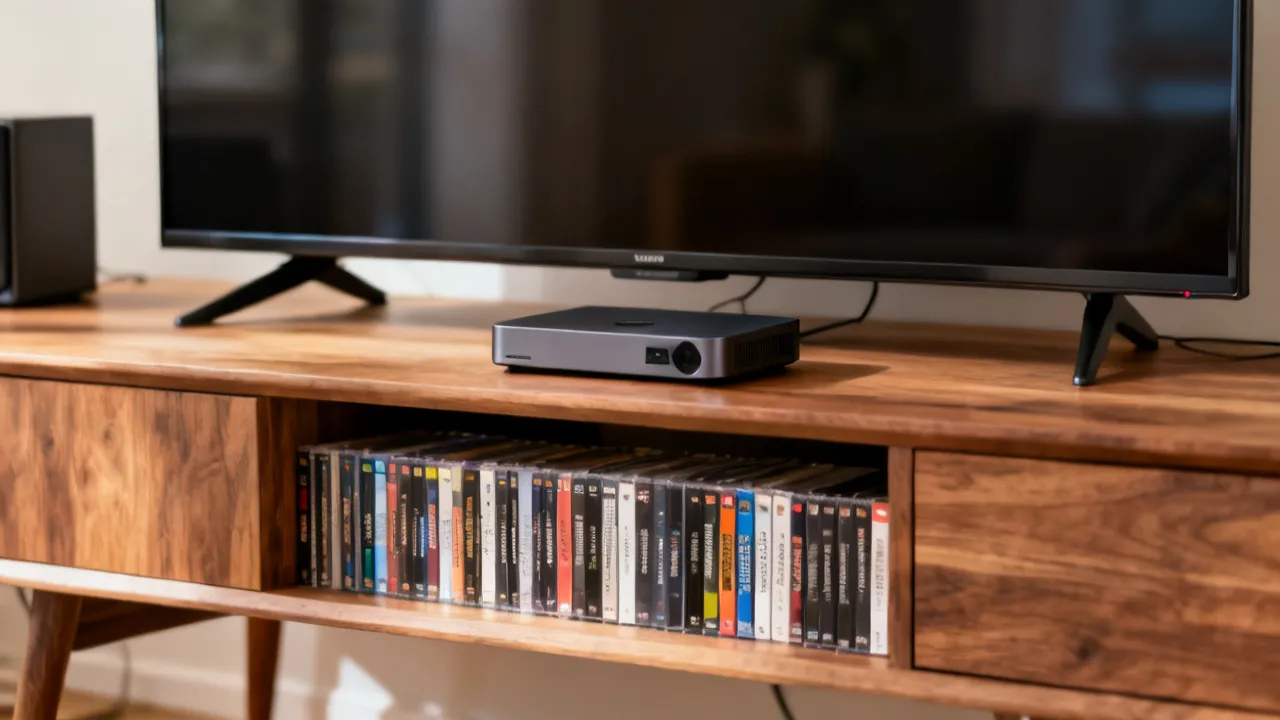
Critical Takeaways First: What to Verify About Xvidio
When evaluating Xvidio for video playback, the most important step is compatibility verification: confirm your player or device supports the relevant codecs, container types, and audio tracks before investing time or money. Quality outcomes are often less about “the platform” and more about encoding settings, bitrate strategy, and playback configuration. From an industry perspective, a careful pre-check reduces troubleshooting cost, prevents mismatch issues, and improves viewing stability.
Because users frequently encounter variations in performance across devices, it’s also wise to compare how content behaves under different network conditions and decoding capabilities. If you are sourcing playback services or bundled media from a supplier, request documentation about supported formats and delivery characteristics. Pricing—whether subscription-based, usage-based, or tied to a media library—should be understood alongside technical constraints, not in isolation.
In other words: treat Xvidio as an end-to-end workflow. If any part of that workflow (codec, container, audio track, delivery method, player support, or network behavior) doesn’t align with your environment, playback friction is almost guaranteed. The most cost-effective approach is to verify alignment before you commit.
Understanding Xvidio in the Context of Video Delivery
Xvidio can be viewed as a reference label people use when discussing a specific approach to video access and playback. In practice, the name you see in user discussions may be tied to:
- Playback compatibility (what formats the receiving device can decode)
- Encoding lineage (how video was compressed and packaged)
- Delivery method (streaming vs. file-based playback workflows)
- Audio track handling (language selection, channel layout, and codec support)
From a professional standpoint, the key is to treat Xvidio not as a single magic file format, but as a workflows label. Your goal is to align the workflow with your environment—TV, browser, mobile device, or dedicated media player.
It can be helpful to think of “Xvidio” as a shorthand for the entire pipeline: how a video is encoded (codec choice, profile level, GOP structure), how it is wrapped (container and metadata), how audio is authored (codec, sample rate, channel layout, track language), and how the stream is delivered (protocol, segmentation strategy for streaming, buffering behavior, bitrate ladder for adaptive streaming). Even if two services both use the same casual naming label, the underlying pipeline may differ significantly—so your evaluation should always anchor to concrete technical characteristics rather than the branding term.
Why Compatibility Matters More Than “Looks Like It Should Work”
In real deployments—whether consumer households or small media rooms—playback failure usually comes down to mismatch. Even when two systems both “support video,” they may differ in:
- Codec support (video decoding profile/level, audio codec capabilities)
- Container support (how the stream is wrapped: MP4-like vs. other packaging)
- DRM or restrictions (where applicable, playback authorization and license checks can affect outcomes)
- Color handling and HDR assumptions (misinterpretation can cause washed colors or incorrect tone mapping)
Industry guidance consistently emphasizes that encoding and delivery decisions must match the player’s decoding pipeline. For background, see documentation and standards references from ISO/IEC and industry codec maintainers (e.g., how H.264/H.265 profiles are defined, and how audio codecs are specified). While individual vendor implementations vary, the underlying constraint remains: a device can only decode what it is built to decode.
Compatibility isn’t only about “can decode,” though. Some players decode successfully but behave poorly under stress—for example, seeking may be inaccurate, the audio may drift after a network hiccup, or the player may fail to recover from buffer stalls. That means you should not only verify basic playback, but also verify playback behavior under realistic conditions: fast-forward/seek, switching audio tracks, starting playback after a delay, and resuming from partially watched positions.
Quality Expectations: What Actually Drives Visual and Audio Results
People often ask whether Xvidio delivers “good quality,” but a more objective question is: what are the encoding parameters? In professional QA, the quality conversation usually breaks into:
- Bitrate strategy: consistent bitrate vs. variable bitrate behavior (VBR) affects stability and compression artifacts
- GOP structure: affects seeking and error resilience
- Resolution and frame rate: mismatches can cause stutter or repeated frames
- Audio track codec: influences sync, clarity, and channel rendering
If you’re comparing offerings (including by price), request or review technical notes rather than relying on marketing language. Many “quality” claims are subjective; technical documentation is auditable.
To make “good quality” measurable, you can ask for (or infer from test files) details such as:
- Target bitrate vs. achieved bitrate: a promised resolution doesn’t guarantee adequate bitrate allocation, especially for complex scenes.
- Resolution and scaling approach: if the source is upscaled or downscaled, examine whether scaling artifacts appear (ringing, blurring, aliasing).
- Frame rate mode: constant frame rate vs. variable frame rate (VFR). VFR can cause stutter in some playback environments.
- Chroma subsampling and color sampling: differences can show up on gradients, skin tones, and low-light scenes.
- Audio codec and profile: audio encoding complexity affects clarity, especially on speech and music with lots of high-frequency content.
- Audio normalization or dynamic range processing: perceived loudness consistency matters for comfort and intelligibility.
In practice, quality evaluation often requires listening and watching under the same conditions you care about. A video might look excellent on one TV but reveal banding or macroblocking on another due to different display processing and scaling behavior. Similarly, audio could sound crisp on a soundbar but become harsh or mis-mixed on headphones if the downmix or channel mapping is not handled correctly.
Price Considerations: How to Compare Without Being Misled
When you encounter Xvidio-related pricing—whether for a media library access plan, a device bundle, or a supplier-provided playback service—the most reliable comparison method is to break the cost into components that correlate with operational requirements:
- Access model: subscription, pay-per-view, or usage-based charging
- Device coverage: number and type of supported devices
- Format/codec support: whether the supplier indicates compatibility with mainstream players
- Streaming conditions: bandwidth recommendations, adaptive behavior, and buffering expectations
- Support and troubleshooting: documented procedures and response paths
Instead of comparing only monthly cost, compare whether the plan reduces your risk of re-encoding, incompatibility errors, or repeated troubleshooting. In production media workflows, these “hidden costs” often matter more than the listed price.
To do this well, you can convert technical uncertainty into operational risk. For example:
- If you choose a plan with unclear codec/container documentation, you may later need a conversion pipeline. Conversion can add cost, CPU/GPU time, storage overhead, and potential quality degradation.
- If the delivery method is streaming but the provider cannot explain adaptive bitrate behavior, you might experience buffering that directly affects satisfaction or productivity.
- If audio track handling (language selection, stereo vs. surround, subtitle timing) is vague, you may lose control of accessibility features, which is a major quality dimension for real users.
Therefore, your price comparison should include a “risk premium” mental model: the less transparent the technical details, the higher the potential cost of failures. A cheaper offering with high ambiguity can become more expensive when you account for engineering time, support tickets, or user dissatisfaction.
Supplier Evaluation: Due Diligence for Playback Services
If you are dealing with a supplier (for example, a vendor offering a package that includes Xvidio access or playback components), treat evaluation like procurement:
- Ask for a technical compatibility statement (supported codecs, container types, and player/browser environments)
- Request sample playback outputs from the same environment you will use (or at least an equivalent test rig)
- Confirm delivery method (how it reaches the device; whether it is file-based, streaming-based, or both)
- Document support expectations (what happens when playback fails—logs requested, troubleshooting steps, and escalation paths)
This approach is consistent with standard vendor due diligence used across broadcast, streaming operations, and enterprise media distribution—where SLAs and technical specifications are key to reliable playback.
To make supplier evaluation even more rigorous, you can ask for test matrices. A test matrix specifies which combinations of devices, OS versions, browsers, player apps, and network conditions have been validated. When suppliers provide a matrix (even a partial one), you can judge whether your target environment is likely to behave similarly.
You can also ask about:
- Known limitations: what edge cases are documented (unsupported audio codecs, specific browser versions, or specific hardware decoders)?
- Fallback behavior: if the ideal codec configuration is not supported, does the provider offer alternative encodes or lower bitrate/resolution streams automatically?
- Subtitle and caption support: if subtitles are included, are they delivered as embedded tracks, sidecar files, or timed overlays?
- DRM and licensing: if DRM is involved, what license flow is used and which playback agents support it?
In many real-world failures, the supplier can respond quickly if you already have the needed information. A good supplier will document how to collect logs and which error codes correspond to which class of problem (decode failure, network stall, permission issue, or track parsing error).
Operational Workflow: How to Test Xvidio Playback Responsibly
Before committing to a plan or integrating a service into a routine, run a structured test. The objective is to determine whether you can reproduce stable playback across your typical viewing scenarios (Wi‑Fi vs. mobile data, different times of day, and multiple devices).
Testing should be treated like verification in engineering: you want repeatability, comparability, and evidence. A “quick test” that only checks that the video plays once under ideal conditions doesn’t reveal the most common failure modes. Instead, you should design tests that stress the workflow in ways that mirror actual usage.
Step-by-Step Guide (for Setup, Testing, and Conditions)
Note: The steps below are written to be audit-friendly and do not assume any specific device brand. Follow them with the documentation provided by your device manufacturer and any relevant service supplier.
- Confirm codec support on your target device/player.
Check whether the player supports the expected video codec profiles and the audio codec used by the Xvidio workflow you’re considering. - Identify the container and stream behavior.
If the supplier lists file/container types or streaming characteristics, record them for reproducibility. - Run short-duration playback tests (5–15 minutes).
Use representative content: fast-motion scenes, dialogue-heavy scenes, and segments with complex audio (if available). - Test under realistic network conditions.
Compare results on stable Wi‑Fi and your typical alternate connection (e.g., mobile tethering) to evaluate buffering resilience. - Validate audio synchronization.
Watch for drift, unexpected muting, or channel rendering issues (stereo vs. surround downmix). - Check seeking and playback controls.
Verify that scrubbing behaves normally and that playback starts within an acceptable time window. - Document outcomes.
Keep a short log: device model, player version, network type, and a timeline of any playback interruptions or errors. - Assess whether re-encoding is required.
If playback fails due to unsupported formats, determine whether the workflow allows alternative encodes or conversion paths without compromising quality.
To extend this into a more reliable verification routine, you can add a few “repeatability” measures:
- Re-run the same test at least twice after a gap (e.g., later the same day) to confirm the behavior is consistent and not a one-off network fluctuation.
- Test start conditions: start playback immediately after selecting the title, after a period of idling, and after switching apps to check resume behavior.
- Test switching: switch quality levels (if adaptive streaming allows manual selection), switch audio tracks (if multilingual), and toggle subtitles to confirm the player handles metadata transitions cleanly.
- Test error recovery: intentionally introduce a brief network interruption (if feasible) and observe whether playback resumes smoothly or gets stuck in an unrecoverable state.
Comparison Table: Practical Decision Inputs and Requirements
| Decision Input | What to Check | Why It Matters for Xvidio Playback |
|---|---|---|
| Device compatibility | Supported codecs, audio formats, and container support | Prevents decode failures and reduces repeated troubleshooting |
| Delivery behavior | Streaming vs. file delivery characteristics | Impacts buffering stability and start-up time |
| Quality profile | Resolution, frame rate, bitrate strategy, and audio track type | Determines artifact levels, smoothness, and clarity |
| Price structure | Access model and included device coverage | Ensures cost aligns with your usage scenario |
| Supplier support | Logging requirements, escalation paths, and response procedures | Speeds resolution if playback issues occur |
| Testing conditions | Wi‑Fi stability, alternate network method, and typical viewing times | Reveals how the workflow behaves outside ideal conditions |
Conditions and Requirements to Reduce Playback Risk
- Use updated players and system software where feasible; codec compatibility improvements and bug fixes can change outcomes.
- Maintain consistent audio settings (e.g., avoid unexpected enhancements that may alter channel mapping).
- Use representative content for testing rather than only low-motion or short clips.
- Record troubleshooting evidence (timestamps, error codes/messages, and device/player versions).
Beyond these baseline steps, you can reduce risk by proactively controlling variables. For example, if your test environment includes Bluetooth audio devices, Wi‑Fi power saving mode, or device-specific audio enhancements (room correction, virtual surround, loudness normalization), disable or standardize them during testing. This doesn’t mean you must leave them off forever; it means you should isolate the cause when something goes wrong.
Additionally, watch out for the following common “gotchas” that can mimic codec incompatibility:
- Hardware acceleration settings: some players allow switching hardware decoding on/off. Changes can affect stability and error recovery.
- Browser differences: if playback occurs in a browser, codec support and DRM support can differ between Chrome, Firefox, Safari, and embedded webviews.
- OS-level audio pipeline issues: sample rate conversion and audio routing can cause delay or distortion.
- Clock and synchronization handling: some devices handle A/V sync slightly differently, especially under poor network conditions.
In a mature QA process, you treat these as variables and document them, so you don’t attribute every symptom to the Xvidio workflow itself.
Localization Note: Viewing Habits and Practical Expectations
In many regions, including households around nearby metropolitan and suburban areas, users typically watch on a mix of TVs and mobile screens—often switching between Wi‑Fi and mobile data while commuting. That real-world behavior makes adaptive playback stability and audio synchronization especially important. A workflow that appears smooth on a single device at home may behave differently during mobile viewing; therefore, testing across the devices you actually use is the most realistic way to judge Xvidio performance.
Localization can also affect how audio tracks and subtitles are delivered. If you evaluate Xvidio in one language and then use it in another, you may uncover differences in audio codec selection, different channel layout choices, or alternate track encoding. Some workflows encode dubbed tracks differently than original tracks; if so, your device may support one track but not another, creating a confusing “it works except when I switch audio” scenario.
Therefore, a robust test should include:
- At least two audio tracks (e.g., original language and a dubbed alternative), if available.
- Subtitles/captions toggling on and off (not just once, but at least at a mid-playback point).
- Switching devices at a similar timestamp to see whether state transitions (resume, track selection) behave consistently.
Industry Context: How Standards Inform Practical Outcomes
Video playback reliability is shaped by standards for encoding, containerization, and decoding. While the naming of “Xvidio” may vary across communities, the underlying engineering constraints remain grounded in widely adopted specifications for codecs and media containers. For objective background, readers can consult:
- ISO/IEC publications and codec specifications
- Official documentation for media frameworks and playback engines
- Broadcast/streaming best practices from recognized industry consortia
This matters because when you understand the standard constraints, you can interpret why a given device behaves differently—and you can evaluate suppliers and price offers more rationally.
To make this concrete, consider the idea of codec profiles and levels. Many devices support a codec family (e.g., H.264 or H.265) but still fail when presented with an encoding profile or level outside what the device decoder expects. Similarly, audio codecs may be supported in principle but fail when they are packaged in an unexpected way or when a specific channel layout isn’t handled properly.
Another standards-driven issue is container and metadata behavior. Even when the raw codec bitstream is decodable, a container that lacks expected indexing, has unusual track ordering, or includes unsupported metadata can break playback initialization or seeking.
From an engineering perspective, standards don’t guarantee identical behavior across devices, but they provide predictable constraints. Your job as a buyer/evaluator is to map those constraints onto your environment and demand evidence that the supplier has done the same.
FAQs About Xvidio Video Playback
1) What is Xvidio, exactly?
Xvidio is commonly used as a label for a particular video access or playback workflow. In practice, what matters most for you is the underlying encoding and delivery behavior (codec support, container type, audio track configuration, and device compatibility). Because the term may be used loosely, you should always ask what specific codecs, profiles, container types, and delivery mechanisms are involved.
2) Why does Xvidio play on one device but not another?
Most playback failures come from codec profile or audio codec support mismatches, container handling differences, or variations in player decoding pipelines. Even if both devices “support video,” their supported codec sets can differ. Additionally, some devices may decode but cannot handle certain edge cases (like VFR timelines, unusual GOP patterns, or specific audio track layouts), causing partial failure that appears as stutter, A/V drift, or broken seeking rather than complete failure.
3) How should I compare Xvidio-related pricing?
Compare the access model, included device coverage, documented codec/container support, and supplier support procedures. The goal is to estimate your operational risk and troubleshooting time—not only the monthly cost. If you can, compare based on a test plan: ask for sample clips or a short trial and evaluate technical performance in your target environment.
4) Does better “quality” always require higher cost?
Not necessarily. Quality depends on encoding choices like bitrate strategy, resolution, and audio codec setup. Some plans achieve strong results with efficient encoding, while others may deliver content that is technically compatible but compressed in a way that reduces visual clarity. In other words, “higher cost” might correlate with better resources, but it doesn’t guarantee better encoding parameters.
5) What conditions should I set before committing?
Run short test sessions across your target devices and networks, validate audio synchronization, confirm seeking behavior, and document outcomes. If the supplier cannot provide compatibility guidance, treat that as a procurement risk. A practical commitment checklist includes: (a) verified decoding support, (b) confirmed audio track behavior, (c) tested seeking/resume, and (d) clear support escalation if failures appear.
6) Are there reliable ways to troubleshoot playback issues?
Yes: collect device/player versions, record timestamps of failures, note any error messages, test with representative content, and confirm whether the failure correlates with a particular codec or audio track. Then use those logs to request targeted support from the supplier. A good troubleshooting approach narrows the failure to a category: decode failure vs. network issue vs. metadata parsing vs. permission/DRM.
7) Can I improve playback quality after the fact?
Sometimes, but it depends on the delivery workflow. If the original encode is incompatible with your device, re-encoding or conversion may be required—however, that should be evaluated carefully because it can introduce quality loss or additional complexity. If the issue is compatibility rather than quality, you may prefer a re-encode that targets the correct codec profile and audio track format rather than repeatedly transforming the content, which can degrade quality over multiple generations.
8) How do I tell whether the problem is encoding vs. network?
Use a diagnostic pattern: if playback fails immediately or consistently on all networks, suspect encoding/container compatibility. If playback starts but stutters only under certain bandwidth/latency conditions, suspect network delivery and buffering behavior (or adaptive bitrate ladder issues). You can also compare behavior across devices connected to the same network: if one device stutters and another doesn’t, the problem may be decode pipeline performance and buffer handling rather than raw bandwidth.
9) What audio issues should I watch for during testing?
Watch for audio/video sync drift, missing audio on certain tracks, unexpected loudness changes between titles, channel mapping errors (stereo played as surround incorrectly), and subtitle timing mismatches. These issues sometimes appear only with specific audio codecs or when switching tracks mid-playback, so you should test track switching as part of your evaluation.
Practical Recommendations for Buyers and Evaluators
If your goal is a stable, repeatable playback experience using Xvidio, prioritize:
- Written compatibility expectations from the supplier or service documentation
- Controlled testing across your real devices and networks
- Clear escalation routes if playback fails (what logs are needed and how quickly issues are addressed)
- Quality assessment by technical criteria rather than only subjective impressions
It can also help to formalize your evaluation criteria into a simple acceptance test. For example, define what “pass” means: “playback starts within 5–10 seconds,” “seeking works within 1–2 attempts,” “audio remains in sync within a small tolerance,” and “no error banners appear during a 15-minute stress segment.” This turns “it seems fine” into a measurable standard.
Additionally, you should consider operational constraints and user experience factors that go beyond codec support:
- Startup time: even if decoding works, slow initialization can feel broken to users.
- Switching speed: when users change episodes or select a different audio track, delays may be caused by buffering or track parsing.
- Resume accuracy: resuming at the correct timestamp is part of perceived quality.
- Consistency across content types: some titles (sports, animated content, high-motion movies) can stress encoding differently than static interviews.
When a supplier provides a technical spec, ask whether their encoding strategy is consistent across titles, or if it varies widely. If it varies, your tests might need to cover multiple content types to avoid a misleading “one title works” conclusion.
Conclusion: Treat Xvidio as a Workflow, Not a Hype Claim
From an industry perspective, the most reliable way to evaluate Xvidio is to focus on concrete factors: device codec support, delivery behavior, encoding quality drivers, and supplier-backed compatibility requirements. If you align these elements and perform structured testing, you can make decisions based on reproducible evidence rather than assumptions—resulting in fewer failures and a smoother viewing experience.
For any final purchase decision, ensure you have the supplier’s technical documentation (where available), and validate the workflow within your own typical conditions. That disciplined approach is the difference between a working playback setup and a persistent troubleshooting loop.
In practice, your success with Xvidio depends on how well you connect the dots between the encoding pipeline and the playback environment. If you demand clarity on codecs, containers, audio tracks, and delivery behavior—and then verify it with tests that mirror real usage—you reduce the likelihood that “it should work” turns into “why does it break here?” The workflow mindset is what turns a speculative purchase into a confident evaluation.
-
1

A Guide to Cost-Efficient Small Electric Cars for Seniors
-
2
Mastering Debt Consolidation: Boost Your Credit Score and Manage Interest Rates
-
3
Your Guide to Loans, Credit Checks, and Interest Rates
-
4
Affordable Independent Living: Finding the Right Senior Housing
-
5
Guide to Senior Living Apartments: Affordable and Comfortable Environments