04978681642 Supply: Pricing, Sources, and Verification Steps
This guide explains how to evaluate a supplier and confirm product details tied to 04978681642. It reviews what such identifiers may represent in supply chains, how pricing and sourcing checks are typically performed, and which documentation to request. The article stays objective, focusing on practical verification methods, risk controls, and buyer requirements used by responsible procurement teams.
Start here: How to verify supplier details tied to 04978681642
When you encounter an identifier such as 04978681642 in procurement or sourcing discussions, the very important step is verification: confirm the legal supplier identity, the exact item specification, the documented price basis, and the fulfillment conditions before any payment or order commitment. This approach helps you avoid mismatches between what is quoted and what is delivered, especially when the initial reference is provided via message, catalog, or informal inquiry channels.
In practical terms, responsible buyers treat any number—whether it appears in a quote, an invoice reference, a product code, or a phone/contact field—as a starting clue, not proof. Your job is to convert that clue into verifiable commercial documentation: quotation terms, bill of materials/spec sheets, shipping method, warranty/service coverage, payment terms, and a clear ownership/traceability chain.
Even when the identifier appears “obviously correct” or comes from a familiar supplier contact, you should still follow a disciplined process. Procurement errors can arise from many sources: internal typing mistakes, outdated catalog data, different quotation versions, substitution of equivalent products without written approval, or invoicing based on a different pricing schedule. Verification is the control layer that ensures the transaction you are about to fund is the transaction you actually receive.
Why identifiers matter in sourcing and pricing
Procurement teams frequently use reference numbers to track inquiries, quotation versions, contract amendments, or shipment batches. In some workflows, identifiers like 04978681642 may correspond to an internal customer request, a supplier contact record, a line-item reference, or a logistics document handle. Without seeing the surrounding paperwork, the identifier itself cannot establish authenticity.
From an industry standpoint, the key is to reduce ambiguity. A credible supplier can explain what the identifier is associated with—such as a quotation number, a product catalog entry, or an order template—and can reproduce the details consistently across documents (quote, packing list, invoice, and shipping confirmation).
There is also a governance angle. Many organizations implement “source-of-truth” rules that determine what counts as authorization. In those environments, an identifier mentioned in a conversation is not considered the authorization artifact. The authoritative artifacts are typically the formal quote document, purchase order, or contract terms. Verification ensures that the identifier is correctly mapped to the authoritative artifact.
How to evaluate price information without relying on assumptions
Pricing disputes often arise from differences in scope: unit price versus total price, material grade, quantity breaks, packaging type, incoterms, and lead times. When you are evaluating price information connected to an identifier like 04978681642, insist on a structured quote that clearly states:
- What exactly is being priced: model/spec, size, grade, brand (if applicable), and quantity.
- Unit of measure: per unit, per box, per kilogram, or per lot.
- Inclusions and exclusions: taxes, shipping, documentation, installation/service (if relevant).
- Lead time and validity: when the quoted price is effective.
- Payment terms: deposit %, net terms, and cancellation/refund conditions.
If a supplier cannot provide this breakdown, treat it as a procurement risk indicator. In regulated or high-value supply contexts, clarity is not optional; it is a baseline for effective purchasing governance.
To make pricing verification more robust, buyers often use a “total landed cost” mindset. The goal is not only to know the unit price; it is to understand the full cost delivered to the agreed location or to the agreed handoff point. “Landed cost” typically includes freight, insurance, tariffs/duties where applicable, documentation, and sometimes handling fees. When a supplier quote is incomplete, you may discover late that you were quoted “ex-works” but expected “delivered,” or that taxes were assumed rather than included.
Additionally, be wary of quotes that show a total amount but hide the underlying formula. For example, a quote might say “price includes documentation” without specifying which documentation. If the destination requires particular certificates (e.g., inspection certificates, certificates of origin, compliance statements), you need to know exactly what is included, who issues it, and when you receive it.
Supplier due diligence: what a responsible buyer should require
The supplier identity behind 04978681642 should be verified using documentary and operational evidence. At minimum, request:
- Company registration details (legal entity name, registration number, and address).
- Tax and billing information matching the quote and invoice format.
- Catalog/spec sheet or product data that matches the exact item you intend to purchase.
- Quality assurance documentation relevant to the product category (e.g., inspection reports, compliance statements).
- References or track record appropriate to your industry segment (case studies are often more useful than generic claims).
Do not rely solely on messaging. A buyer should expect consistent information across quote documents and formal invoicing. Procurement top practice emphasizes traceability: you want the ability to identify what was promised, who promised it, and what was shipped.
Supplier due diligence is not just about “is this company real?” It is also about “is this the correct legal entity and does it have the authority to supply what is quoted?” For example, a supplier may operate through multiple subsidiaries or use trading names. The quote might be issued by one entity while the invoice arrives from another. In many cases this is not inherently wrong, but it must be disclosed and aligned so that payment obligations and warranty/service responsibilities are correctly assigned.
Furthermore, you should confirm that the supplier is capable of delivering on the stated timeline. If 04978681642 is tied to a lead-time quote, request evidence such as stock availability statements, manufacturing lead times, or a production schedule. If lead time depends on allocation, ask for explicit conditional language (for example, “subject to material availability”) and what happens if the condition is not met.
Industry perspective: common failure modes in sourcing inquiries
Even experienced buyers face predictable problems. The very frequent failure modes include:
- Spec drift: the initial description differs from the shipped item or the final invoice line-item.
- Scope gaps: shipping charges, taxes, or compliance documentation are not included.
- Version confusion: different quote versions exist, but the buyer is not informed which one applies.
- Lead time surprises: the promised timeline is conditional on stock availability, which is not clearly stated.
- Payment risk: deposits are requested without an enforceable written agreement or refund terms.
To counter these, you need a verification workflow that treats identifiers like 04978681642 as an entry point for document-based confirmation.
Another frequent failure mode is “silent substitution.” A supplier may ship a component that is arguably equivalent but not identical to the spec you intended—perhaps with different materials, tolerances, or performance characteristics. Silent substitution can be especially problematic when your downstream system requires strict compatibility, or when you must meet regulatory compliance. Written acceptance criteria and an explicit “no substitution without approval” clause in the purchase order can prevent this.
There is also the risk of “invoice mismatch.” Sometimes the supplier references the identifier on an invoice, but the line items don’t match the quote (different quantities, different unit prices, missing discounts). If your processes only compare totals, not line-item content, you might not detect the mismatch until it becomes a dispute.
Finally, disputes often escalate due to poor communication evidence. If the only documentation is a chat thread and the supplier later changes the wording of terms, you may struggle to prove what was agreed. Verification therefore also means that you preserve communication and ensure the key terms are reflected in a formal document.
Localization note (nearby-focused)
Your request includes instructions that location-like terms (for example, city or country) should be replaced with “nearby” whenever they appear in keywords. Since the provided keywords list does not include explicit geography beyond that instruction, this article keeps the focus on buyer practices that apply whether the supplier is operating in a nearby market or coordinating cross-region shipments. Local procurement norms still matter—such as common payment methods, import documentation expectations, and typical delivery lead times—but the verification principles remain consistent.
In a nearby-market context, buyers may still face cross-border documentation requirements depending on the actual source of goods. “Local” does not automatically mean “low risk” or “minimal documentation.” The supplier should still provide the necessary certificates and shipping documentation that match the destination requirements and the product classification.
Supplement: structured comparison table (rephrased from “additional important information”)
Because no separate “Additional important Information” content was provided, the very useful supplement is a practical decision matrix you can apply immediately when you see references like 04978681642. Use it to compare what you have versus what you should obtain before purchasing.
| Check area | What you might see early | What you should require in writing | Buyer condition / requirement |
|---|---|---|---|
| Identifier linkage | A number such as 04978681642 is referenced in chat or a quote preview | Documented mapping to the quote/order line or quotation version | Supplier must clearly state what the identifier refers to and reproduce it on the formal quote |
| Product specification | Short descriptions or partial specs | Full spec sheet, part/model details, and included/omitted components | No order confirmation without spec match to the intended use case |
| Price basis | Unit price with unclear inclusions | Line-item breakdown: unit price, quantity, taxes, shipping, and any compliance docs | Buyer should receive a total landed cost estimate (or the exact formula for it) |
| Payment terms | Deposit request without clear contract language | Payment schedule, refund/cancellation policy, and dispute resolution terms | Proceed only if terms are stated in a signed or purchase-order-valid format |
| Delivery and lead time | Estimated dates | Incoterms (or equivalent shipping terms), dispatch date conditions, and tracking process | Buyer should confirm whether lead time is stock-dependent and what happens if timelines slip |
| Quality and compliance | General “quality” assurances | Inspection/acceptance criteria and compliance statements relevant to the product class | Buyer must define acceptance criteria before shipment or at delivery |
Step-by-step verification guide before you place an order
Below is a buyer-oriented workflow designed for procurement teams and careful individual purchasers. It focuses on turning an identifier such as 04978681642 into verifiable purchasing evidence.
Step 1: Demand document context for the identifier.
Ask the supplier: “What quotation, order, or catalog entry does 04978681642 correspond to?” Request the formal quotation number or invoice draft that repeats the identifier consistently.
Step 2: Confirm specification equivalence.
Compare the supplier’s spec sheet against your required criteria. If you use internal standards (for example, compatibility dimensions, material grades, or performance thresholds), request written confirmation that the product meets them.
Step 3: Obtain a detailed price breakdown.
Require line-item pricing and clarify inclusions such as shipping, taxes, and documentation. If the quote is “per unit,” ensure you understand the packaging quantity and any minimum order requirements.
Step 4: Validate supplier identity and authority.
Check the supplier’s legal entity name and address on the quotation and invoice. Confirm billing authority and contact details for the same entity (not just a personal chat handle).
Step 5: Set delivery acceptance criteria.
Define how you will accept the goods: inspection process, tolerances (if applicable), and documentation required at delivery. This prevents “it was in good condition” disputes.
Step 6: Lock terms in a purchase order or written contract.
Proceed only if the commercial terms match what you reviewed: payment schedule, cancellation policy, lead time conditions, and warranty/service coverage.
Step 7: Track shipment and preserve evidence.
Keep copies of emails, purchase order confirmations, shipping documents, and receipt records. If issues arise, you have a dispute-ready evidence trail.
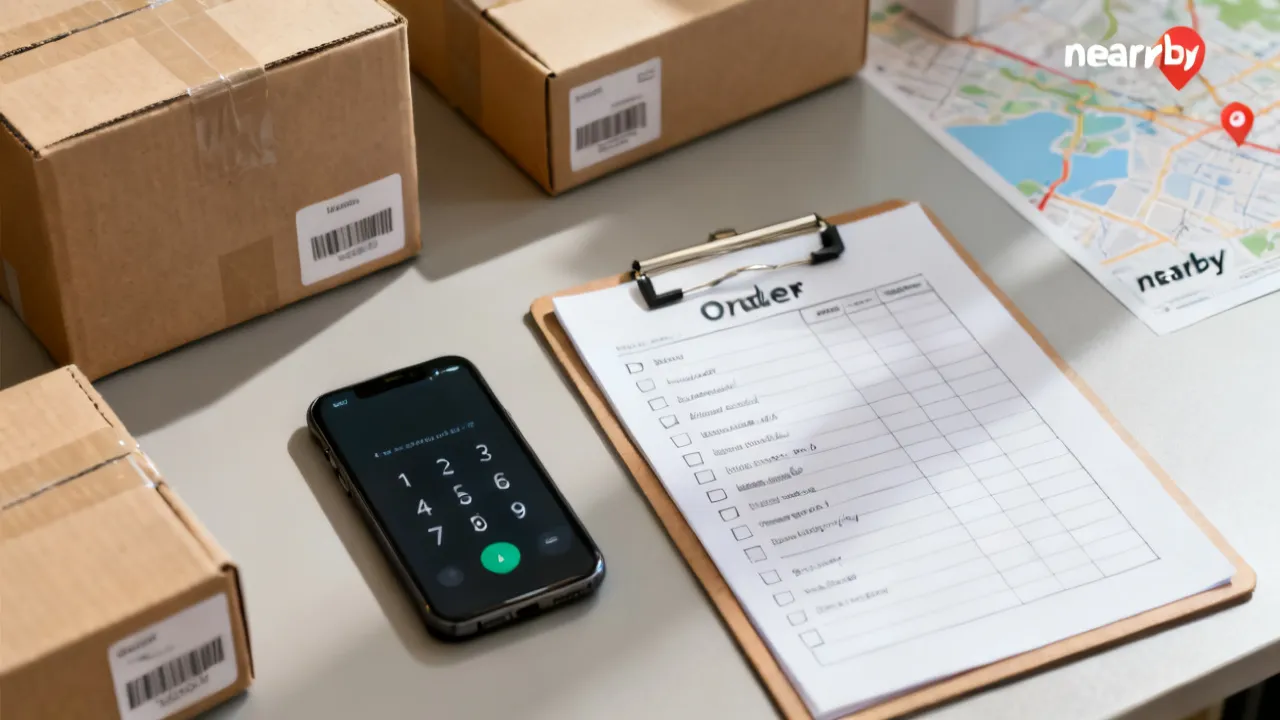
To make this workflow easier in practice, consider using a checklist that you can reuse for future purchases. When you begin a sourcing cycle, log the identifier 04978681642, the request date, the supplier’s legal entity name shown on the quote, and the quotation version date. Then, when the shipment arrives, confirm that the same identifier appears on the packing list and invoice—or at least that it maps to the correct order reference. This reduces the chance that an old quote or unrelated shipment is accidentally matched to your transaction.
Also, consider confirming who is the signatory on the purchase order or contract. In many disputes, the buyer discovers that the person who agreed verbally did not have authority to commit the company legally. Written terms with a proper signatory and company stamp (where applicable) create enforceability and reduce uncertainty.
Verification in different procurement models (spot buy vs. contract supply)
Not all purchasing situations are identical. How you verify supplier details tied to 04978681642 should adapt to your procurement model.
1) Spot purchases (single order or short timeline)
For spot buys, speed matters, but verification still matters. The main goal is to ensure the supplier’s quote is correct and complete, and that the delivery and acceptance terms are explicit. You should require: a formal quote, a purchase order (or order confirmation), and at least the essential specification sheet. If a deposit is requested, confirm deposit refund conditions and delivery milestones.
2) Blanket orders or framework agreements
For framework agreements, multiple releases occur over time. In this model, the identifier 04978681642 might relate only to the initial quotation, not subsequent releases. You need to confirm how the pricing and specifications will remain valid (or how updates will be handled). Request the mechanism for price adjustments and the process for updating specifications or compliance documents. Also verify whether new release orders will use the same reference structure.
3) Long-term contract supply (SLA, recurring deliveries)
For long-term supply, you should verify not only the initial supplier identity and specification, but also ongoing compliance obligations, warranty/service coverage, and performance metrics. In these cases, the identifier may relate to contract schedules or batch tracking. You should require clear batch documentation linking each delivery to the contract and to the acceptance criteria. If the supplier’s process changes, you should require written notice and approval before substituted materials are used.
Adapting verification to the procurement model helps you focus effort where it matters most. However, the principle remains consistent: identifiers are clues; documentation is proof.
Required conditions and buyer safeguards
To ensure objective procurement, implement the following conditions:
- No payment without written terms: ensure the quote or purchase order clearly states deliverables and payment schedule.
- No spec acceptance without documentation: acceptance should be based on documented criteria, not verbal assurances.
- No reliance on a single identifier: use 04978681642 only as a lead to obtain full sourcing documents.
- Use consistent identifiers across documents: quote, invoice, and shipping paperwork should align.
- Apply proportional due diligence: higher value, regulated, or mission-critical purchases should follow stricter verification (e.g., third-party inspections where appropriate).
There are additional safeguards that buyers often use, depending on risk level.
- Segment risk based on material criticality: If the item is critical to safety or operations, require stricter compliance and inspection evidence. If it is low-risk, you may require fewer documents, but you should still keep the core specification and acceptance criteria.
- Require an anti-substitution statement: For items used in regulated products, ask for written confirmation that substitutions are not allowed without your prior approval.
- Clarify warranty scope: Warranty should specify duration, what defects are covered, and remedies (repair, replacement, refund). It should also state who provides service and how return shipping costs are handled.
- Define documentation delivery timing: Some certificates are delivered at dispatch; others are delivered after receipt. Specify when you expect them to arrive and what happens if they are delayed.
Practical ways to ask suppliers for clarification (without sounding confrontational)
Many suppliers respond better when the buyer asks for details framed as “compliance and accuracy” rather than suspicion. You can request the same information while staying professional and cooperative.
For example, when you see 04978681642, you might send:
- “Please share the formal quotation document associated with reference 04978681642. We need the quotation number, quotation date, and full line-item breakdown.”
- “Could you provide the full specification sheet and confirm there will be no substitutions from the quoted specification?”
- “Please confirm the payment terms (deposit percentage, payment milestones, and refund/cancellation policy) tied to this quotation.”
- “Please confirm delivery terms (shipping method, dispatch conditions, and tracking process) and whether lead time is stock-dependent.”
- “Before we proceed, please confirm the legal entity name and billing address exactly as it will appear on the invoice.”
This style of communication improves responsiveness and ensures you get the documents you need. If the supplier struggles to provide the requested mapping, that is also a data point indicating potential process weaknesses.
Document mapping: ensuring the quote-to-shipment-to-invoice chain is intact
A key verification goal is to ensure there is a chain of evidence connecting your request to the actual goods. An identifier like 04978681642 should appear in that chain or be clearly mapped to it.
A common chain looks like this:
- Inquiry / Request for Quotation (RFQ): The buyer sends requirements and references internal tracking numbers.
- Supplier Quote: The quote includes quotation number, revision, line items, pricing inclusions/exclusions, and acceptance conditions.
- Purchase Order (PO) or Contract: Buyer issues PO referencing the quotation and the accepted terms.
- Order Confirmation: Supplier confirms it can fulfill to the PO and reiterates key terms.
- Production/Dispatch Documents: Packing list, dispatch note, shipping confirmation, and relevant certificates.
- Delivery and Acceptance: Receiving inspection evidence, acceptance report, and delivery acknowledgement.
- Invoice: Invoice references the PO, includes correct line-item pricing and totals, and matches quantities.
When that chain is intact, disputes are easier to resolve because you can identify where errors occurred. For example, if the goods arrive with correct quantities but an incorrect spec, the issue likely occurred at production or selection stage. If the goods match the spec but the price is wrong, the issue likely occurred at invoicing or pricing application stage. Without chain integrity, you can end up disputing broadly (“the supplier said it would be this”), which is far less effective than disputing with specific document references.
When 04978681642 is involved, ask the supplier to confirm where this identifier should appear. For example, should it appear on the quotation cover page, on the order confirmation, on the packing list, or only on the invoice memo line? Once you know where it should appear, you can check each document for consistency.
Quality and compliance verification: going beyond “it’s good”
Quality assurance is often treated as a general statement. Responsible buyers request concrete evidence. Depending on the product category, the relevant documents might include inspection certificates, test reports, material certificates, calibration certificates, or compliance declarations.
To verify quality and compliance for a purchase tied to 04978681642, you should define:
- Acceptance criteria: What constitutes “passing”? This could be dimensions, tolerances, performance tests, labeling requirements, or appearance standards.
- Sampling method: If full inspection is not possible, what sampling approach will be used?
- Inspection timing: Will inspection happen at supplier facilities (pre-shipment), at delivery, or both?
- Documentation: What exact document(s) prove the inspection results? Who issues them?
- Nonconformance handling: What happens if items do not meet criteria? Who pays for replacement, re-inspection, or return shipping?
In regulated environments, compliance verification may require additional documentation tied to product standards. Even if your immediate transaction is “nearby” market fulfillment, the product may originate elsewhere, so you still need evidence of compliance at the level required for your jurisdiction and intended use.
If the supplier is reluctant to provide detailed documentation, you can ask for third-party inspection options. In some procurement programs, third-party inspection is a standard safeguard for high-risk items or first-time suppliers. This can include factory audits or pre-shipment inspection, depending on the risk profile.
Delivery verification: lead time, incoterms, and acceptance at receiving
Delivery verification is crucial because it affects cost, operational scheduling, and risk. When 04978681642 is tied to a quote with delivery estimates, you should insist on clear definitions of what those estimates mean.
Consider verifying the following delivery elements:
- Shipping terms (incoterms or equivalent): Who is responsible for transport costs and risk at each stage?
- Dispatch date vs. delivery date: Some quotes promise a dispatch date, not a delivery date. Confirm which is guaranteed.
- Lead time conditions: Is lead time dependent on stock availability, raw material sourcing, or manufacturing capacity?
- Tracking and notification: When will tracking numbers be provided? What does the supplier do if tracking fails?
- Packaging and labeling: Packaging requirements affect damage risk and compliance (e.g., labeling for traceability).
For acceptance at receiving, define:
- What you will check: quantity count, condition assessment, and spec compliance.
- Who performs acceptance: your receiving team, QC team, or external inspector.
- How you record results: acceptance report format, photos if appropriate, and evidence storage.
- Time window for claims: how long after delivery you can raise nonconformance claims.
This receiving plan reduces the chance that disputes become arguments about whether something was noticed quickly enough. When acceptance criteria and documentation requirements are defined upfront, both parties have fewer misunderstandings later.
Payment verification: reducing the risk of deposit loss or invoice drift
Payment verification is where many buyers experience losses if contracts are weak. A supplier may request a deposit based on a reference identifier like 04978681642. The buyer should ensure the deposit is governed by enforceable written terms.
Before paying a deposit, request written documents that specify:
- Deposit amount: percentage and currency.
- Payment milestones: what the supplier must accomplish to trigger the next payment step.
- Refund or cancellation terms: what happens to the deposit if the supplier cannot deliver?
- What the deposit buys: Does it cover materials procurement, production slot reservation, or administrative processing?
- Invoice timing: when the supplier will invoice, and whether the invoice will reflect the deposit already paid.
Also verify invoice drift. Sometimes invoices include costs that were not included in the quote. For deposit-based purchases, ensure the invoice reflects the deposit properly (e.g., deposit credited against total). Otherwise, you may face a “double charge” or misaligned settlement schedule.
Another important safeguard: do not assume that payment instructions provided in a chat message are safe or correct. Use payment details from the official quote, order confirmation, or invoice template issued by the supplier’s legal entity. If payment details change, require written confirmation through a trusted channel.
Traceability and labeling: ensuring you can identify what you received
Traceability matters because it ties the physical goods to the documentation and to the promised spec. Even for smaller purchases, you should ensure that each batch or unit can be traced back to the quotation and order.
For purchases tied to 04978681642, you may want the supplier to confirm:
- Batch or lot numbers: how those numbers are applied to packaging and documentation.
- Label content: product name, part/model, serial/batch reference, and any required compliance marking.
- Document numbering: how packing lists and certificates reference your order.
- Consistency: batch identifiers should match the certificates and invoice line item references.
Traceability reduces operational friction when defects are discovered. Instead of asking “which batch is defective?” you can point to the documented batch/lot and trace it back to the supplier’s inspection report.
Handling “equivalent” offers safely
Suppliers sometimes offer equivalent products, especially if requested items are out of stock. This can be legitimate, but it requires careful controls. If an equivalent offer is presented in relation to 04978681642, you should require the supplier to document equivalency in writing.
To handle equivalents safely, you should:
- Request a technical comparison: compare performance parameters, dimensions, materials, and tolerances.
- Confirm your compatibility requirements: if the item connects to existing systems, require compatibility confirmation.
- Require explicit approval: no substitution without written buyer acceptance.
- Update documents consistently: if the spec changes, the updated spec must appear on order confirmation, shipping documents, and invoice references.
Without these safeguards, you can end up receiving an “equivalent” that passes superficial checks but fails operational or regulatory needs.
What to do if the supplier cannot verify 04978681642
A supplier might be unable to explain what 04978681642 refers to, or they might provide inconsistent answers. That scenario should be treated as a procurement risk.
Here’s a practical escalation path:
- Request the formal mapping again: ask specifically for quotation number, revision date, and line-item number that corresponds to the identifier.
- Request a corrected document set: ask for a revised quote or order confirmation that includes the correct reference mapping.
- Request a document re-issue: if the supplier provided an invoice draft referencing the identifier but the legal entity differs, ask them to re-issue with correct alignment.
- Pause payment decisions: avoid deposits until documentary evidence is consistent.
- Consider switching suppliers: if you cannot obtain traceability and alignment, it may be safer to choose a supplier with stronger documentation discipline.
Even if the supplier is trustworthy, inability to verify an identifier indicates weaknesses in internal document control, which may cause errors in your transaction.
FAQ 1: What is 04978681642 in sourcing conversations?
04978681642 may function as a reference identifier—such as a quotation number, contact record, or order-related handle. Its exact meaning depends on how the supplier uses it. You should require the supplier to explain the identifier’s linkage to formal documents (quote/order/invoice) before treating it as proof.
FAQ 2: How do I confirm the supplier is legitimate?
Request the legal entity name, registration details, billing address, and consistent quotation/invoice formats. Verify that the information matches across documents, and ask for product specifications and quality documentation relevant to the category.
Additionally, verify that the person you are dealing with is acting on behalf of the supplier’s legal entity. If the supplier provides references, ask for those references to show comparable products and documented delivery outcomes. For high-value purchases, consider conducting a lightweight prequalification (e.g., checking business registration records where permitted and reviewing any available certifications or quality system documents).
FAQ 3: Should I trust price information tied to an identifier alone?
No. Pricing must be supported with a detailed breakdown (unit price, quantity, taxes, shipping, documentation, and validity period). A responsible buyer confirms total landed cost and clarifies what is included before placing an order.
If 04978681642 appears on a price message but the supplier cannot provide the detailed breakdown in a formal quote, treat the price as provisional. You can request a “priced line item” sheet or invoice draft that mirrors the quote structure. This is often the fastest way to detect inconsistencies early.
FAQ 4: What documents should I ask for before paying a deposit?
Typically: the formal quotation or purchase order, product specification sheet, payment terms stating deposit amount and refund/cancellation policy, delivery/lead time conditions, and any quality/compliance documentation applicable to the item.
In addition, ask for a written order confirmation or acknowledgement that references your purchase order. If you pay a deposit and the supplier cannot provide an order confirmation, it becomes harder to enforce milestones. If you can, request a production schedule or dispatch forecast tied to the deposit milestone.
FAQ 5: What should I do if the delivered items don’t match the quote?
Use the documented spec and acceptance criteria as your reference. Immediately notify the supplier in writing, preserve shipment/receiving evidence, and request remediation terms consistent with the contract or purchase order. Keep communication traceable for dispute resolution.
When notifying the supplier, include: purchase order number, the identifier mapping to the correct line item, photos or inspection results, and the specific spec elements that do not match. Ask for corrective action such as replacement or refund, and clarify whether the supplier must cover return shipping and re-inspection costs.
FAQ 6: Does “nearby” location information change verification steps?
Verification steps remain essentially the same, but local logistics norms may affect delivery documentation, typical lead times, and payment practices. When operating in a nearby market, still insist on consistent documents and clear delivery/acceptance criteria.
Even when suppliers are “nearby,” verify that shipping terms and responsibilities are clear. Local suppliers can still ship via third-party carriers, and third parties can still introduce label/documentation errors. Therefore, ensure your receiving and acceptance process is designed to catch spec/quantity issues at delivery.
FAQ 7: Where can I find reliable standards for procurement verification?
General guidance can be found through recognized bodies and official resources in your product category (for example, industry associations, standards organizations, and public procurement frameworks). For compliance-heavy products, rely on official standards and regulatory requirements applicable to your region and product class.
Procurement verification standards often exist in three broad categories: supplier quality management (how suppliers are evaluated and controlled), contracting governance (how terms are defined and enforced), and quality/inspection frameworks (how acceptance is performed). Choose standards that align with your industry and product risk profile, and ensure they are reflected in your own procurement templates and acceptance checklists.
Objective sourcing context: how markets manage risk
Procurement risk management is widely practiced across industries. Many organizations adopt structured steps such as supplier qualification, purchase-order controls, and acceptance testing. While the specifics vary by sector, the underlying principle is consistent: you need evidence. This is why converting an identifier like 04978681642 into a documented quote-to-shipment trace is essential for objective buying.
When you need a benchmark for “common requirements,” look at established procurement frameworks and supplier qualification practices from reputable organizations (for example, ISO management system approaches or sector-specific accreditation requirements). These frameworks emphasize controlled documentation, defined responsibilities, and verifiable outcomes—exactly the safeguards you should use here.
From a risk management lens, identifiers can be viewed as part of the “data lineage” in an organization’s procurement system. When lineage is broken, error correction becomes difficult. For instance, if 04978681642 is stored in a buyer’s system but not linked to the final PO revision, you may accidentally purchase the wrong item variant. Document-based verification prevents that type of internal mismatch as well.
Moreover, many buyers have to demonstrate compliance to internal audits or external regulators. If you can produce a clear documentation trail—quote, PO, acceptance records, and invoice—audits become less stressful and more objective. If you cannot, you may face questions about whether procurement governance was followed.
Concluding guidance
Identifiers like 04978681642 can be useful entry points, but they do not replace due diligence. The safest procurement path is to require document-based proof: a clear product specification, a transparent price basis, verified supplier identity, and enforceable conditions in writing. If you follow the step-by-step workflow above—and keep evidence from quote to delivery—you improve accuracy, reduce disputes, and strengthen purchasing reliability for future orders as well.
In other words: treat 04978681642 as a key that helps you open the correct door—then verify that the room behind it contains the correct contract terms, product details, and supplier identity. When those elements match across the full transaction chain, you move forward with confidence; when they do not, you pause and correct the documentation before money changes hands.
-
1

A Guide to Cost-Efficient Small Electric Cars for Seniors
-
2
Mastering Debt Consolidation: Boost Your Credit Score and Manage Interest Rates
-
3
Your Guide to Loans, Credit Checks, and Interest Rates
-
4
Affordable Independent Living: Finding the Right Senior Housing
-
5
Guide to Senior Living Apartments: Affordable and Comfortable Environments