
How Multishop Supports Multivendor Commerce Operations
This guide explains how Multishop can streamline multivendor commerce operations, from supplier onboarding to product catalog control and order routing. Objectively, “Multishop” typically refers to a system that helps businesses manage multiple storefronts and vendors through shared workflows, improving consistency across catalogs and fulfillment. You’ll also find practical evaluation steps and requirements for implementing such platforms.
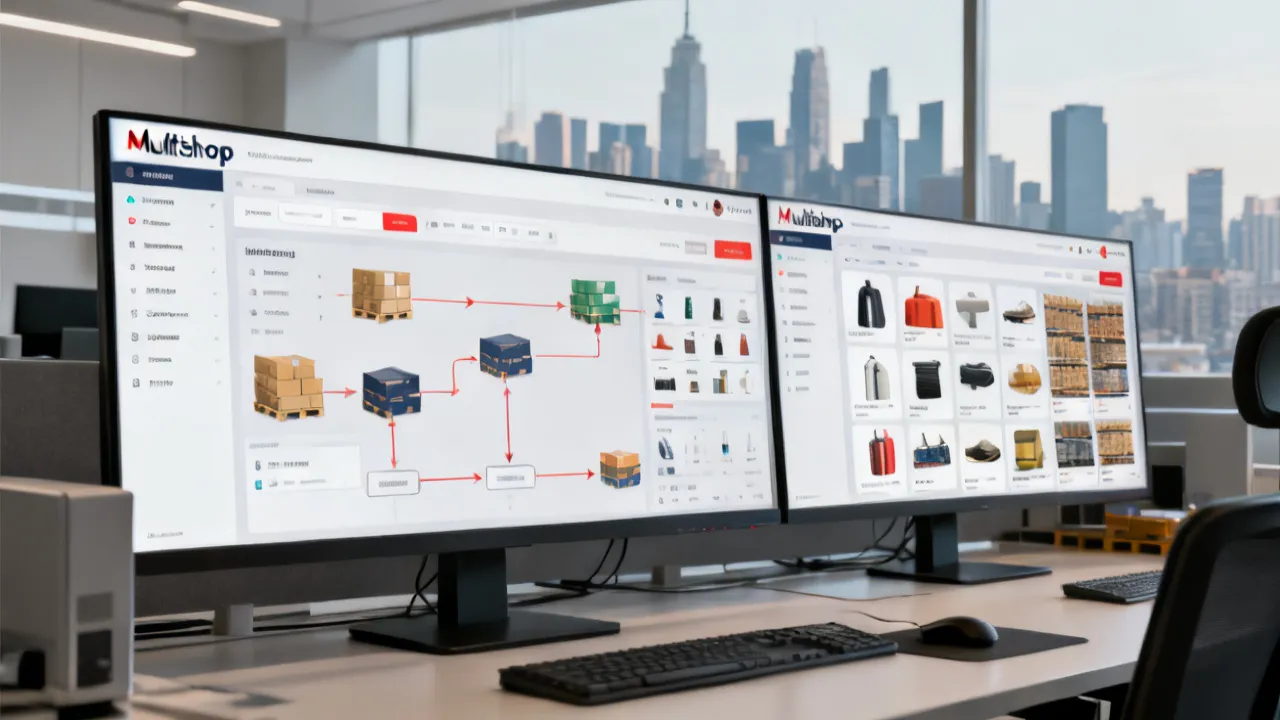
Executive takeaways for Multishop decision-makers
Multishop is best understood as an operational framework for multivendor retail—an approach that coordinates catalogs, pricing, supplier relationships, and fulfillment logic under one management model. If you’re evaluating or redesigning a Multishop environment, treat it like an operating system for your marketplace, not just a technical integration. Start with workflow clarity (onboarding, listing, pricing governance, and order handling). Then verify data control (inventory accuracy, product attribute completeness, and change history with auditability). Finally, assess integration readiness (payments, shipping, returns, and ERP/accounting interfaces), because multivendor failures are rarely “one feature problems”—they are usually process and system boundary problems.
From an industry perspective, multivendor commerce succeeds less because a platform offers a single standout feature and more because it enforces rules. Multishop-style systems are typically strongest when they provide repeatable, measurable processes: supplier verification, catalog normalization, pricing and promotion boundaries, and consistent order status updates. This operational consistency reduces customer confusion and prevents costly back-and-forth between vendors and your internal support teams. In practice, governance is what turns a multi-party transaction into a reliable customer journey.
Decision-makers should therefore look beyond demos and pay attention to operational mechanics: role-based permissions, how the system handles exceptions, how data conflicts are resolved, whether the platform supports stock locking and reconciliation, and whether reporting can reconcile marketplace outcomes (sales, refunds, fees, and settlement) into the accounting view your finance team requires. When you align governance and integration design early, you avoid “late surprises” during peak seasons, supplier onboarding waves, and complex returns cycles.
What “Multishop” usually means in practice
In many commercial contexts, Multishop refers to a platform concept or software capability that supports multiple selling entities—multiple merchants, storefronts, brands, or vendor accounts—through coordinated back-office operations. Instead of treating each vendor as a completely separate project, a multishop approach centralizes common tasks (product data management, order processing rules, and reporting) while still allowing vendor-specific configuration where it makes sense.
In practice, “Multishop” can appear in different shapes:
- A unified portal where multiple merchants manage listings, inventory, and promotional inputs within a shared workflow.
- A marketplace admin panel that manages vendor storefronts with standardized product and order controls.
- An orchestrator layer that distributes product and order operations across disparate systems (e.g., vendor ERPs, internal warehouses, third-party logistics).
- A modular back office where governance and data validation are handled centrally, while execution is delegated (for example, shipping label generation may be outsourced to a logistics provider).
Even when implementations differ, the operational goals remain similar: reduce manual workload, standardize data so customer experiences are consistent, and improve responsiveness across the vendor network. The platform should make it easy to do things correctly (through guided workflows and guardrails) and hard to do things incorrectly (through validation, approvals, and restricted permissions).
It’s also helpful to clarify terminology when discussing projects internally: some teams use “multishop” to mean a UI for vendor management; others use it to mean the broader operating model that includes settlement, compliance controls, and order lifecycle orchestration. In vendor negotiations, confirm what your counterpart means by Multishop. Ask what portions are truly centralized governance and what portions are simply shared dashboards.
Why multivendor operations are operationally hard (and how Multishop helps)
Multivendor models introduce complexities that single-vendor stores often avoid. Industry practitioners commonly highlight four friction points, but they are usually only the visible symptoms of deeper process gaps:
- Catalog fragmentation: Vendors describe items differently, resulting in mismatched titles, attribute sets, images, and compatibility fields. Even when products are the same, inconsistencies create multiple search entries, confuse shoppers, and increase returns.
- Pricing governance: Discounting rules, margin constraints, VAT/tax calculations, and promotional mechanics can conflict across vendors and campaigns. Small variations can create customer disputes or compliance issues if the final displayed totals are not consistent.
- Inventory synchronization: Stock availability must remain accurate across warehouses and vendor-managed quantities. Oversells harm customer trust; undersells harm revenue and vendor relationships.
- Order routing and fulfillment status: Orders may be split by vendor and tracked through shipment, partial delivery, and returns. Without robust status mapping, customers receive unclear messaging and your support team spends time “translating” events.
A Multishop-oriented system reduces these friction points by providing structured workflows and standardized data formats. The systems that perform best in production also include:
- Role-based access controls so suppliers can contribute what they own (for example, product listing proposals and specific inventory feeds), while the marketplace retains governance over what the customer sees (final pricing rules, compliance statements, brand filters, and merchandising constraints).
- Validation and normalization so vendor-provided data is converted into a consistent schema, minimizing customer-facing differences that cause confusion.
- Process-driven exception handling so deviations are handled through defined pathways rather than ad hoc manual action.
- Traceability through audit logs and change history so you can answer “who changed what, when, and why” during disputes and internal investigations.
In short, Multishop helps by moving from “multi-party chaos” to “multi-party governance,” where each actor has clearly defined responsibilities and the platform enforces consistency across the customer journey.
Supplier onboarding: where governance begins
Supplier onboarding is the foundation of a reliable multishop setup. In mature deployments, onboarding is not just “create vendor account and go live.” Instead, it becomes a controlled checklist designed to reduce risk and establish accountability.
- Collect legal and operational documents required for selling in the relevant jurisdictions (company registration, tax identifiers, return policies compliance, and where required, product compliance attestations).
- Define permission boundaries that specify what the supplier can edit (certain catalog attributes, certain shipping settings, inventory quantities, potentially draft listings) and what the platform controls (final pricing rules, content moderation approvals, compliance text, brand restrictions, required warranty/usage disclaimers).
- Establish product taxonomy and attribute mappings (sizes, variants, compatibility fields, warranty terms, materials, and other structured attributes).
- Test fulfillment readiness using sample SKUs or a sandbox workflow that simulates listing, order capture, routing, shipping updates, and returns.
- Set escalation contacts and SLA expectations so operations knows who to contact when something fails (stock discrepancies, shipment delays, damaged-return disputes).
From a compliance-and-operations standpoint, Multishop models succeed when they make vendor onboarding auditable. You want an explicit record of when a vendor was verified, which catalogs were approved, which price/stock rules were activated for that vendor, and what exceptions were accepted during initial readiness testing. Without this, later disagreements become harder to resolve because the platform lacks “ground truth” for decisions.
Practical onboarding governance also includes internal controls. For example, if a supplier can submit product data, you need a review system that checks required fields, verifies that attributes match your schema, and ensures content meets any regulatory or brand guidelines. If your organization sells in “nearby” regions or multiple local jurisdictions, onboarding may need additional steps for localized compliance text, packaging claims, and language requirements.
Finally, onboarding should be iterative. The first go-live should be treated like a controlled pilot: limited categories, limited SKUs, or phased expansion to reduce risk. A Multishop environment should make phased onboarding possible through configuration toggles and workflow staging (rather than requiring re-implementation each time).
Pricing and promotions: consistency without losing vendor flexibility
Pricing in multivendor commerce should be predictable for customers and manageable for your internal team. If pricing outcomes vary unexpectedly by vendor or by order type, customer trust erodes quickly—especially when shipments are split or returns are partial.
In practice, pricing governance often includes:
- Base price ownership: Decide whether the vendor sets the base price, whether the platform applies a recommended structure, or whether base prices are negotiated and then locked under constraints.
- Margin and discount constraints: Define how deep discounts can go, whether certain products can be promoted, and how long promotions can run. Even when vendors propose promotions, the marketplace should enforce boundaries.
- Tax and currency rules: Ensure consistent handling so totals and tax lines remain coherent across vendors. This is crucial when a customer’s jurisdiction differs from the vendor’s location.
- Rounding and display logic: Ensure price display follows local retail expectations (tax-inclusive vs tax-exclusive presentation) and matches what appears in checkout and invoices.
- Promotion stacking rules: If multiple promotions can apply, define whether they stack, which one takes precedence, and how the system prevents unsupported combinations.
Rather than focusing on hypothetical numeric claims, the key principle is governance through rules. The more complex your promotion calendar, the more you need a rules-based pricing control model. A Multishop environment typically provides the structure to enforce those rules so individual vendors can’t unintentionally break pricing standards or cause compliance violations.
One of the most underappreciated aspects of pricing governance in multivendor setups is dispute readiness. When a customer contacts support about a price mismatch or refund discrepancy, you need to explain the rule chain that led to the final price and what changed between the listing price and checkout price. Audit logs and versioning of price rules are therefore essential. In mature systems, pricing changes are tied to approval workflows—so you can trace “who approved this promotion and when” without hunting through emails.
Another key consideration is the relationship between pricing and customer-facing merchandising. If your marketplace uses curated collections (for example, “best value,” “premium brands,” “eco-friendly picks”), the promotion rules must align with merchandising strategy. If a vendor’s products can appear in curated collections, the platform needs guardrails so those products don’t violate content or compliance constraints at display time.
Catalog quality: attribute normalization and product clarity
Catalog management is where customer experience is either improved or damaged. In a multishop approach, catalog operations typically introduce structured normalization and moderation rather than letting each vendor upload free-form content.
A Multishop approach usually includes:
- Attribute normalization: Converting vendor-provided product fields into a consistent schema (e.g., standard unit types, standardized material descriptors, consistent brand and model naming patterns).
- Variant handling: Ensuring that size/color/model combinations map correctly to purchasable variants. This includes validating that variant combinations exist and that they are linked to appropriate product identifiers.
- Image governance: Standardizing image requirements (resolution thresholds, cropping rules, file format constraints, background and lighting requirements), plus moderation and approval steps.
- Compliance and content checks: Avoiding missing warranty text, inaccurate dimensions, prohibited claims (depending on category and jurisdiction), or incorrect regulatory labeling.
- Compatibility rules: Where relevant, mapping compatibility attributes so that “fits model X” is consistent across listings and doesn’t appear as vague text.
Catalog quality also impacts discoverability. When product pages are inconsistent, customers face friction—especially on mobile, where users often scan titles, variant labels, and key attributes quickly. If a vendor’s listing format differs, the user may not trust the information or may hesitate because the page “feels unreliable.” In regulated categories, missing compliance text is not just a UX issue; it’s an operational and legal risk.
Therefore, catalog governance should include explicit validation rules and content QA workflows. For example:
- Required field checks: Prevent submission of listings missing required attributes or media.
- Range and formatting validation: Ensure dimensions and weights are in correct units and within reasonable bounds.
- Consistency checks across fields: Verify that the declared compatibility matches category constraints and that the variant set is complete.
- Moderation queue management: Ensure human review capacity scales as vendor count increases.
In addition, consider change management. Vendors frequently update product descriptions and images. If your system overwrites content without versioning, it becomes difficult to understand what customers saw at the time of purchase and how that relates to returns disputes. A Multishop environment should maintain a change history so you can answer “what changed, from which version to which version, and who approved it.”
Finally, catalog clarity should be localized where necessary. Even if the product range is identical, the way attributes and compliance text are expressed affects comprehension and trust. For multi-region operations (including “nearby” customer contexts), localized language and unit formatting can be a decisive factor in conversion and support workload.
Order management: routing, status transparency, and exceptions
Order handling in a multivendor context requires more than “create order and notify vendor.” Operationally, you need an order lifecycle that can be traced end-to-end: from customer purchase, through vendor fulfillment, to shipping, delivery updates, and returns.
Typically, multishop order management includes:
- Order capture: A customer purchase triggers an internal record with payment context, addresses, and cart line details.
- Routing logic: Orders may be routed to one or multiple vendors based on SKU ownership, availability, or fulfillment constraints. Routing should be deterministic so that the same scenario yields the same outcome.
- Status updates: Fulfillment stages (confirmed, packed, shipped, out for delivery, delivered) must map into a customer-facing timeline. The goal is not only accuracy but also consistent semantics across vendors.
- Exception handling: Backorders, partial shipments, address issues, cancellation requests, and return authorizations must be handled within defined workflows.
In expert deployments, Multishop implementations emphasize exception workflows. Exceptions are where customer frustration grows if the system forces humans to interpret ambiguous signals. A robust system guides staff through standardized resolution steps and keeps customers informed with consistent messaging. For instance:
- Partial shipment scenarios: When some items ship earlier than others, the customer should receive clear item-level tracking and refund/return instructions if cancellation or return is requested.
- Shipping label delays: If a vendor ships late or fails to generate labels promptly, the platform should trigger escalation and update status messaging appropriately.
- Address validation issues: If carrier verification fails or the address is incomplete, operations should have a guided workflow to request customer confirmation.
- Backorder policies: The system should clearly differentiate between delayed dispatch and true backorder cancellation risks.
Order management should also support operational accountability. Internally, you need to know which vendor had the responsibility at each stage, and which system event (or vendor update) caused a status transition. That traceability reduces support time, improves vendor performance management, and enables reliable reporting.
Another critical concept is idempotency and consistency in status updates. In high-volume systems, events may be retried by integrations. If the system mishandles retries, it could duplicate shipments, duplicate tracking numbers, or generate conflicting status updates. Mature Multishop designs include safeguards so repeated updates do not corrupt order state.
Inventory control: accuracy over speed
Inventory mistakes are among the most costly issues in multivendor commerce because they directly affect customer trust, operational cost, and revenue recognition. A Multishop-style configuration should treat inventory accuracy as a primary concern, supported by clear rules and reconciliation.
Inventory control typically involves:
- Stock source definition: Whether inventory is vendor-managed, warehouse-managed, centrally managed, or a hybrid. The system must know which source is authoritative for each SKU and each fulfillment route.
- Update frequency and timing: Rules for when stock is refreshed and when it is locked (for example, during checkout to prevent oversells). Timing is crucial: a system that updates too slowly may oversell; a system that updates too aggressively may block sales unnecessarily.
- Buffer policies: Handling oversells by adding conservative buffers, reducing sales when uncertainty is high, or enabling fallback logic when stock is stale.
- Reconciliation reports: Monitoring discrepancies between expected stock movements and actual stock updates. Reconciliation is where you catch issues early and correct them before they become customer-facing problems.
Instead of relying on “top effort” or manual checking, mature organizations implement reconciliation checks and clear escalation rules. A Multishop environment can support these operations with standardized reporting and audit logs.
Inventory control also includes the concept of lock vs availability. Availability shown on product pages must reflect something meaningful: either real-time stock, near real-time stock, or safely buffered stock. If the system displays inventory that is later found to be inaccurate, customers experience cancellation or delay. Over time, repeated inconsistencies reduce purchase intent and lead to support burden.
Additionally, multishop inventory handling should consider:
- Returns affecting stock: When returns are processed, inventory should be adjusted based on inspection outcomes (resellable vs damaged/unsellable). This impacts availability and prevents listing items that should not go back on sale.
- Warehouse transfers: For SKUs that move between locations, ensure that transfers don’t cause temporary negative availability or inaccurate availability states.
- Unit-of-measure mismatches: Some vendors track inventory in different units or packaging quantities. Your normalization layer must ensure inventory conversions are correct.
- Reserved stock for orders: Once an order is confirmed, the system should reserve the required quantity to protect inventory integrity until completion or cancellation.
When these elements are implemented carefully, inventory becomes a dependable input to the rest of the order workflow. That predictability is a defining advantage of well-executed Multishop operations.
Integrations: payments, shipping, returns, and accounting
Very multishop operations depend on integrations. Your multishop governance model is only as reliable as the systems that execute the transaction and the systems that record the outcome. Typical integration categories include:
- Payments: Payment gateway connections, refund flows, chargeback handling, and reconciliation exports. The marketplace must be able to map payment events to order states reliably.
- Shipping: Carrier label creation, shipping rate calculation, tracking number mapping, and shipment status feeds. These must be normalized so your customer timeline remains consistent.
- Returns (RMA): Return authorization steps, inspection workflow, refund timing, and replacement logic. Returns are where edge cases become expensive: damaged items, missing parts, partial returns, and disputes between customer and vendor.
- Accounting: Vendor settlements, fee calculations, tax reporting support, general ledger exports, and possibly invoice generation. Accounting outcomes must reconcile with operational outcomes so finance can close books without expensive manual correction.
Industry top practice is to evaluate integrations as part of operational design—not as an afterthought. Settlement model, tax reporting obligations, and return handling complexity should be tested early with representative scenarios, including “unhappy paths.”
When integration readiness is strong, you get more than smooth happy-path flows. You also get:
- Defined failure modes: What happens when shipping rates are unavailable? What happens when payment confirmation is delayed? What happens when a vendor integration times out?
- Retry and idempotency behavior: Repeated requests should not create duplicate shipments, duplicate refunds, or inconsistent state changes.
- Monitoring and alerts: Operational teams need visibility into integration health, not just logs after failures.
- Event ordering control: When multiple events arrive out of order, the system should still produce correct final order state.
One common operational mistake in multishop projects is focusing on integration connectivity rather than integration correctness under stress. Connectivity might work in tests but fail in production due to timing, volume, or vendor-specific behavior. Therefore, when evaluating Multishop readiness, run scenario testing that includes partial shipment and return flows. Test how settlement data is generated when an order is partially refunded. Test how your system handles chargebacks in relation to returns and vendor fees.
Finally, consider that accounting and settlement timelines can be governed by business rules. A Multishop platform should allow those rules to be configured and enforced. For example, a settlement might occur only after shipment delivery is confirmed, or after returns are inspected. The integration layer should support these lifecycle-based triggers.
Localization and customer expectations (“nearby” context)
When businesses expand to serve customers in and around a region—often described as “nearby” areas—customer expectations around delivery timeframes, packaging norms, and support responsiveness can change. Local retail culture can shape what shoppers consider “reliable”: straightforward delivery tracking, clear return policies, and quick, humane support responses.
A Multishop implementation should align messaging, order status granularity, and support escalation paths with what customers in the “nearby” market consider trustworthy. That means you may need to adjust:
- Delivery status language: The phrasing and granularity of status updates should match local expectations (for example, whether customers expect “out for delivery” updates).
- Return policy visibility: Return timelines and conditions should be clear at checkout and in account pages in the local language and format.
- Customer support routing: Escalation pathways should align with local support staffing and vendor responsibility assumptions.
- Packaging and labeling expectations: Some regions expect specific packaging norms or documentation clarity inside parcels.
Operationally, localization also touches language for product attributes, unit formatting (dimensions, weight, and variant labels), and compliance statements. Even if your product range is identical, these details affect comprehension and trust. When a customer cannot understand variant labels or warranty terms, support requests rise and return rates increase.
Localization also interacts with governance. For example, catalog normalization should support localized value sets and translate specific attribute descriptors consistently. Pricing display should respect local tax and currency rules. Order invoices and return authorizations should reflect localized formatting, shipping methods, and compliance requirements.
Therefore, Multishop decision-makers should treat localization as a first-class requirement in governance design—not just a UI translation task. Vendors may provide product descriptions in different languages or inconsistent formats, so the platform should provide structured controls to manage localization and approvals.
Comparison table (supplemental): evaluation steps, conditions, and requirements
The following supplement is intended to help you evaluate a Multishop approach systematically. It rephrases common decision support criteria into conditions and implementation steps—so you can assess readiness with less reliance on vendor marketing claims.
| Evaluation area | Step-by-step guide | Conditions / requirements |
|---|---|---|
| Vendor onboarding | Map your vendor approval workflow → define required documents → confirm role permissions → run a sandbox listing cycle. | Audit logs enabled; clear vendor vs admin permissions; moderation workflow for product content; evidence stored for verification status. |
| Catalog data model | Define your product schema → set attribute mapping rules → validate variant logic → test search and filtering behavior. | Standardized attribute types; image/video policy; compatibility rules where relevant; validation errors handled with guided vendor feedback. |
| Pricing governance | Choose price ownership model → define discount constraints → verify tax/currency display logic → test promotion scenarios. | Consistent pricing display; promotion guardrails; transparent handling of tax-inclusive vs tax-exclusive presentation; versioned pricing rules. |
| Inventory accuracy | Select stock source logic → set update cadence → implement stock locking rules during checkout → run discrepancy checks. | Clear reconciliation reports; escalation paths for mismatches; oversell mitigation policy; reservations support; support for return-inspection-driven stock updates. |
| Order routing & fulfillment | Define routing rules by SKU/vendor → map order status states → configure customer notifications → rehearse exception flows. | Partial shipment logic supported; status timelines consistent; returns and cancellations integrated; vendor responsibility mapped to state transitions. |
| Returns and settlement | Define RMA authorization steps → connect return inspection to refund logic → test vendor fee settlement exports. | RMA workflow completeness; vendor settlement rules validated; refund timeline clarity; audit trail for inspection outcomes and disputes. |
| Integration readiness | List all external systems → define data flows and failure handling → test with real sample orders → verify reporting exports. | Documented APIs/webhooks; retry and idempotency behavior; monitoring for integration errors; event ordering safety; reconciliation-ready accounting outputs. |
Use this table as a structured checklist during vendor evaluations. If a platform cannot answer these conditions clearly, treat it as a risk indicator rather than a missing “feature request.” Multishop environments are governance-heavy; unclear answers often translate into operational pain later.
Industry perspective: what to ask during vendor or platform evaluation
When a company claims it can handle multishop operations, it’s important to ask practical, testable questions—not only questions about capabilities. The useful questions focus on how the platform enforces governance and how it behaves when reality deviates from ideal scenarios.
Here are questions that tend to reveal implementation maturity:
- Governance: How does the system enforce who can change what—and what happens when fields conflict (for example, when vendor-submitted attributes disagree with normalized schema requirements)?
- Auditability: Can you trace catalog edits, price changes, and stock updates to a user and a timestamp? Is there versioning for changes?
- Operational tooling: Does the back office include workflows for exceptions, disputes, and manual overrides? Are overrides logged and permission-controlled?
- Data integrity: Are product attributes validated against your schema? What happens when validation fails—does the system reject, queue for review, or allow “best effort” acceptance?
- Scalability of process: As vendor count grows, do moderation and listing approvals become harder—or do workflows remain structured and measurable?
- Performance under load: How does the platform behave during peak periods? What mechanisms exist to prevent oversells and integration timeouts?
- Event model correctness: How are order state transitions handled when events arrive out of order or are retried? Is the state machine robust?
- Settlement accuracy: How do you ensure settlement outputs reconcile with order outcomes (shipments, refunds, returns)?
In many evaluations, the difference between “works in demo” and “works in production” is the presence of operational workflows and integrity guarantees. If the vendor answers vaguely—“we handle it”—push for specifics: workflow screens, audit logs, state machine definitions, retry policies, and reconciliation reports.
Another practical area is vendor performance management. Multishop platforms often become operationally effective when you can measure vendor compliance: listing quality scores, response time for shipment updates, RMA outcomes, and discrepancy rates between inventory declarations and actual fulfillment.
Finally, ask how the platform supports changes over time. Vendor catalog models evolve, compliance requirements change, and business rules adapt. A governance-oriented Multishop should allow rule changes with versioning, approvals, and minimal disruption to existing transactions.
FAQs
1) What is Multishop in a multivendor context?
Multishop typically refers to a platform approach that supports multiple vendors or storefronts under shared operational workflows—commonly covering catalog management, pricing governance, order routing, and reporting. In mature designs, it also includes auditability, role-based permissions, standardized fulfillment status semantics, and integration-driven settlement and returns workflows.
2) Does Multishop replace supplier fulfillment systems?
Often it coordinates fulfillment rather than replacing every supplier system. Many implementations integrate with vendor tools or shipping solutions, then translate vendor activity into consistent order status updates and customer communications. Where vendors have their own logistics, Multishop acts as the orchestrator that normalizes events into a unified lifecycle.
3) How should companies handle price differences between vendors?
Organizations usually define a pricing governance model: either vendors control base prices under constraints (with platform-enforced rules), or the platform applies standardized pricing rules and promotions. Promotions and tax/currency display should follow consistent logic across the entire catalog, with versioning and audit trails so support and finance can explain outcomes during disputes.
4) What are the very common operational mistakes in multivendor setups?
Common issues include inconsistent product attributes, unclear inventory update rules, weak exception handling for partial shipments, and insufficient permissions or audit logs. Another frequent mistake is treating integrations as a connectivity task rather than a correctness task—leading to reconciliation errors, refund mismatches, or duplicated events.
5) How do integrations affect Multishop performance?
Integrations strongly influence reliability. Poorly designed integration flows can cause order status delays, reconciliation errors, refund problems, settlement mismatches, and customer-visible confusion. Evaluation should include failure handling, retry and idempotency behavior, monitoring visibility, and scenario testing with real sample orders that cover partial shipments and returns.
6) What requirements should a team prepare before onboarding suppliers?
Teams should prepare a standardized product attribute schema; onboarding and moderation workflows; pricing and promotion guardrails; inventory update policies (including lock and reconciliation logic); and clear return/settlement procedures. It also helps to define vendor SLAs and escalation contacts, because exceptions will occur even in well-designed systems.
7) Is localization important for “nearby” markets?
Yes. For customers in “nearby” areas, expectations often center on delivery transparency, support responsiveness, and understandable product details (language, units, and compliance text). A Multishop approach should support these localization needs through structured catalog normalization, localized messaging rules for order statuses, and consistent return and invoice formatting.
Practical conclusion: aligning Multishop design with operational reality
Multishop strategies are very effective when they treat governance and workflow design as first-class requirements. By standardizing supplier onboarding, normalizing catalog data, enforcing pricing rules, and building robust order and inventory handling, multivendor operations become more predictable and easier to scale. The central idea is that governance turns multi-party transactions into reliable customer experiences.
Equally important, approach Multishop evaluation with operational rigor: test integrations early, rehearse exceptions, confirm auditability, and validate that settlement and returns reconcile cleanly with accounting outcomes. When you do this, you reduce the hidden costs that typically emerge in multivendor environments—support escalations, customer disputes, inventory reconciliation firefights, and finance close inefficiencies.
Sources (for general governance and reliability context): International Organization for Standardization (ISO) standards on information security management and risk-based controls (e.g., ISO/IEC 27001). E-commerce reliability and consumer trust principles are also widely discussed in industry research from organizations such as the OECD on consumer protection and online commerce practices.
-
1

A Guide to Cost-Efficient Small Electric Cars for Seniors
-
2
Mastering Debt Consolidation: Boost Your Credit Score and Manage Interest Rates
-
3
Your Guide to Loans, Credit Checks, and Interest Rates
-
4
Affordable Independent Living: Finding the Right Senior Housing
-
5
Guide to Senior Living Apartments: Affordable and Comfortable Environments




