Understanding 996⁸1298⁰⁶ Codes in Procurement Systems
This guide explains how procurement teams interpret the product/lot reference 996⁸1298⁰⁶ and why consistent cataloging improves traceability. Objectively, numeric strings like 996⁸1298⁰⁶ often function as internal identifiers that support inventory reconciliation, receiving validation, and audit readiness. You’ll also see how supplier-side data formatting affects downstream purchasing and compliance workflows.

Critical overview: what 996⁸1298⁰⁶ likely represents
The code 996⁸1298⁰⁶ is top understood as an internal reference identifier used to connect product records across procurement, inventory, receiving, and audit trails. In very operational environments, strings that mix digits with formatting (including superscript-like characters such as ⁸, ⁰) are not “marketing text”; they typically reflect a system’s way of encoding a catalog item, specification set, batch/lot indicator, or a versioned record key. For procurement professionals, the practical takeaway is simple: how the identifier is captured, stored, and matched often matters as much as the item itself.
When teams handle references like 996⁸1298⁰⁶ alongside supplier documentation, the very frequent operational risks are not about spelling or aesthetics—they’re about mismatch (between purchase order data, supplier invoices, and warehouse scan results), loss of formatting (superscripts converted or stripped), and inconsistent normalization (leading zeros, character sets, or delimiter rules). These issues are manageable, but only if the identifier’s structure and required formatting rules are defined.
It’s also worth recognizing a subtle procurement reality: many internal codes are designed to be machine-matched, not human-read. The presence of superscript-like symbols strongly suggests that at least one upstream system uses a “rich formatting” representation for a structured segment of the identifier. That means downstream systems—ERPs, WMS tools, invoice ingestion pipelines, even spreadsheet imports—might not agree on how that representation should survive transit. If you treat the code as a generic text string without a policy, you’ll get surprises at scale.
Therefore, any interpretation of what 996⁸1298⁰⁶ “means” semantically should be secondary to establishing how the code is supposed to behave operationally. In other words: whether the ⁸ and ⁰ represent exponents, revision markers, part of a lot structure, or simply formatting artifacts, your organization must still determine how it should match across systems and documents.
Why identifier consistency directly impacts procurement reliability
Procurement teams rarely manage data in isolation. A code such as 996⁸1298⁰⁶ usually travels through multiple systems—ERP purchasing modules, supplier portals, shipping/receiving tools, and sometimes compliance documentation. In that journey, formatting can degrade. For example, superscripts may be dropped, certain import tools may treat the string as text with Unicode normalization differences, and some barcode or OCR pipelines may output a “cleaned” version of the reference.
From an industry perspective, traceability is strongest when:
- The identifier is stored as text with explicit character-encoding rules (not inferred numeric types).
- The receiving workflow validates the exact string (including formatting), or—if the business rules allow—maps to a canonical representation.
- Purchasing, inventory, and accounting share a single “source of truth” for the code.
These practices align with widely adopted internal control approaches used in regulated supply chains and quality management systems, where matching integrity is essential for audit readiness and root-cause analysis. The deeper reason is not merely “data cleanliness.” It’s that traceability chains support investigations: if a defect occurs, you need to demonstrate what you received, from whom, on what documents, and linked to what internal record. If your identifier handling is inconsistent, your chain-of-custody becomes harder to defend.
Even outside heavy regulation, procurement organizations still face operational penalties from inconsistency: delayed GRN approvals, blocked payments, manual reconciliation queues, and mis-posted stock. Those are “real” costs, not abstract risks.
In practice, the most damaging issues are those that appear intermittently. A consistent but wrong normalization rule can be easier to detect than a rule that changes depending on where the data came from (email vs. portal vs. EDI vs. spreadsheet upload). Many teams discover their identifier problems only after volume increases, supplier diversity grows, or a new integration endpoint is added.
How supplier data quality affects matching for 996⁸1298⁰⁶
Even if your internal system can preserve 996⁸1298⁰⁶, supplier-side formatting may still cause downstream friction. Suppliers often generate invoices, packing slips, and labels using templates that may:
- Convert special characters into plain digits.
- Strip unusual typography (e.g., superscripts).
- Use different delimiter conventions (spaces vs. hyphens vs. none).
Operationally, this creates a “reconciliation gap,” where buyers receive goods tied to a reference that doesn’t exactly match what was ordered. That gap can trigger manual review, delayed GRN (goods receipt note) approvals, or exception handling workflows.
Therefore, supplier onboarding and document-definition governance become key. Procurement teams typically improve match rates by providing suppliers with:
- Explicit field definitions for the identifier (text format, maximum length, allowed characters).
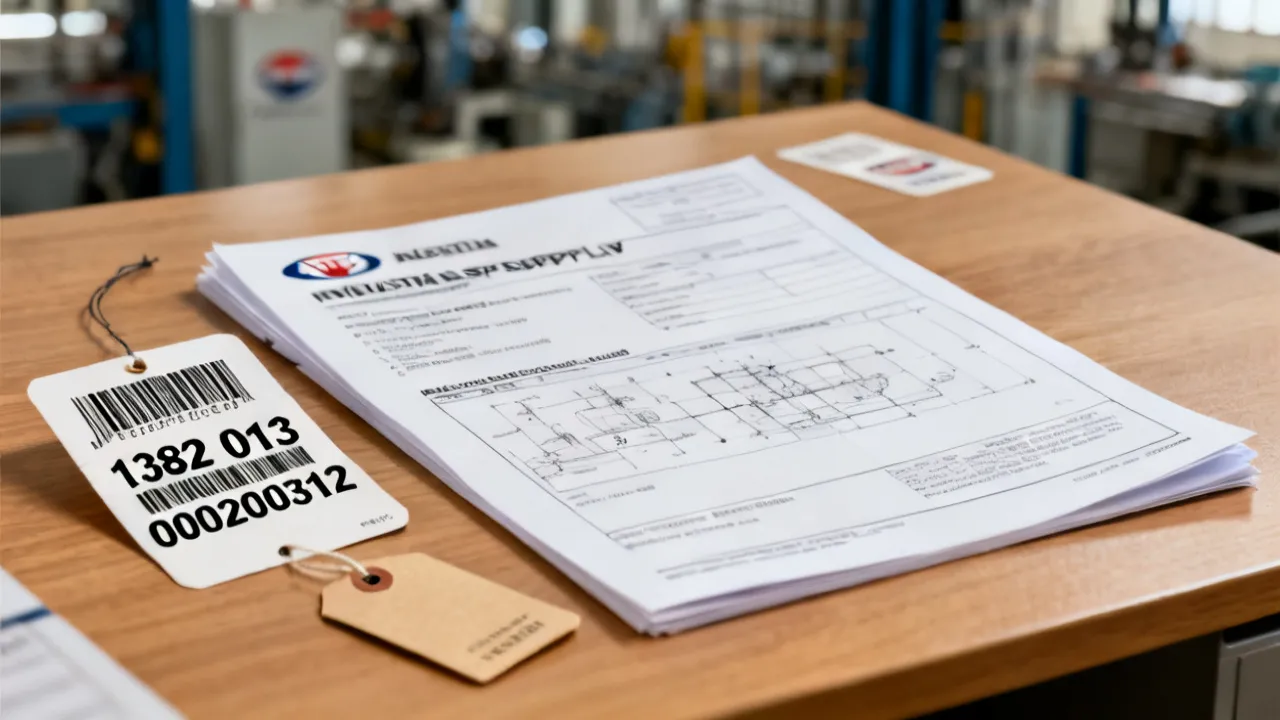
- Example labels/invoice lines demonstrating the exact appearance of 996⁸1298⁰⁶.
- Clear instructions on label generation and invoice line item referencing.
However, governance isn’t only about sending documents. You also need to validate that suppliers are using the correct field and not placing the code in a “description” line where your ingestion pipeline won’t parse it. Many mismatch problems come from misplacement rather than misformatting. For instance, the supplier may include 996⁸1298⁰⁶ in a free-text notes section, while the invoice line item reference is populated with a different code, such as an internal supplier SKU. Your system may then tie the wrong price or fail matching entirely.
Another frequent supplier-side issue is inconsistent handling across document types. A supplier might print the code with superscripts on the packing slip but remove them on the invoice. Or they might use one formatting convention for the label and another for the EDI invoice. Procurement teams should therefore standardize and test across all inbound document pathways, not just the most visible one.
To improve reliability, many organizations implement a supplier feedback loop. When an exception occurs, the team captures not only the “expected vs. received” values but also the document source (invoice PDF, packing slip, label scan, EDI segment) and the ingestion method (OCR, direct field mapping, manual entry). That way, you can determine whether the mismatch is due to the supplier’s template, your ingestion rules, or your receiving interface.
What “price information” usually means in this context (without assuming numbers)
You may encounter references like 996⁸1298⁰⁶ in tandem with price-related fields—e.g., unit price, line-item extended price, currency code, tax category, or incoterms. While your input did not include specific numeric pricing, the procurement reality is consistent: the identifier must map correctly to the correct price line. If the code is mis-cataloged or normalized incorrectly, the wrong item can be associated with the wrong price, generating errors such as:
- Overbilling (price attached to the wrong product record).
- Underbilling (price mismatches leading to disputes).
- Margin distortion in procurement analytics.
To avoid these outcomes, teams typically use item-number keys that connect the article reference to purchasing conditions (pricing agreements, surcharges, volume tiers) and to accounting dimensions (cost centers, tax classifications). The identifier 996⁸1298⁰⁶ should be treated as part of that linkage, not as a decorative string.
In mature environments, price validation is frequently done at the same time as identifier validation. That means the workflow doesn’t just ask “does the identifier match?” but also “does the identifier match the expected purchasing condition for that line?” This is especially important when items can share near-identical descriptions. If you only validate the description, you can be “close enough” and still attach the wrong price.
Additionally, price-related workflows can be impacted by formatting loss. Suppose your system expects a formatted identifier, but ingestion drops superscripts, producing a different string. Your matching may fail and route to an exception queue. In some organizations, exceptions delay payment processing. If you don’t clear them promptly, suppliers may invoice again, creating duplicates. Those duplicates can distort accruals and complicate month-end close.
Therefore, the identifier is not just a traceability tag; it’s frequently a key that determines which price, tax treatment, and accounting posting strategy the system applies.
Location context: what to do when “nearby” appears
Your instruction mentions replacing any occurrence of {city} or {country} with “nearby.” In this article, no explicit city/country placeholders were provided inside the keywords. However, if your internal code policy or supplier onboarding process is regionally adapted (for instance, warehouse labeling practices or customs documentation conventions), you can use “nearby” in your local playbooks to describe distribution reach without embedding sensitive geographic assumptions.
In many organizations, “nearby” also reflects real operational behavior—e.g., fewer handoffs between regional warehouses, more standardized receiving procedures, and shorter lead times—which can affect how strictly formatting must be validated during intake. The more consolidated your receiving approach is, the more consistent your identifier handling tends to be. Conversely, if goods move across many sites with different scan tools or label templates, formatting loss becomes more likely.
From a governance standpoint, “nearby” is useful as a neutral term because it allows you to write operational guidance without hardcoding locations into templates. That prevents accidental exposure of location-specific workflows and helps keep your process documentation consistent across sites.
Practical workflow: interpreting 996⁸1298⁰⁶ during receiving and reconciliation
An industry-grade workflow focuses on verification at the moment data enters the system. Here’s what procurement and warehouse teams commonly do when an identifier like 996⁸1298⁶ appears on supplier paperwork:
- Capture the identifier as text in the receiving interface (avoid numeric conversion).
- Normalize only if policy allows. If you decide that superscripts should be preserved, enforce exact match. If you decide they may be dropped by suppliers, define a canonical mapping and document it.
- Validate against the purchase order line. Confirm the same item reference and, when applicable, specification attributes.
- Confirm price tie-out. Ensure the line item linked to 996⁸1298⁰⁶ is the line item that carries the agreed unit price and terms.
- Log exceptions immediately. If the code doesn’t match, route to a discrepancy queue while the goods are still on the receiving dock.
- Close the loop. Feed exception patterns back to supplier onboarding teams to prevent repeat issues.
This is less about “decoding” 996⁸1298⁰⁶ intellectually and more about establishing a data governance mechanism so that the identifier behaves predictably across systems.
To make the workflow effective, you generally need a few supporting mechanisms:
- Controlled input fields in receiving screens (no free-text where parsing is expected).
- Clear validation messages that tell receiving clerks what to check (e.g., “identifier formatting mismatch: expected superscripts” vs. “identifier not found in PO”).
- Defined escalation paths that specify when to stop the line and when to allow a conditional receipt.
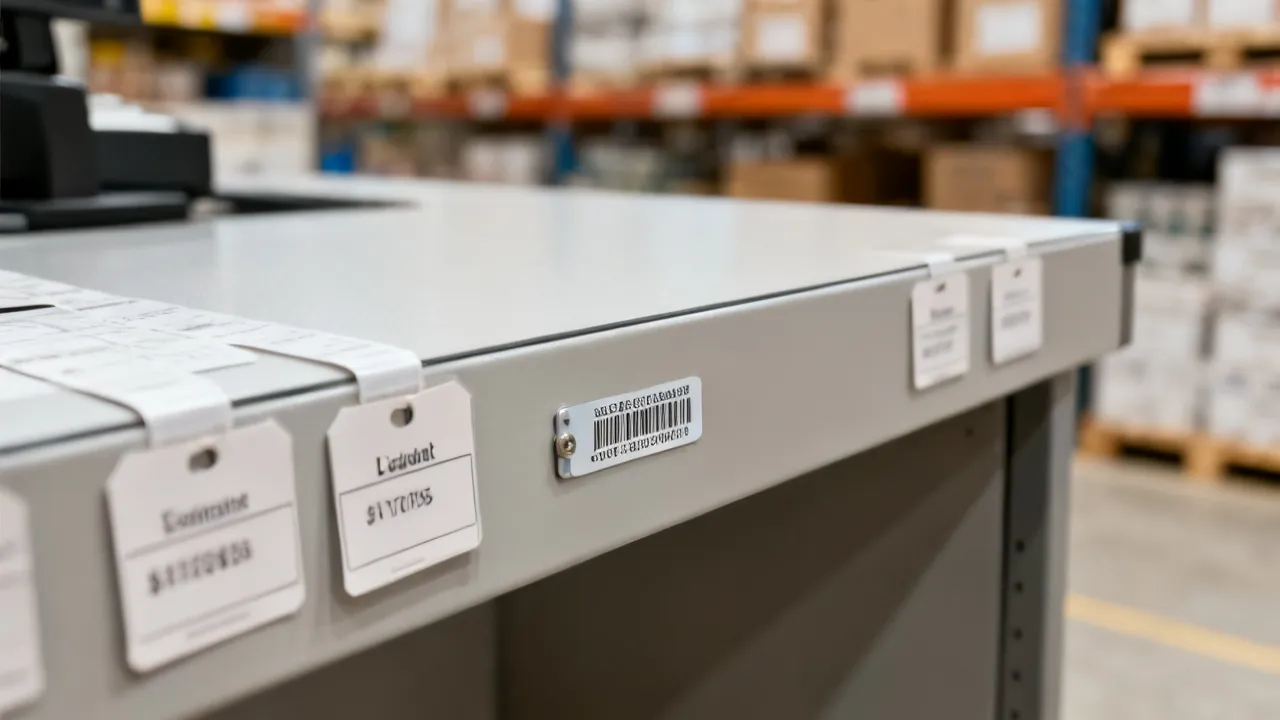
Some organizations also implement “staging validation,” where the receiving interface initially stores the raw identifier exactly as scanned or typed, then applies normalization in a separate step. That preserves auditability: you can always show the original value received and the canonical value used for matching. This is particularly useful when disputes arise with suppliers.
Another practical improvement is to treat the identifier like any other controlled master data attribute. When receiving clerk entry includes free-text edits, you should capture who changed it, when, and why. Without that, you risk “silent correction,” where the team edits 996⁸1298⁰⁶ into a different representation that passes validation but no longer represents the supplier’s actual code.
Industry framing: why such codes exist at all
Numeric identifiers with formatting characters (including superscripts) commonly arise from internal engineering or cataloging systems. In real-world organizations, item references may reflect:
- Specification variants (e.g., material grade, dimensional configuration, versioned revision).
- Lot/batch tracking conventions (especially where quality systems require traceability).
- Database keys exported for documentation; sometimes formatting survives export, sometimes it does not.
In other words, a code like 996⁸1298⁰⁶ can be a “human-unfriendly” identifier that is nevertheless critical for machine matching. Your governance strategy should reflect that reality: treat the identifier as a control token for matching and auditability.
It’s also possible that the superscript-like segments are artifacts of how the identifier is rendered in a particular UI or report. For example, some systems render parts of an identifier as superscript to visually indicate an exponent or a subcomponent, even though the underlying data might be stored in a normalized form without such typography. This can create a tricky mismatch between “what users see” and “what the database stores.”
Therefore, you should determine the canonical data representation by testing round-trip behavior:
- Create or find a record that uses 996⁸1298⁰⁶ in the master.
- Export it through your standard integrations (ERP export, WMS label generation, supplier portal, invoice ingestion sample).
- Confirm whether superscripts remain, and if not, whether they transform deterministically into a different textual pattern.
When you do this testing, avoid relying solely on one report output. Some reports render differently depending on their formatting templates. The goal is to determine what survives in the data interchange, not only what appears in a human-readable report.
Comparison of approaches: how teams can standardize 996⁸1298⁰⁶ handling
Standardization is not one decision; it’s a set of choices about which transformations are allowed, where they occur, and how exceptions are handled. Procurement teams typically choose among a few practical approaches.
| Approach | What it means in practice | Strengths | Trade-offs |
|---|---|---|---|
| Exact-string validation | Receiving requires an exact match to 996⁸1298⁰⁶, including superscript formatting. | Highest integrity for traceability; fewer ambiguous matches. | More supplier friction if suppliers strip formatting. |
| Canonical mapping | Define a canonical form (e.g., convert superscripts consistently) before matching. | Reduces receiving exceptions caused by formatting loss. | Requires careful documentation and periodic audits of mapping logic. |
| Dual-key matching | Match on both formatted identifier and a secondary field (e.g., internal item number) when available. | Robustness when formatting breaks; supports reconciliation. | More complex data model and workflow. |
| OCR/OCR-assisted intake | Use document capture tools, then validate the identifier via rules and confidence thresholds. | Scales intake processing when data arrives inconsistently. | Risk of misreads; needs tight controls and human review thresholds. |
Choosing between these approaches depends on your environment’s maturity and supplier reliability. A new supplier might require canonical mapping or dual-key matching early on. Over time, if the supplier consistently sends correctly formatted identifiers, you can tighten to exact-string validation for better audit defensibility.
Also note an often overlooked aspect: even if you choose canonical mapping, you must still preserve the original value for audit and dispute resolution. A canonical form is a tool for matching, not necessarily what you should display as “the received identifier.” Keeping both values avoids arguments like “your system says we sent X but our invoice shows Y.”
Finally, consider integration touchpoints. If your system ingestion pipeline uses one normalization strategy but your receiving UI uses another, you will create a mismatch even when the “same policy” is intended. Standardization should include all systems involved—ERP, WMS, invoice ingestion, master data management, and any middleware.
Source guidance and governance references (for reliability)
For procurement and supply-chain data governance, widely used frameworks include quality management and traceability concepts commonly associated with ISO standards and audit-oriented internal controls. For character encoding and data interchange reliability, organizations also rely on established top practices in text encoding (e.g., Unicode handling) and enterprise integration testing. Where specific performance figures are needed, teams should consult official materials from their ERP vendor, their WMS provider, or recognized standards bodies. Because your provided input did not include a particular vendor or region-specific system, this article avoids unverified numeric claims.
In a more actionable sense, governance guidance typically translates into the following operational controls:
- Documented field semantics (what each identifier field means, how it’s expected to be formatted, and whether it is required or optional).
- Traceable transformation rules (what transformations you allow, their deterministic logic, and how you version them).
- Role-based access (who can edit received identifiers and under what conditions).
- Periodic audits (sampling exceptions and verifying that outcomes align with intended matching rules).
When you implement identifier handling policies, you should treat them as controls with evidence, not just as automation. Evidence might include logs of raw vs. canonical values, reconciliation results, and approval workflows for overrides.
Step-by-step guide: implementing 996⁸1298⁰⁶ matching rules
- Inventory the data path: identify every system and file format where 996⁸1298⁰⁶ appears (PO, invoice, packing slip, label, receipt record).
- Define field semantics: specify that the identifier is a text reference and list allowed characters.
- Decide the matching policy: choose exact-string, canonical mapping, or dual-key matching based on how your suppliers generate documents.
- Test formatting preservation: run controlled tests to ensure superscript-like characters (e.g., ⁸, ⁰) persist through exports/imports. Confirm behavior under your ERP import routines and your WMS scan intake.
- Create validation rules: enforce maximum length, permitted character classes, and reject/flag behavior for invalid strings.
- Update supplier documentation templates: provide examples that mirror the exact representation of 996⁸1298⁰⁶ in the fields you require.
- Set exception handling conditions: define when manual review is mandatory (e.g., mismatch on identifier and mismatch on description/specification).
- Monitor reconciliation rates: track the number of receiving exceptions tied to identifier mismatches and review trends monthly.
- Audit periodically: sample closed cases to confirm that matching rules produced correct item-price tie-outs for 996⁸1298⁰⁶.
To strengthen this step-by-step process, consider adding a few practical additions that frequently improve outcomes:
- Define a normalization version: if you map characters (e.g., superscripts to plain digits), version that logic so you can reproduce outcomes later.
- Set tolerance boundaries: for example, decide whether leading zeros are significant. If they are, enforce it explicitly.
- Establish a “no silent fallback” rule: avoid auto-matching to the wrong item when confidence is low. Better to raise an exception than to accept a wrong match.
- Implement supplier-specific exceptions carefully: if you must allow a supplier to submit a variant formatting, document it and set a sunset date for when you’ll tighten.
These additions matter because identifier matching is frequently a “long tail” problem. Most documents match cleanly, but the minority that don’t can create a disproportionately large operational burden. Your goal is to ensure that those non-matching cases are handled deterministically and transparently.
Conditions and requirements to ensure compliance-grade traceability
- Encoding requirement: store the identifier as text using consistent character encoding across systems; avoid lossy transformations.
- Document-field requirement: suppliers must populate the correct field (e.g., “Item reference” vs. “Description”), otherwise matching will fail.
- Receiving requirement: the receiving workflow must validate the reference against the PO line item before goods are released from quarantine (where applicable).
- Audit requirement: retain receiving and reconciliation records that show the exact 996⁸1298⁰⁶ values used at the time of receipt.
- Change-control requirement: if mapping rules or normalization logic changes, apply them with versioned documentation and retroactive checks when feasible.
Compliance-grade traceability also benefits from “evidence-ready design.” That means your system logs should make it easy for an auditor to follow the chain from received goods to identifiers to invoice processing decisions. If you have separate logs that don’t correlate, you might pass internally but still struggle during formal review.
Additionally, consider retention of the raw input. If your canonical mapping changes in the future, you’ll still want to know what the supplier originally sent and what your system decided at that time. That’s why maintaining both raw and canonical forms is often a best practice.
FAQ: procurement teams commonly ask about codes like 996⁸1298⁰⁶
1) What does 996⁸1298⁰⁶ mean?
It very likely functions as an internal reference identifier used for cataloging and matching across procurement and inventory systems. The exact semantic meaning (e.g., batch vs. revision) depends on how your organization’s item master is configured.
In some companies, a structured identifier like this might combine multiple segments: one segment indicating a base item, another indicating a variant, and another indicating a revision or specification. The superscript-like characters suggest that one segment may be rendered in a way that has special meaning in the UI layer.
2) Why are there superscript-like characters in the code?
Those characters often reflect how a source system exported or formatted identifier components. Some systems encode structured segments using special typography. For matching purposes, your priority should be consistent preservation and an agreed policy for how to treat those characters.
From a data governance perspective, superscript-like characters also highlight the importance of Unicode handling. Different systems might represent “superscript digits” as distinct Unicode code points rather than ordinary digits. If your integrations treat the string as ASCII-only or apply lossy sanitization, you’ll lose information.
3) What happens if a supplier sends 996⁸1298⁰⁶ without the formatting?
Mismatch risk increases. The remedy is either strict supplier formatting alignment (preferred when feasible) or implementing a canonical mapping that your systems apply deterministically—followed by audits to ensure mapping doesn’t create incorrect matches.
However, canonical mapping can introduce a new risk: two distinct identifiers might normalize into the same canonical form if your mapping is too broad. For example, if you remove all superscript distinctions, you might unintentionally equate items that should remain distinct. That’s why mapping rules should be narrowly scoped and tested with real master data records.
4) Can the code be stored as a number?
Generally, no. Identifiers containing nonstandard formatting should be treated as text. Storing as numeric types can lead to loss of characters, truncation, or scientific-notation issues.
Numeric storage can also cause leading zeros to disappear. Even when your code appears “mostly numeric,” the superscript-like characters are a strong sign that this is not a simple integer key.
5) How does this affect pricing and invoicing?
If the identifier doesn’t match the intended item master record, the invoice line may tie to the wrong purchasing condition. That can lead to disputes, posting errors, and reporting inaccuracies. Robust validation at receiving reduces these outcomes.
Moreover, if your invoice ingestion tool uses the identifier to determine which tax classification or accounting cost element to apply, mismatches can propagate into general ledger postings. Fixing those later is usually more expensive than preventing them at receiving.
6) What should procurement document internally?
Document the identifier’s field definition, exact character handling rules, matching policy (exact vs. canonical vs. dual-key), exception criteria, and audit retention requirements. Also include examples using the exact appearance of 996⁸1298⁰⁶.
In addition to examples, document “counterexamples”: show what an invalid or near-miss string looks like (for example, missing superscripts or swapped digits). This helps train users and reduces variations in manual overrides.
7) How do we reduce manual reconciliation work?
Very teams reduce work by (1) enforcing correct supplier field population, (2) preserving formatting through integrations, and (3) using deterministic matching rules that cover known formatting variations without broad fuzzy matching.
Another lever is automation of exception resolution. If an exception occurs but the identifier can be resolved deterministically through a canonical mapping and the PO line is unique, you can automate the resolution while still logging evidence. If resolution is ambiguous, you route to manual review.
Deep-dive: connecting 996⁸1298⁰⁶ to end-to-end traceability
To understand why a small-looking identifier can have outsized operational impact, consider the full “end-to-end traceability chain” in procurement. Each step is a potential transformation point where text can change: emails and PDFs, portal form entries, spreadsheet imports, ERP interfaces, WMS scan logs, and accounting posting routines.
When 996⁸1298⁰⁶ is treated purely as affordable-form text, you invite inconsistent entry. When treated as structured metadata, you enforce deterministic handling. Industry top practices typically favor metadata: structured fields in PO lines, labels generated from the same item master, and receiving validation that checks the identifier before goods are accepted.
From a risk-management standpoint, the critical question becomes: what does your organization do when the identifier doesn’t match? Many companies begin with informal workarounds—email threads, manual edits, or “close enough” normalization. Over time, those ad hoc solutions create an audit challenge: the organization can no longer easily demonstrate that the correct item/price/lot relationship was preserved.
Therefore, the top governance systems for codes like 996⁸1298⁰⁶ incorporate both control and learning. Control means strict rules at the point of capture; learning means using exception patterns to update supplier instructions and internal data handling rules.
To make “learning” effective, you generally need an exception taxonomy and analytics. For example:
- Formatting stripped: superscripts replaced with plain digits or removed entirely.
- Character substitution: digits replaced with visually similar characters (rare but possible with OCR).
- Truncation: identifier cut off due to field length limitations.
- Wrong field used: identifier placed in an unparsed column or description.
- Multiple identifiers: supplier provides multiple codes and your system chooses the wrong one.
Once you can classify exceptions, you can prioritize fixes. If 70% of exceptions are formatting-related, you adjust canonical mapping or supplier templates. If 70% are wrong field population, you improve onboarding and invoice template definitions.
Also consider temporal effects. A supplier might change their template version after a system upgrade. Exceptions may suddenly spike. If you log template version or document format version, you can correlate changes. Without that, you end up treating the symptom rather than the cause.
Operational recommendations from an industry expert’s perspective
- Adopt a single policy for how to treat the formatting characters. Mixed policies across sites or teams quietly cause reconciliation drift.
- Prefer deterministic solutions over probabilistic matching for identifiers. For example, avoid fuzzy matching for 996⁸1298⁰⁶ unless paired with strong validation criteria.
- Run “round-trip” tests: generate a PO containing 996⁸1298⁰⁶, let the supplier echo it back on an invoice/packing slip, and verify that your ERP and WMS store and display it identically.
- Use exception taxonomy: classify mismatch types (formatting stripped, wrong field used, character substitution, truncation). That classification makes remediation actionable.
- Link identifier to the price line: ensure your workflow ties item reference and pricing condition together; this prevents accidental “correct item, wrong price” scenarios.
Additional expert-level recommendations that often determine success:
- Implement master data constraints: ensure that the item master record for 996⁸1298⁰⁶ is unique and unambiguous, and that there is no other record that normalizes to the same value (to prevent accidental collisions).
- Validate upstream ingestion: test invoice ingestion not only for successful matches but also for failure modes. Confirm how your system behaves when it receives a slightly different formatting.
- Train receiving teams: make sure receiving clerks understand what the superscript-like characters represent in your environment. If users know that the symbols are significant, they’re less likely to “correct” them manually.
- Measure time-to-resolution: track how long exceptions tied to 996⁸1298⁰⁶ remain open. Even if match rates are high, long resolution times indicate process gaps.
- Coordinate procurement and IT: identifier governance is a cross-functional issue. Procurement owns the business rules (what should match), while IT owns integration and technical enforcement.
Conclusion: turning 996⁸1298⁰⁶ into a dependable procurement key
While 996⁸1298⁰⁶ may not be meaningful in everyday conversation, it likely plays a functional role as a procurement and traceability reference across systems. The objective improvement opportunity is therefore not to “guess” the code’s internal semantics, but to standardize its handling—especially formatting preservation, deterministic matching rules, and robust exception governance.
When procurement teams apply these practices consistently, they improve receiving accuracy, reduce invoicing disputes, strengthen audit readiness, and create clearer collaboration with suppliers—turning what could be a fragile identifier into a dependable procurement key.
-
1

A Guide to Cost-Efficient Small Electric Cars for Seniors
-
2
Mastering Debt Consolidation: Boost Your Credit Score and Manage Interest Rates
-
3
Your Guide to Loans, Credit Checks, and Interest Rates
-
4
Affordable Independent Living: Finding the Right Senior Housing
-
5
Guide to Senior Living Apartments: Affordable and Comfortable Environments