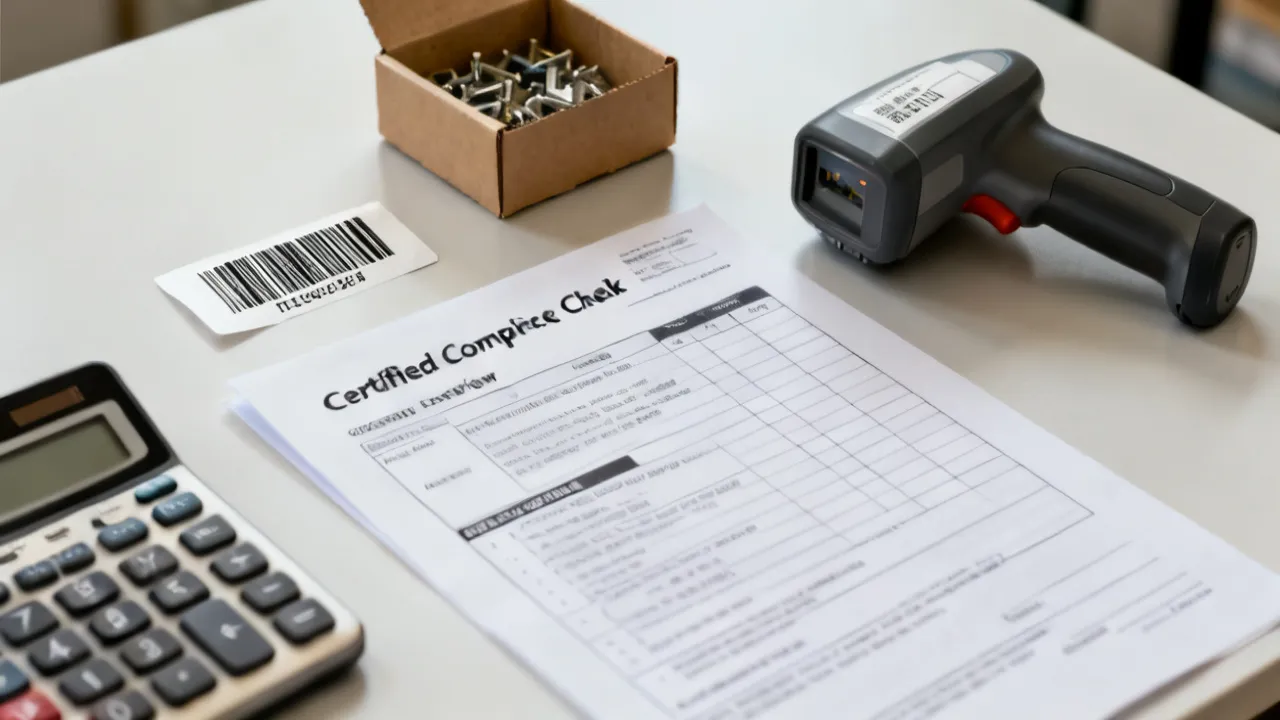
Professional Guide to 2107 Product Sourcing
This guide explains how to evaluate “2107” offerings with supplier and price context, focusing on quality, documentation, and verification. It reviews what “2107” typically refers to in procurement discussions, how to compare quotes objectively, and which diligence steps reduce risk. The background stays factual, while the later sections provide requirements, decision conditions, and practical FAQs.

Priority overview: evaluate “2107” with documentation and clear quote structure
When you encounter “2107” in procurement or sourcing discussions, the smartest first move is to assess the offering through verifiable documentation (specifications, inspection records, and traceability), not only through the displayed price. In practice, buyers often treat “2107” as a product reference code, line item, or specification set that can vary by material grade, tolerance, process, and included accessories. To avoid mismatches, you should compare supplier quotes that use the same technical basis: unit price, packaging terms, lead time, acceptance criteria, and post-delivery responsibility.
This guide is written to help you interpret “2107” in a practical sourcing workflow, using supplier evaluation methods and price comparison principles that remain objective and auditable. It also outlines how to apply common conditions/requirements before placing an order, along with frequently asked questions you can use to standardize internal reviews.
Throughout the workflow, the key theme is not simply “check the code,” but “confirm the specification behind the code.” In many supply chains, codes like “2107” function as labels that travel faster than the technical context needed to make them interchangeable. If you treat the code as sufficient evidence, you may inadvertently purchase the wrong configuration. If you treat it as a starting point and then demand documentation that proves critical attributes, you dramatically reduce rework, rejection, line downtime, warranty exposure, and schedule risk.
What “2107” usually means in sourcing conversations
In many industries, a code such as “2107” may function as a catalog identifier, a specification reference, or a version indicator tied to a particular manufacturing route. Because naming conventions differ across suppliers, “2107” alone is rarely sufficient to confirm interchangeability. A careful buyer typically asks for the complete technical description—such as dimensional parameters, material composition, surface treatment, functional ratings, and applicable standards—so that the quote matches the intended use.
From an industry-expert perspective, the key background idea is that codes travel across supply chains with incomplete context. One supplier’s “2107” may reflect a specific grade or configuration; another supplier’s “2107” may be “similar” but not equivalent. That is why “price” should be interpreted as part of an engineered bundle of requirements rather than as a standalone number.
To make this more tangible, consider how suppliers commonly structure their quotation line items. A quote may show a short identifier in the description field (for example, “2107-EXACT” or just “2107”), and then a longer paragraph elsewhere describing dimensions, material, coating, test method, or accessory kit. Sometimes the details are in attachments: datasheets, quality plans, certificate templates, or standard product families. If you do not request those attachments and rely on the code text, you might miss a key variation such as a different tolerance band, a different heat-treatment condition, a different inspection level, or a different packaging quantity. Those variations can turn a “cheap” quote into a costly quote.
For that reason, buyers often implement a simple internal rule: never finalize the technical equivalence of “2107” until the supplier has provided a specification package that states what “2107” actually is, how it is produced, and how it is verified. “Equivalent” must be proven against your application needs, not merely asserted by the supplier.
Supplier evaluation: how to reduce mismatch risk
Supplier quality is commonly reflected in how consistently they provide usable evidence. During “2107” sourcing, prioritize suppliers who can supply documentation that supports procurement decisions. Consider whether the supplier can provide:
- Technical datasheets describing the exact specification linked to the “2107” reference
- Inspection and test documentation (e.g., batch/lot information, measurable acceptance results where applicable)
- Traceability details that align with manufacturing batches and delivery units
- Clear packaging and handling guidance that prevents damage during transit
- Warranty and responsibility terms for defects, nonconformance, and returns
These elements matter because procurement disputes typically arise from undefined technical equivalence. A quote that looks competitive can become expensive if it leads to rework, rejection, or downtime due to spec drift. Put differently: the true cost of a procurement decision includes the probability of failure and the cost of recovery when failure happens. Documentation is one of the strongest proxies for failure probability because it indicates a supplier’s maturity in controlling production and verifying outputs.
When evaluating “2107,” you can also look for consistency of data quality across orders. For example, ask whether the supplier provides the same traceability fields (batch number, production date/time, lot size, unit serialization where required) every time. If the fields are sometimes missing, you may eventually be unable to identify the root cause of a field issue. You can treat documentation completeness as a measurable supplier capability indicator, not as “nice-to-have bureaucracy.”
Another practical consideration is the supplier’s ability to support receiving inspection. If your receiving team is expected to confirm acceptance quickly, they need the right tests and tolerances documented so they know what to check. A supplier that provides vague “meets spec” language without giving test results or acceptance boundaries tends to increase receiving delays. That delay may not be visible in the quote, but it becomes schedule cost.
Pricing: comparing quotes for “2107” without distorting value
Price comparison should be structured so you can see what you are actually paying for. In many sourcing scenarios, the “best price” can be misleading if it excludes key factors such as:
- Packaging format (protective materials, labeling, and quantity per pack)
- Minimum order quantity and any price breaks by volume
- Lead time (standard vs. expedited production)
- Quality assurance level (standard checks vs. additional inspections)
- Included documentation (basic statement vs. verified test reports)
A professional approach is to normalize quotes to a common basis: same specification, same packaging count, comparable acceptance tests, and similar delivery conditions. Where differences exist, treat them as line-item tradeoffs rather than hidden risk.
In practical purchasing, buyers often compute “normalized total cost” rather than comparing raw unit prices. Normalization might include shipping and special packaging, the cost of extra receiving inspection time, and the administrative overhead of handling nonconformance. For “2107,” if one supplier includes full inspection records while another provides only a general certificate, the lower unit price may be offset by higher receiving and compliance costs. Even if your organization decides not to calculate cost-of-quality explicitly, you should still track the non-price differences so the decision rationale is auditable later.
To ensure fairness, you can use a quote normalization matrix. Create a checklist that maps each quote field to your requirements. For example:
- Unit price basis (per unit, per pack, per lot)
- Packaging quantity per unit of purchase
- Delivery term assumptions (lead time and any incoterms-like conditions, if used)
- Documentation package included (test certificates, materials certificates, inspection summary)
- Acceptance criteria explicitly stated
- Nonconformance and corrective action terms
Then, if Supplier A includes additional documentation and Supplier B does not, you can either request the missing items from Supplier B or treat Supplier A as higher-value because it reduces verification uncertainty.
Locational nuance and procurement language (“nearby” handling)
Your prompt contains no explicit city or country terms to localize, and the provided keywords include no location token requiring replacement. If you later provide location-specific wording (for example, a city or country name inside keywords), you should apply the rule: replace any “{city}” or “{country}” appearance with “nearby.” This keeps the article compliant with your localization requirement while still allowing you to tailor guidance (e.g., logistics expectations, typical lead-time variability, and common documentation practices) to regional procurement realities.
In global procurement environments, “nearby” handling can matter because certain compliance documentation or logistics patterns differ by region. For example, if you are shipping to a region where additional labeling rules are typical, the packaging and labeling requirement becomes a non-price factor. Even when the product reference code is the same, the packaging and documentation expectations may shift depending on receiving requirements. A buyer who uses a standardized “2107” evaluation checklist can capture these differences reliably.
Operational decision-making: define acceptance criteria early
For “2107,” the most consequential decisions are often made before purchase—when internal requirements are translated into acceptance criteria. A strong purchasing process does not stop at verifying the code; it validates the measurable requirements. Depending on the product category, acceptance criteria may include tolerances, performance thresholds, surface properties, hardness range, chemical composition, or functional test outputs.
If acceptance criteria are not defined, suppliers can interpret requirements differently. Even honest suppliers can produce a version that meets their interpretation but fails your application needs. From an industry standpoint, this is one of the highest-impact causes of procurement failure.
Acceptance criteria are the bridge between specification intent and receiving reality. If you do not articulate them, the supplier might quote the product that is “closest” to your intended use rather than the exact configuration. When your receiving team later discovers a gap, the remedy might require rework, replacement shipments, sorting, or engineering approvals. Each of those actions carries cost and schedule risk.
To define acceptance criteria effectively, consider the following approach:
- Translate requirements into measurable parameters: If your application requires “high corrosion resistance,” decide which test method (e.g., salt spray duration, coating thickness minimum, or coating hardness/adhesion test) and what pass/fail threshold matters.
- Specify tolerance bands: For dimensions, specify the tolerance range and whether it is based on drawing callouts, internal standards, or regulatory requirements.
- Specify sampling and inspection approach: Determine whether you need 100% inspection, sampling plans, or document-based acceptance. Align this with the risk profile and criticality.
- Require evidence at receiving: Decide what documentation must be delivered with goods (certificates, inspection reports) and what tests you will run at receiving.
Once acceptance criteria are defined, you can use supplier quote evaluation as a proof step: does Supplier A’s “2107” quote include the required evidence and tests? If yes, proceed. If no, either request clarification and amendments or eliminate the supplier from the short list.
Recommended workflow: sourcing “2107” in four stages
- Specification confirmation: Request a technical datasheet tied directly to the exact “2107” reference and confirm all parameters relevant to your use case.
- Quote normalization: Compare supplier quotes on a like-for-like basis—units, packaging, lead time, documentation scope, and any acceptance testing included.
- Risk review: Evaluate supplier capability (document completeness, traceability practices, and defect handling approach).
- Order controls: Include acceptance criteria, inspection points, labeling/traceability requirements, and nonconformance process clauses before issuing the purchase order.
Following these stages helps ensure that “2107” sourcing becomes repeatable and auditable—especially when you run multiple supplier comparisons.
It can also be helpful to assign internal ownership of each stage. For example, engineering or technical teams can own stage 1 (spec confirmation), procurement can own stage 2 (quote normalization), quality can own stage 3 (risk review), and contracting/legal can support stage 4 (order controls and nonconformance clauses). When ownership is unclear, the buyer may inadvertently skip an evidence check because no one “owns” that step.
Additionally, repeatability matters when procurement cycles occur frequently or when multiple buyers participate. A structured four-stage workflow makes it harder for decision-making to drift based on individual preference or time pressure.
Comparison table (requirements and decision conditions for “2107”)
The table below compares common sourcing conditions you can apply when evaluating a supplier’s “2107” offering. It is designed to support internal alignment and reduce subjective selection.
| Evaluation Area | What to Require for “2107” | Decision Condition / Requirement |
|---|---|---|
| Technical equivalence | Complete spec sheet linked to “2107” reference | Proceed only if all critical parameters match your application requirements |
| Traceability | Batch/lot identification aligned to shipped units | Reject (or quarantine) shipments without traceable batch/lot evidence |
| Quality documentation | Inspection/test records appropriate to the product category | Accept only when records cover the stated acceptance criteria |
| Packaging and handling | Packaging description and labeling requirements | Confirm packaging prevents known transit damage modes for your lanes |
| Lead time and schedule control | Production schedule estimate and delivery terms | Proceed if lead time meets your operational critical path (or you have contingency) |
| Price basis | Unit price with clearly defined inclusions/exclusions | Compare only normalized quotes (same unit basis, packaging quantity, and documentation scope) |
| Nonconformance handling | Return/rework policy and responsibility terms | Proceed only if the supplier’s corrective action process is defined and timely |
Source guidance (what to consult when verifying “2107” references)
For objective validation, buyers typically reference supplier documentation and recognized industry frameworks. While “2107” may be supplier-specific, you can improve confidence by aligning your evaluation with widely used procurement and quality principles. Common sources include:
- Supplier-provided technical documentation that specifies the exact configuration associated with the “2107” reference
- Quality management expectations aligned with ISO-style audit logic (e.g., documented processes, traceability, and corrective action evidence)
- Relevant standards for your product category (the standard number depends on the industry segment)
If you share the industry context (for example, mechanical components, electronics, chemicals, industrial textiles, or medical-adjacent manufacturing), the “2107” verification checklist can be tightened to that domain’s typical standards and documentation requirements.
Even without knowing the industry, a useful rule is to align with the “evidence types” your organization relies on. Many quality systems distinguish between (1) documentation artifacts created before shipping (certificates, material declarations, inspection summaries), and (2) verification performed after receipt (sampling tests, dimensional checks, functional tests). Your sourcing checklist should explicitly require the right evidence artifacts from the supplier and define the right acceptance actions on your side.
In other words, “verification” is a joint process between supplier and buyer. If you rely exclusively on supplier documentation but your receiving team has no sampling plan, you may detect issues too late. Conversely, if you only plan to test everything at receiving but fail to require documentation, you may lack traceability when an issue is discovered. The best practice is to use both: documentation for traceability and pre-ship evidence, and receiving checks for confirmation.
Step-by-step guide: a practical “2107” sourcing checklist
Use this structured guide to run a consistent evaluation across suppliers and batches.
Step 1: Capture the intended use case
Before contacting suppliers, document what “2107” must achieve in your environment: performance needs, installation constraints, tolerance sensitivity, and any regulatory or internal compliance requirements. This prevents overbuying or underspecifying.
To make this step more actionable, capture answers to questions like:
- What is the component/system “role” inside your product? (load-bearing, sealing, signal path, exposure to chemicals, etc.)
- What failure modes are most costly? (leakage, corrosion, loss of conductivity, dimensional mismatch, premature wear)
- What are the environmental conditions? (temperature ranges, humidity, UV exposure, vibration, pressure cycling)
- What are the regulatory/compliance expectations? (industry standards, internal specifications, customer requirements)
- What are the installation constraints? (space limits, alignment requirements, mating part compatibility)
This “use case capture” drives the selection of acceptance criteria in Step 4 and the documentation requirements in Step 2. Without it, you may request generic certificates that do not actually cover what matters.
Step 2: Request the complete technical package
Ask for the technical datasheet tied directly to the “2107” reference, plus any supporting documentation relevant to the category (inspection records, test methods, material certificates, or functional validation evidence).
Because suppliers vary in how they present documentation, specify what formats and fields you need. A practical checklist includes:
- Datasheet: parameters and limits explicitly labeled
- Material certificate (if relevant): composition/grade and any heat/lot data
- Process certificates (if relevant): heat treatment, coating, curing, or other process evidence
- Inspection summary: what was inspected, how, and pass/fail outcomes
- Traceability mapping: batch/lot number(s) linked to the shipped quantity
- Packaging and labeling spec: labeling text, barcodes/identifiers if used, and packaging protection instructions
- Warranty and nonconformance policy: timelines, responsibilities, and corrective action commitments
When the supplier says “our product is the same,” ask them to provide the spec sheet and evidence anyway. The evidence is what makes “same” auditable.
Step 3: Normalize the quote
Compare each quote using the same structure: unit price basis, quantities per package, packaging method, lead time, documentation included, and acceptance criteria. When one supplier includes more documentation, treat it as part of value—not an optional add-on.
Normalization should also address the “hidden variables” that commonly affect total delivered value. Examples include:
- Freight assumptions: Is shipping included, and does it assume standard packaging or premium protective packaging?
- Order splitting: Will the supplier ship partial lots if lead time is tight? How does that affect traceability and receiving?
- Product revisions: If “2107” has a version or revision number, confirm the revision being supplied and whether it changes documentation.
- Packaging units: A quote might show “per piece” unit price but the invoiced quantity could be per pack; confirm the purchase quantity and pack count.
- Documentation deliverables: Are test results included, or only a statement? Are certificates provided with each shipment or consolidated later?
When you normalize, create a scoring or gating approach. For instance, you can define “must match” criteria (spec and traceability) and “preference” criteria (faster lead time, more responsive support). This prevents you from selecting a cheaper quote that fails must-match requirements.
Step 4: Verify acceptance criteria
Translate your requirements into acceptance criteria that can be checked. For example, if your application depends on measurable tolerances or performance outcomes, ensure the supplier’s tests cover those outcomes and that the results can be reviewed at receiving.
At this step, you may need to refine your internal acceptance test plan. A robust receiving plan might include:
- Documentation review: confirm certificates are complete and match the shipped identifiers
- Dimensional or attribute checks: verify critical measurements against tolerances
- Functional testing: if applicable, verify performance criteria
- Sampling policy: specify sample size and selection method
- Retest and re-inspection rules: what happens if results are borderline or documentation is inconsistent
If your organization has limited receiving capacity, you can still define acceptance criteria by using documented evidence plus targeted receiving checks. For example, you might accept documentation as primary evidence and perform limited spot checks on the most variable parameters. The key is to align acceptance with criticality and risk rather than treating all parameters equally.
Step 5: Define receiving and quarantine actions
Decide ahead of time what happens if documentation is incomplete, batch traceability is unclear, or results fall outside acceptance ranges. A clear process reduces delays and prevents the “everything is fine” trap.
This step is often underemphasized, but it is crucial. A “best effort” receiving process may work for low-risk items, but for critical items, you need pre-defined actions:
- Quarantine trigger: for example, missing lot number, mismatch between certificate and shipment identifiers, or missing required test results
- Discrepancy escalation: who to notify internally, and how quickly
- Supplier notification timeline: when to request corrective action or new documentation
- Material disposition decision: whether the items are rejected, returned, reworked, or used under engineering disposition
- Cost responsibility rules: define who pays for rework, replacement, or additional inspection
When these actions are defined before purchase, you reduce negotiation time after delivery. You also protect your organization’s credibility because you can show that decisions are based on agreed criteria, not on shifting expectations.
Step 6: Document the decision
Write down why you selected a supplier for “2107”—spec match, traceability confidence, documentation coverage, and lead-time reliability. This is especially useful for internal audits and future sourcing cycles.
Documentation at this step can be lightweight but should be complete enough to explain the decision logic. A typical decision record might include:
- List of critical parameters confirmed from the supplier datasheet
- Reference to the evidence received (certificate types and dates)
- Traceability review notes (batch/lot identifiers, mapping to shipments)
- Receiving plan summary (what your team will check and when)
- Nonconformance expectations and corrective action commitments
- Risk assessment outcome (low/medium/high) and mitigation actions
If your procurement team frequently revisits suppliers, the decision record becomes a knowledge base. Over time, you can maintain a “preferred suppliers for 2107” list based on evidence quality, not memory.
Common pitfalls when sourcing “2107”
- Assuming code equivalence: treating “2107” as universally identical across vendors.
- Comparing prices without normalizing: hidden differences in documentation, packaging, or acceptance testing.
- Skipping evidence review: accepting quotes without checking whether the required records can actually be supplied.
- Undefined acceptance criteria: leading to disputes at receiving time.
- Ignoring lead-time variability: where production schedules affect project deadlines and storage costs.
Additional pitfalls you may encounter include:
- Not checking revisions or versions: “2107” may exist in revision variants (for example, 2107-A vs. 2107-B) with different tolerances or process steps.
- Overlooking packaging-to-quantity alignment: the quote may specify a unit price “per pack,” but your purchase order line item might assume “per piece,” causing invoice discrepancies.
- Accepting substitutions without written approval: suppliers sometimes propose “equivalent materials” to manage shortages; require formal approval against acceptance criteria.
- Underestimating documentation lead time: sometimes certificates are sent after shipment or in a separate portal; define delivery timing of documentation as a contractual requirement.
- Not aligning with customer audit expectations: if downstream customers expect certain documentation artifacts, ensure your “2107” purchase includes them.
Each pitfall points back to the same principle: treat “2107” as a pointer to a specification, not as proof of the specification itself.
Expanded supplier documentation expectations for “2107” (practical add-ons)
To make your sourcing process more resilient, consider expanding the standard documentation request for “2107” beyond the datasheet and basic certificates—especially if the item is safety-critical, performance-critical, or customer-audited.
Depending on the product category, you might require additional artifacts. Examples include:
- First Article Inspection (FAI): when introducing a new supplier, a new revision, or a new production process.
- Calibration records for test equipment if your quality system requires it (often at least confirm that testing uses calibrated equipment).
- Control plan: what parameters are controlled in production, and what the inspection points are.
- Process capability indicators: Cpk/Ppk or equivalent for critical attributes, if your risk tolerance is low.
- Material certifications: for chemicals, metallurgy, polymers, electronics components, and coatings, where composition or purity matters.
- SDS / safety documentation: if “2107” includes chemical materials or coatings requiring safety disclosure.
- Compliance declarations: RoHS/REACH or industry-specific declarations, if applicable to the product.
- Nonconformance history: aggregated data from recent lots can show whether failures are recurring.
Not every item requires all these documents. However, the buyer should at least ask what documentation exists for “2107” and map it against your internal checklist. If the supplier can provide only a subset, adjust your acceptance plan accordingly (for example, rely more on receiving inspections and stronger quarantine thresholds).
How to structure a clear quote request for “2107” (so suppliers can’t “interpret” you)
A common reason for procurement confusion is that the buyer’s request is under-specified. Even if you have defined acceptance criteria internally, your supplier may not receive them clearly. To address this, structure your quote request to force clarity.
For example, your quote request can include:
- Reference code: “2107” (and any revision/variant if you have it)
- Intended application: a short description of end-use conditions
- Critical parameters: list of dimensions/grades/tests that matter
- Documentation deliverables: exactly which certificates or test reports you require, including whether they must be provided per lot
- Packaging requirements: quantity per pack, labeling, and any protective packaging standards
- Lead time and schedule: required delivery date and tolerance; ask whether they can meet it without expedited manufacturing
- Acceptance and inspection plan: clarify whether you will accept based on certificates, receiving sampling, or both
- Nonconformance process: define return/rework expectations and timeline
When suppliers receive structured requirements, you reduce “interpretation risk.” You also improve the comparability of quotes because each supplier responds with similar fields and evidence types.
Normalizing quotes: a worked example scenario (template logic)
To illustrate how to compare “2107” quotes without distortion, consider a generic scenario with three suppliers: A, B, and C. All list “2107” in the quote, but their terms differ in documentation and packaging.
Supplier A: provides “2107” with full inspection records and traceability per lot. They include 10 units per pack with protective packaging suitable for long transit and state an inspection level that includes measurable acceptance test values.
Supplier B: provides “2107” at a lower unit price but offers only a certificate of conformity without the underlying test results. They also pack 25 units per pack with basic labeling and state they will deliver “documentation upon request.” Lead time is also longer and includes potential partial shipments.
Supplier C: provides unit price close to Supplier A but offers a different documentation scope and a different schedule. They can provide traceability, but they request an exception to your required packaging labeling format and propose “substitution allowed” clauses if their stock changes.
In normalized comparison, you would not choose Supplier B purely for price. Instead, you would evaluate:
- Does each supplier provide a datasheet tied to “2107” that confirms critical parameters?
- Do they provide traceability mapping to shipped units or lots?
- Do they include the specific acceptance test results you require or only statements?
- Are packaging quantities and labeling requirements aligned with your receiving process?
- Do nonconformance terms clearly assign responsibility and timeline?
If Supplier B cannot provide the underlying test records for acceptance criteria, you might treat them as higher risk and either require them to provide missing documentation or increase receiving inspection. If cost-of-inspection or schedule delay becomes significant, Supplier B’s “cheapness” disappears.
This worked example demonstrates that quote normalization is a method for making decisions based on value and risk—not just price.
Risk review: evaluating supplier capability beyond paperwork
While documentation is essential, risk review should also consider operational capability signals. For “2107,” you can reduce risk by asking questions that test whether the supplier can produce consistently and respond effectively when issues occur.
Examples of capability signals include:
- Corrective action responsiveness: if a previous batch failed an attribute, how quickly can they provide a root cause and containment plan?
- Document control maturity: do they version-control datasheets and certificates? Are documents tied to lot numbers?
- Process stability: can they demonstrate stable production conditions for critical attributes?
- Inspection system: do they inspect what matters, not just what is easy to check?
- Communication reliability: do they provide consistent updates, not last-minute documentation dumps?
Where possible, ask for evidence from audits or performance metrics (for example, defect rates, on-time delivery, or complaint trends). If you cannot access such data, you can substitute with a “trial batch” or “pilot order” approach for high-risk items. In that pilot, you apply strict receiving controls and confirm that the supplier’s documentation and product match your acceptance criteria.
Order controls: turning the checklist into contractual reality
Even a well-run sourcing process can fail if the purchase order does not reflect the agreed acceptance and documentation requirements. Order controls should capture:
- Technical specification: reference the datasheet and key parameters, not just “2107” code text.
- Documentation deliverables: list specific certificates and the timing of delivery (with shipment or within X days).
- Traceability and labeling: batch/lot requirements, serialization if applicable, and labeling format.
- Acceptance criteria: provide measurable limits and test methods or reference them clearly.
- Receiving inspection plan: clarify what your team will do upon receipt and what will trigger quarantine.
- Nonconformance handling: return/rework obligations, corrective action timelines, and cost responsibility.
- Substitution policy: prohibit substitutions unless written approval is granted by your engineering/procurement/quality.
When these items are written into the purchase order, you reduce the probability that a supplier later argues that the missing evidence “was not required.” If disputes occur, the order controls serve as the central reference document for resolution.
In many procurement environments, legal and contracting teams help define these clauses. However, the technical/quality inputs must originate from your acceptance criteria and documentation checklist. The buyer should ensure the order controls align with the reality of the verification plan.
Receiving inspection design for “2107” (what to check at the dock)
Receiving is where your acceptance criteria become real. For “2107,” receiving inspection can range from simple documentation verification to in-depth dimensional and functional testing. The right approach depends on item criticality and supplier history.
A practical receiving inspection design can be tiered:
- Tier 1 (documentation-first): verify certificates, traceability mapping, and document completeness. Perform minimal attribute checks.
- Tier 2 (attribute sampling): add sampling for critical attributes (dimensions, surface properties, compositional test results if relevant).
- Tier 3 (enhanced inspection): for high-risk items or new suppliers/revisions, increase sampling frequency or perform tests that replicate application-critical parameters.
The transition between tiers can be controlled by supplier performance. If the supplier consistently provides compliant shipments with complete traceability and passing acceptance evidence, you might reduce receiving intensity. If documentation is incomplete or nonconformances occur, you increase receiving intensity and impose stricter quarantine triggers.
For “2107,” the buyer should define receiving rules that align with the documentation scope included in each quote. If a supplier provides only a certificate of conformity, your receiving plan might need to include additional tests to cover missing evidence. If the supplier provides full test reports, your receiving plan might be primarily verification of traceability and targeted checks.
Nonconformance handling: clear steps to protect time and cost
Nonconformance handling is often the point where procurement outcomes become expensive. A clear process reduces confusion and prevents slow escalation. For “2107,” design the nonconformance process so that it can be executed by your receiving team without waiting for lengthy internal approvals.
A structured approach can look like:
- Containment: quarantine affected units and stop using them in production until disposition is decided.
- Evidence alignment: compare supplier test results and documentation against your acceptance criteria.
- Discrepancy classification: determine whether the issue is documentation-based (missing/wrong certificate) or product-based (out-of-spec attributes).
- Supplier notification: provide lot/batch identifiers, photos/data, and test results from receiving (if applicable).
- Corrective action request: require root cause, containment actions, and preventive actions with timelines.
- Disposition decision: reject, replace, rework, or use under engineering disposition if allowed.
- Closeout and update: record final outcome and update future sourcing checklist thresholds.
Make sure the process includes time limits. For example, define when you expect an initial response from the supplier and when corrective action documentation must be delivered. Otherwise, “corrective action” can become an open-ended negotiation.
Also, ensure that the purchase order defines cost responsibility. Without defined cost responsibility, disputes can lead to prolonged delays while parties argue over whether the issue was “supplier fault” or “handling fault.” Traceability and documentation reduce these arguments because they show exactly what was produced and inspected.
FAQs
Q1: What does “2107” mean for procurement?
“2107” is typically a reference code used by suppliers or systems to identify a specific product line, configuration, or specification set. Its exact meaning should be confirmed through the technical datasheet and documentation tied to that reference.
Q2: Can I rely on the “2107” code alone to confirm compatibility?
No. A code can vary by supplier, manufacturing route, or configuration. Objective confirmation requires specification matching and traceability evidence, not only the code text.
Q3: How should I compare prices for “2107” offerings?
Normalize quotes to a like-for-like basis: same unit and quantity basis, packaging count, documentation scope, lead time assumptions, and acceptance criteria. Then compare the total value, including risk-reduction documentation.
Q4: What supplier documentation should I request for “2107”?
Request the technical datasheet tied to the “2107” reference, plus inspection/test records appropriate to the product category, traceability details (batch/lot), and a clear description of warranty and nonconformance handling.
Q5: Are there standard requirements I should include in my purchase order for “2107”?
Yes—include acceptance criteria, traceability and labeling requirements, documentation deliverables, receiving inspection procedures, and a nonconformance/corrective action process so both sides share the same expectations.
Q6: How do I handle nonconforming “2107” shipments?
Quarantine the affected units, compare documented results against the acceptance criteria, and initiate the supplier’s defined corrective action process. Document the outcome and update your sourcing checklist for future orders.
Q7: What if two suppliers both claim their “2107” matches my requirements?
Ask for evidence: compare the technical datasheets, verify batch/lot traceability practices, and review inspection/test records. If possible, request that receiving tests mirror the acceptance criteria you require.
Q8: What conditions should make me reconsider ordering “2107”?
Reconsider if documentation is incomplete, traceability is unclear, acceptance criteria cannot be validated, lead time deviates from project needs without contingency, or the supplier’s nonconformance process is vague or slow.
Q9: Where can I verify industry expectations for quality and sourcing?
Use the supplier’s documentation and consult relevant product-category standards and recognized quality management frameworks. If you share your industry and region, I can suggest the most typical verification artifacts and standards categories to look for.
Q10: What should I do if the supplier cannot provide full test records for “2107”?
If full test records are not available, treat that as a risk signal rather than accepting it silently. Ask what evidence they can provide instead (partial results, process certificates, or alternative tests) and then adjust your receiving plan accordingly (for example, require more receiving sampling or enhanced inspection). If you cannot align evidence with acceptance criteria, do not proceed without an explicit engineering/quality disposition.
Q11: Is it acceptable to accept “2107” based only on a certificate of conformity?
It may be acceptable for low-risk items or long-established suppliers with consistently compliant performance, but it is not universally acceptable. The key is whether the certificate of conformity covers the measurable acceptance criteria you need and whether traceability is complete. When in doubt—especially for new suppliers, new revisions, or critical attributes—use receiving inspection to confirm compliance.
Q12: How do I ensure documentation matches the specific shipment of “2107”?
Require traceability mapping such that batch/lot identifiers on certificates match the identifiers on shipped packaging or labels. At receiving, verify that the lot number on the documentation corresponds to the lot number on the goods. If there is a mismatch, quarantine and resolve before acceptance.
Q13: Can “2107” be updated over time, and how do I prevent version confusion?
Yes. Product references may be revised, and “2107” might point to a family where revisions change tolerances, material grade, coating process, or inspection method. To prevent version confusion, request the datasheet revision or part revision, specify the revision in your purchase order, and prohibit substitutions without written approval. When receiving, verify that shipped documents correspond to the expected revision.
Q14: How much receiving inspection should I require for “2107”?
That depends on risk. If “2107” is critical to performance or safety, and if documentation evidence is incomplete or suppliers are new, increase receiving inspection. If the supplier has a strong history and provides full evidence, you may reduce receiving inspection intensity. The objective is to ensure that your acceptance decisions remain reliable given the supplier’s evidence quality.
Conclusion: treat “2107” as a verified specification, not a label
Effective “2107” sourcing is achieved by translating a reference code into confirmed technical requirements and auditable evidence. When you evaluate suppliers using normalized pricing, traceability, and acceptance criteria, you reduce the likelihood of mismatch and protect downstream operations. Use the workflow and comparison conditions in this guide to make your selection process more consistent—especially when multiple suppliers offer competing quotes for the same “2107” reference.
When done well, this approach makes the sourcing decision clearer for all stakeholders—procurement, quality, engineering, receiving, and any downstream customer audit teams. It also makes your organization faster over time because each “2107” sourcing cycle builds a repeatable evidence baseline. Instead of debating “what does 2107 mean,” your team consistently asks “what does the documentation show about 2107,” “does it match our acceptance criteria,” and “can we trace it to the shipped lots.”
-
1

A Guide to Cost-Efficient Small Electric Cars for Seniors
-
2
Mastering Debt Consolidation: Boost Your Credit Score and Manage Interest Rates
-
3
Your Guide to Loans, Credit Checks, and Interest Rates
-
4
Affordable Independent Living: Finding the Right Senior Housing
-
5
Guide to Senior Living Apartments: Affordable and Comfortable Environments