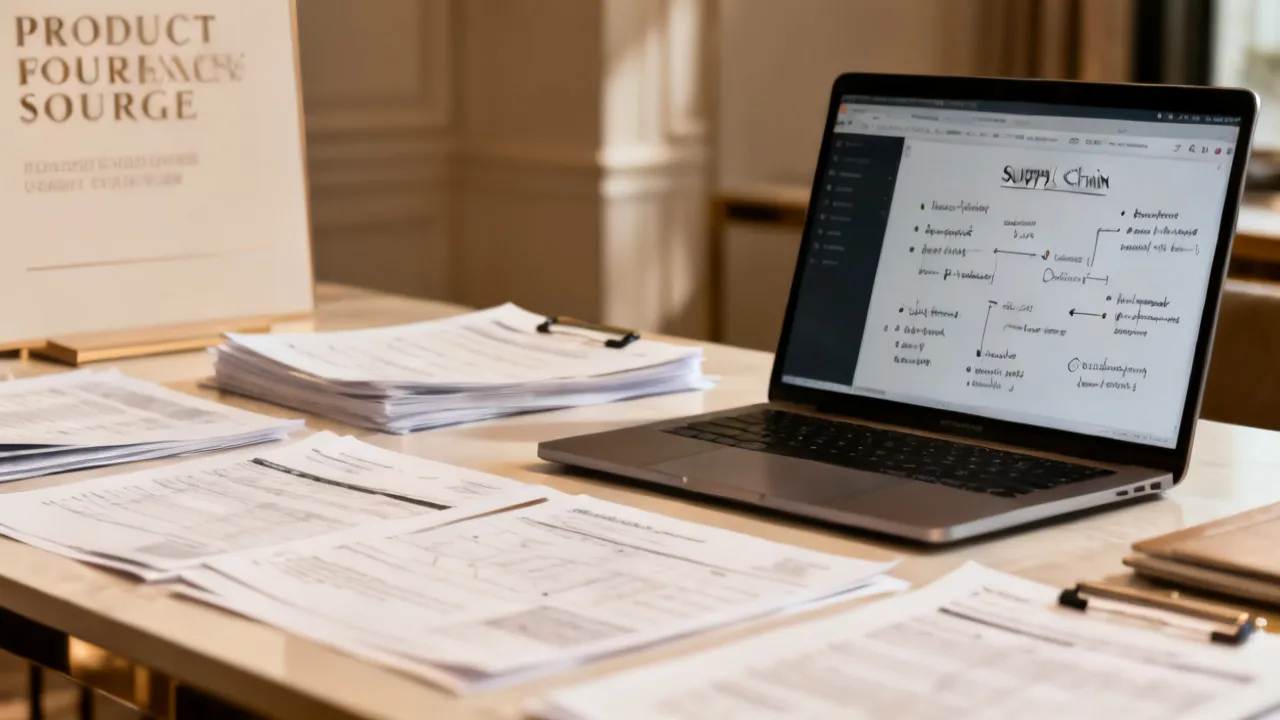
Understanding Product Enquiries Using Supplier Codes
This guide explains how to handle supplier code inquiries and order references using the identifier “03827516399” within procurement workflows. It objectively reviews what supplier codes represent, why they matter for traceability, and how enquiry details should be documented. The article then provides conditions, a comparison view of enquiry approaches, and practical next steps for procurement teams seeking reliable sourcing.

Critical overview: using supplier code 03827516399 correctly
When procurement, logistics, or service teams need to raise an enquiry, the identifier 03827516399 should be treated as a primary reference used to locate the correct item, batch, configuration, quotation record, or contract context within a supplier’s internal system. In practice, this often means the supplier’s database entry that ties together product attributes, approved revisions, pricing rules, documentation pack versions, and fulfillment constraints. If you are coordinating through email, a shared ticketing system, or a purchasing platform, the code must be included in the subject line and repeated in the opening lines of the message so the enquiry is routed to the correct internal team and matched to the correct machine record with minimal manual intervention.
In parallel, you should capture and include any related reference strings your workflow uses (such as your internal requisition number, project code, asset identifier, batch/lot reference, or previous supplier reference). Even if these secondary references are not required for the supplier’s lookup, they serve a key role: they make the interaction auditable, improve internal traceability, and help later teams verify what exactly was requested and what was delivered.
Across many real-world sourcing processes, confusion arises less often because the item is truly unavailable and more often because the enquiry lands in the wrong queue (for example: sales vs. parts vs. procurement support) or because the supplier’s team lacks the information needed to determine which of several similar catalog records you mean. The most reliable workflow is therefore simple and deliberate: provide the supplier code, specify what you need and why, and include enough operational context for the supplier to validate whether the request aligns with the correct catalog entry, revision level, or documented configuration indexed by 03827516399.
What the identifier 03827516399 typically represents in supply chains
In industry practice, numeric reference strings like 03827516399 are frequently used as internal catalog identifiers, quotation references, part numbers, or document/order keys. Their core purpose is to connect a human request to a machine record inside a supplier’s databases. From an objective standpoint, the digits themselves are less important than what they index: inventory records, pricing tables, revision history, quality documents, warranty or service scope rules, and fulfillment requirements such as packaging type or distribution constraints.
Even when multiple products appear “similar” from a cursory description, a correctly used identifier can confirm the exact configuration without relying solely on narrative text. For example, the right record might reflect one or more of the following:
- Material or formulation grade (e.g., different chemical composition or compliance status)
- Physical configuration (dimensions, connectors, mounting standard, interface type)
- Packaging size (single unit, bulk pack, protective packaging grade)
- Compatibility level (software/hardware compatibility, standards alignment, approved substitutions)
- Labeling and documentation requirements (required markings, certificates, batch traceability)
- Revision or manufacturing change level (critical for replacements and regulated workflows)
Because supplier catalog systems often contain multiple near-duplicates, the reference code is commonly the fastest and most dependable bridge to the correct SKU, document pack, or contract record. For procurement teams, this reduces a hidden but common cost: the time spent clarifying what the supplier thinks you meant.
Why supplier-code accuracy matters more than price alone
Procurement often starts by asking “how much?” However, for many categories the commercial outcome is shaped by factors that are not visible in a simple unit price. Examples include lead times, shipping terms, packaging, compliance documentation, and substitution policies. A supplier code enquiry improves accuracy on these dimensions because it anchors your request to a known supplier record.
If you have price information available in your internal notes or in previous supplier communications, include it as supporting context, but still anchor the conversation to 03827516399 so the supplier can validate that the quoted amount corresponds to the correct record. This matters because pricing can change due to contract tiers, currency fluctuations, quantity breaks, promotional adjustments, and revision updates.
It also matters for internal governance. If procurement commits to a purchase order that assumes the wrong record behind the supplier code, you can end up with mismatched documentation, a different revision than expected, or terms that were valid only for a different configuration. In those cases, the “price variance” can be only the surface symptom; the underlying mismatch is the more costly issue.
For that reason, the supplier should validate the mapping between their quoted line item and the catalog/quote record indexed by 03827516399. If the supplier provides a quote without confirming the mapping, you should still seek confirmation in your follow-up. That single verification step can be the difference between “quote received” and “quote accepted” with confidence.
How to structure an enquiry message that suppliers can process quickly
From an industry-expert perspective, the highest-performing enquiry templates share three traits: they are scannable, they front-load the reference code, and they include the operational parameters required for the supplier to validate whether the request aligns with their catalog record. A supplier may process hundreds of enquiries; the first 30 seconds of your message often determine whether your request gets handled by the correct team, assigned to the correct record, and treated as “complete” instead of “needs clarification.”
When drafting an enquiry referencing 03827516399, use logic like the following:
- Start with the code: Place “03827516399” in the first sentence and also include it in the subject line. Avoid burying the code later in the body.
- State your request type: Quote request, availability check, lead time confirmation, replacement confirmation, documentation/certificates request, or technical confirmation.
- Add the “why” behind the request: Installation date window, project timeline, replenishment schedule, service call urgency, or audit date. This helps the supplier prioritize and also confirms you are not asking “in general.”
- Provide technical qualifiers: Specifications, intended use, compatibility constraints, required standards, operating conditions, or integration details. Even if the supplier does not need all technical detail, including key qualifiers reduces rework.
- Include procurement basics: Requested quantity, ship-to location information (factual and concise), delivery deadline or preferred schedule.
- Ask for traceable documentation: Where applicable, request datasheets, certificates of conformity, certificates of analysis, revision identifiers, batch/lot details, packing notes, and any documentation that your internal compliance process requires.
A practical tip is to separate the message into “header-like” fields (code, request type, quantity, delivery window) and “context” fields (why, technical constraints, documentation needs). This structure helps suppliers paste your request into their internal systems or assign it to internal owners quickly.
Where your team has standard templates, keep the 03827516399 reference field consistent and unmodified across email, ticket forms, and portal submissions. Any change—such as dropping a leading zero, adding spaces, or using a different formatting approach—can break lookup logic or create ambiguity for manual matching.
Comparing enquiry approaches: what changes depending on your goal
The best enquiry method changes depending on your goal. A quote request emphasizes commercial terms and configuration alignment; an availability enquiry emphasizes lead time and stock status; a documentation enquiry emphasizes revision correctness and traceability evidence. Below is a comparison of common approaches to help you choose the right emphasis when you reference 03827516399. (No links are included in the table.)
| Enquiry approach | Best for | What you should include | Typical outcome |
|---|---|---|---|
| Quote request anchored to 03827516399 | Commercial pricing and ordering decision | Supplier code, requested quantity, required configuration, payment/shipping terms, requested validity period for pricing | Validated quote tied to the correct record, enabling procurement to issue a purchase order |
| Availability + lead time validation | Project scheduling and risk management | Supplier code, required delivery date, acceptable substitutes policy, shipping constraints, and whether partial shipments are acceptable | Fulfillment confidence and timeline estimate, often with recommended ordering strategy |
| Documentation and compliance package enquiry | Audits, QA sign-off, regulated workflows, warranty readiness | Supplier code, requested documents (where applicable), batch/revision reference needed, requested format (PDF, hard copy, electronic portal), and any audit requirements | Traceable records for inspection and approval, including revision alignment to the code |
| Technical confirmation (spec/compatibility) | Ensuring correct fit before procurement | Supplier code, installation constraints, operating conditions, interface compatibility requirements, and any relevant standards | Technical confirmation and reduced rework risk through alignment to the correct configuration |
Notably, these approaches are not mutually exclusive. In many projects you may begin with technical confirmation and availability checks, then progress to a formal quote and a documentation package request. In each step, keep 03827516399 as the anchor so the supplier team continues to reference the same record across stages.
Step-by-step guide: from first message to procurement-ready outcome
Below is a practical workflow you can adapt. It is written as a condition-aware guide so your team can follow a consistent process, regardless of whether you are sending the enquiry to a supplier via email, portal form, or an internal purchasing platform.
-
Confirm the reference context internally.
Before contacting a supplier, verify that 03827516399 matches the same item you intend to buy. If you have multiple references in your files (for example, internal part number, supplier part number, previous quote reference), map them to the same product record. If you cannot map them reliably, resolve the mapping internally before contacting the supplier—because asking the supplier to “guess” what you mean increases delay and risk.
-
Prepare a minimal set of parameters.
At minimum, include quantity and the required outcome (quote, availability, or documentation). If your organization has a standard requisition intake form, ensure the key fields are populated. This prevents supplier teams from responding with “Please confirm quantity/specifications,” which often becomes a multi-day back-and-forth.
-
Draft the enquiry with scannable formatting.
Use short paragraphs or bullet points. Place 03827516399 at the top and in the subject line. Add additional identifiers (if applicable), such as internal requisition number, project name, asset tag, or destination code—but do not overwhelm the supplier with unnecessary data. Clarity beats volume.
-
Request validation, not assumptions.
Ask the supplier to confirm that the quoted item, lead time statement, or document package corresponds to the record indexed by 03827516399. Where relevant, ask for the revision level and batch/lot traceability reference. This is especially important when you are ordering replacements or items with ongoing engineering changes.
-
Set response expectations.
Propose a response timeline based on your procurement schedule and confirm your preferred communication method. For example, if you need a quote by a certain date to meet internal approvals, state that clearly. Avoid assumptions about lead times; instead ask for a written estimate and note any conditions that could affect timing (e.g., production scheduling, material availability, approvals required).
-
Review the supplier reply against a checklist.
Confirm: reference code alignment, pricing basis (unit price vs. configuration price vs. package price), delivery terms (shipping terms, Incoterms if used internally), and document completeness. If any element is missing or inconsistent, request a specific correction rather than re-explaining the whole project. For example, if the supplier’s quote references a different code or revision, ask them to reconcile it with 03827516399 and provide the corrected documentation.
-
Record the outcome for traceability.
Store the enquiry and supplier response in your procurement record. Include any attachments, ticket IDs, revision statements, and terms. This matters for internal auditing and for later warranty or service claims where traceability is essential. When disputes arise, having a record of what was requested and what was confirmed is often the deciding factor.
Conditions and requirements for reliable supplier-code enquiries
To reduce friction and rework, procurement teams should meet certain conditions when referencing 03827516399 or similar codes. These conditions help both parties: you provide the information needed to validate the lookup record, and you enable the supplier to respond efficiently with a consistent and accurate basis.
- One source of truth for the reference: Ensure the supplier code matches your internal item master entry. If you copy codes between systems, confirm formatting is preserved.
- Clear demand parameters: Quantity, configuration/specification, and delivery window should be explicit. If you are flexible, state your flexibility range (e.g., “delivery by 30th is required; later dates acceptable with notification”).
- Document request alignment: If you need compliance documents, name them or describe the audit purpose. Examples include “Certificate of Conformity,” “Certificate of Analysis,” “Test Report,” “SDS,” “COC/COA,” or “Revision-controlled datasheet.”
- Consistency across channels: If you email, submit a ticket, or message through an internal portal, keep the reference string unchanged. Avoid accidental changes such as dropping digits, altering spacing, or converting to scientific notation in spreadsheets.
- Validation language: Use phrasing that asks the supplier to confirm the record tied to the code rather than assuming. For example, “Please confirm the item record and revision associated with 03827516399.”
Where location or destination details are required, provide them in a factual manner. Provide exact ship-to contact details only if required; otherwise include enough logistics data to quote shipping and satisfy fulfillment constraints. If you have internal shipping constraints—such as dock hours, dangerous goods handling requirements, or packaging restrictions—include them. If not, ask what shipping and packaging details the supplier needs to quote accurately for the destination.
Industry context: why traceability and correct referencing reduce risk
In procurement and supplier management, traceability is a core risk-control mechanism. Traceability supports audit readiness, reduces costly returns and rework, and clarifies responsibility for defects or mismatches. Even outside highly regulated industries, suppliers often operate with structured catalog databases that track revisions, equivalence rules, and documentation versions.
From a risk perspective, correct referencing does several things at once:
- Prevents “wrong item” drift: A similar description can mask differences that matter (revision, packaging, compliance category).
- Improves documentation accuracy: Certificates and datasheets correspond to the specific record and revision, not a generic product statement.
- Enables later warranty and service alignment: If an issue arises, you can trace back to the exact supplier record and confirm whether the delivered item matches the procurement basis.
- Supports audit trails: Auditors can reconcile what was requested, what was quoted, and what was received.
Therefore, using 03827516399 as a stable enquiry anchor helps align your request with the supplier’s internal record structure and reduces ambiguity when multiple similar products exist.
For additional context on traceability and quality systems, many organizations reference established quality management frameworks. For example, the International Organization for Standardization (ISO) quality management standards emphasize process control and documented information. Relevant guidance can be found via ISO’s official materials, including the ISO 9001 family (quality management systems). (No unsupported performance claims are made here; the discussion is conceptual.)
Even if you are not operating under ISO-based systems, the underlying principles—clear requirements, documented information, and controlled change—map well to how suppliers should interpret a code-referenced enquiry and how your organization should record outcomes.
Deep dive: preventing the most common failure modes
Although supplier code enquiries seem straightforward, teams frequently encounter recurring failure modes. Addressing them proactively is one of the best ways to make 03827516399 work as intended as a “lookup key” rather than a source of confusion.
Failure mode 1: code formatting drift
A very common operational mistake is accidental formatting drift. For numeric identifiers, the handling of leading zeros, copying from spreadsheets, or formatting conversions can alter the string. For example, a leading zero might be dropped, or a code might be displayed in scientific notation. Even if your human notes show the correct string, the value embedded in a portal form or spreadsheet cell might differ.
Mitigation: Treat 03827516399 as a string field in your systems. Validate it before submission. Add a simple formatting check in your workflow: confirm it is 11 digits (if that is how you consistently store it) and confirm it matches your internal item master entry.
Failure mode 2: wrong “record behind the code” due to unclear context
Sometimes the supplier receives the code but interprets it in a context different from yours. For instance, the supplier’s code might index multiple packaging options, or it might refer to a base part while you require a specific kit configuration.
Mitigation: Ask the supplier to confirm what exactly the code indexes: the item record, revision, and included configuration. If your internal product master requires a certain kit or variant, state that explicitly even if you believe the code already implies it.
Failure mode 3: split responsibility between sales and procurement support
Enquiries often fail not because content is wrong, but because routing is wrong. If you email a sales address instead of an engineering or procurement support queue, your message might arrive late or be treated as a general inquiry rather than a record-lookup request.
Mitigation: Use subject lines that clearly include 03827516399 and request type. For example: “Quote request for 03827516399—quantity X, delivery date Y, confirm revision.” This increases the odds that the message is routed appropriately, even if it initially lands in a general inbox.
Failure mode 4: missing or ambiguous documentation requirements
For compliance-driven procurement, the most common delay is missing documentation requirements. The supplier may quote and ship the item, but later you discover that the certificate pack is not the revision-controlled version your audit needs.
Mitigation: When requesting documentation, specify what you need and why. Reference the code 03827516399 and ask for documentation that corresponds to that record and revision. If you need batch traceability, ask for it explicitly.
Failure mode 5: confusion between replacement and original stock records
Replacement part orders are particularly sensitive. Suppliers might provide an updated equivalent, superseded version, or a cross-reference. If the supplier interprets your enquiry as “any equivalent,” you may receive a different revision or configuration than expected.
Mitigation: Ask for confirmation of whether the supplied item is the exact record indexed by 03827516399 or a superseding equivalent. If the supplier proposes an alternative, require explicit mapping: what differs, what remains the same, and how the code relates to the offered alternative.
Best practices for templates: making enquiries consistent and scalable
In organizations that handle high supplier volumes, individual emails from different buyers lead to inconsistency. Even if each email is correct, variation in phrasing can increase supplier processing time. By building an enquiry template anchored on 03827516399, you standardize both how suppliers interpret your requests and how your internal team evaluates responses.
A robust template often includes:
- Header: Supplier name (if known), subject line, supplier code 03827516399, request type.
- Demand fields: quantity, configuration/specification summary, required delivery window.
- Validation questions: explicit request for supplier confirmation that the record, revision, and included configuration match the code.
- Documentation fields: list of documents required (if any), batch/lot traceability needs.
- Terms fields: shipping method preferences, billing terms preferences, quote validity duration.
- Response request: request for a written quote, lead time statement, and/or document attachments, with a target response date.
When your template is consistent, your internal procurement analysts can compare quotes more easily. It also makes automation easier if you later integrate supplier portals: your form fields map cleanly to supplier lookup fields and reduce the risk of missing required information.
Detailed checklist for your first enquiry (practical copy-ready structure)
The following checklist is designed to help you produce a procurement-ready enquiry quickly. It is also written in a way that encourages validation instead of assumption. You can adapt the wording to your organization’s style while maintaining the key logic.
- Subject line: Include “03827516399” and request type (e.g., Quote request / Availability check / Documentation pack request).
- Opening sentence: State the code 03827516399 and the purpose immediately.
- Quantity: Provide exact quantity and whether there are any quantity break constraints.
- Configuration/specification: Provide relevant technical qualifiers that matter to your use-case.
- Required date window: Provide a date range or deadline, not just “ASAP.”
- Shipping destination: Provide enough logistics data to quote shipping terms accurately.
- Validation request: Ask the supplier to confirm the record and revision associated with 03827516399.
- Documentation request: List which documents you require and confirm they correspond to the same record indexed by the code.
- Quote validity: If you need a commercial decision, ask for quote validity duration and currency.
- Response deadline: Provide a requested response date/time if your project schedule requires it.
- Reference continuity: Remind the supplier to reference 03827516399 in their reply to avoid drift.
This checklist aligns with the core principle: the supplier should validate the record behind the code and respond with a package that is consistent with that record.
How to interpret supplier responses tied to 03827516399
Once you receive a supplier reply, you should not only check the numbers. Your aim is to confirm that the reply is anchored to 03827516399 and that it is consistent across commercial and technical dimensions.
A strong supplier response typically includes:
- Explicit confirmation: The supplier states that their quote pertains to the item record indexed by 03827516399.
- Revision or effective date: If the item has revisions, the supplier clarifies which revision the quoted item corresponds to.
- Configuration clarity: The response indicates what is included (packaging type, kit content, or any special features) or states exclusions if applicable.
- Lead time conditions: If availability is uncertain, the supplier provides conditions, constraints, or expected build/ship windows.
- Documentation alignment: If documents are requested, the response includes the documents and/or states document versioning and traceability.
- Commercial terms completeness: Currency, payment terms, shipping method, and quote validity period are clearly specified.
If any of these elements are missing, you can request correction. Importantly, you should request targeted corrections rather than rewriting the entire project description. For example:
- If the supplier quotes a different code or omits 03827516399 from their line item: ask them to reconcile the quote to the record behind the code.
- If the supplier provides lead time without stating conditions: ask for the conditions that could change timing.
- If the supplier provides documentation without revision clarity: ask for a revision-controlled version aligned to the code record.
This approach keeps the enquiry auditable and reduces unnecessary back-and-forth.
FAQ: supplier-code enquiries using 03827516399
How do I know what 03827516399 refers to?
The most reliable method is to ask the supplier to confirm what the code indexes in their system. If you already have internal product master data, cross-check that the code maps to the same item description, configuration, and revision you intend to purchase. If your internal mapping is uncertain, do not proceed based only on your interpretation—request supplier validation of the record associated with 03827516399.
Can I request a quote without including 03827516399?
You can, but it increases the chance of misrouting or mismatch. For time-sensitive procurement, including 03827516399 typically improves the speed and accuracy of the supplier’s response because it connects your message to a specific catalog entry or quotation record. If the supplier knows your code is the lookup key, they can process your enquiry faster and reduce ambiguity.
What information should I include alongside the code?
Include quantity, required configuration/specification, delivery date or target window, and any documentation needs. If compatibility is critical, describe the interface or operating conditions so the supplier can validate fit against the record indexed by 03827516399. If you are requesting a replacement, also clarify the replacement context (original item reference, reason for replacement, and whether supersession is acceptable).
If the supplier quotes a different item, what should I do?
Request a correction that explicitly states how their quote maps (or does not map) to 03827516399. Ask them to confirm the record and revision associated with the code, then reissue the quote tied to the correct entry. In your follow-up, keep the ask narrow: “Please reconcile the quote line item to confirm it is the record behind 03827516399.”
Do I need to mention price in the first enquiry?
Not always. If you already know a target price internally, you can include it as context, but the supplier should still validate that the pricing corresponds to the item indexed by 03827516399. Otherwise, the commercial terms may be based on assumptions about configuration or revision that do not match the procurement basis.
What if my workflow includes multiple identifiers (references or codes)?
Keep them organized and consistent. Use 03827516399 as the primary anchor and include other identifiers only when they represent additional validation fields (for example, batch references or internal project codes). Avoid duplicating conflicting reference strings. If other identifiers are secondary, label them clearly so the supplier knows which one is the lookup key.
How should I document supplier replies?
Store the supplier response with the enquiry record, including their stated reference mapping to 03827516399, pricing basis, delivery estimate, and any documents provided. If the supplier provides revision or batch/lot information, store it as a separate field in your procurement record so it can be used later for audits, receiving checks, and warranty/service cases.
Can this process be automated?
Yes, but automation works best when your item master is clean and your enquiry templates are standardized. If your team uses forms, ensure the reference field for 03827516399 is required and validated for format consistency (for example: length and numeric-only rules where appropriate). Also ensure your ticketing workflow requires confirmation fields in the supplier response (revision, document pack version, lead time conditions) if your organization needs them.
What if the supplier says they need more detail before they can use the code?
If the supplier cannot map 03827516399 to the item record without additional context, treat that as a signal to improve your internal mapping. Ask the supplier what fields they need for resolution (for example, required revision level, packaging option, or destination constraints). Then update your internal product master or template so future enquiries provide those missing fields upfront.
Procurement-ready checklist for teams handling supplier code enquiries
- Reference code included: 03827516399 (unchanged, no formatting drift)
- Request type specified (quote, availability, documentation, or technical confirmation)
- Quantity and required configuration clearly stated
- Delivery window or schedule communicated (deadline or range)
- Validation requested: supplier confirms the record behind the code and (if applicable) the revision level
- Supplier response reviewed for alignment and completeness (code mapping, commercial terms, delivery estimate, documents)
- All communications stored for traceability (enquiry, supplier reply, attachments, revision/doc statements)
Additional keyword context (handled objectively)
You also provided placeholder keyword groupings that include quotations and a fragmented pattern. Since the only explicit actionable identifier in your input is 03827516399, the guidance above treats that value as the primary operational keyword for supplier enquiries and procurement documentation. If you share additional structured details (for example, the full item name, category, or the meaning of the other reference fragments), the article can be updated to incorporate those terms more precisely and safely. In the meantime, the operational guidance remains consistent: treat 03827516399 as the lookup anchor and request supplier validation that their quote and documents correspond to the record indexed by that code.
Conclusion: keep enquiries anchored, verifiable, and audit-friendly
Supplier-code enquiries work best when they are anchored to an unambiguous reference and supported by clear demand parameters. By treating 03827516399 as the core lookup key—then asking the supplier to validate that their quote, delivery statement, and documentation match the code—you reduce delays, prevent mismatch risk, and strengthen traceability across the purchasing lifecycle.
In a procurement environment, the cost of an unclear enquiry is rarely limited to time spent waiting for a reply. It can also create downstream friction at receiving, in quality assurance, during internal approvals, and later when warranties or disputes require proof of what was agreed. A disciplined approach—front-load the code, specify the required outcome, request record/revision confirmation, and store the evidence—turns 03827516399 from a string of digits into a reliable mechanism for alignment between your organization and the supplier.
-
1

A Guide to Cost-Efficient Small Electric Cars for Seniors
-
2
Mastering Debt Consolidation: Boost Your Credit Score and Manage Interest Rates
-
3
Your Guide to Loans, Credit Checks, and Interest Rates
-
4
Affordable Independent Living: Finding the Right Senior Housing
-
5
Guide to Senior Living Apartments: Affordable and Comfortable Environments